
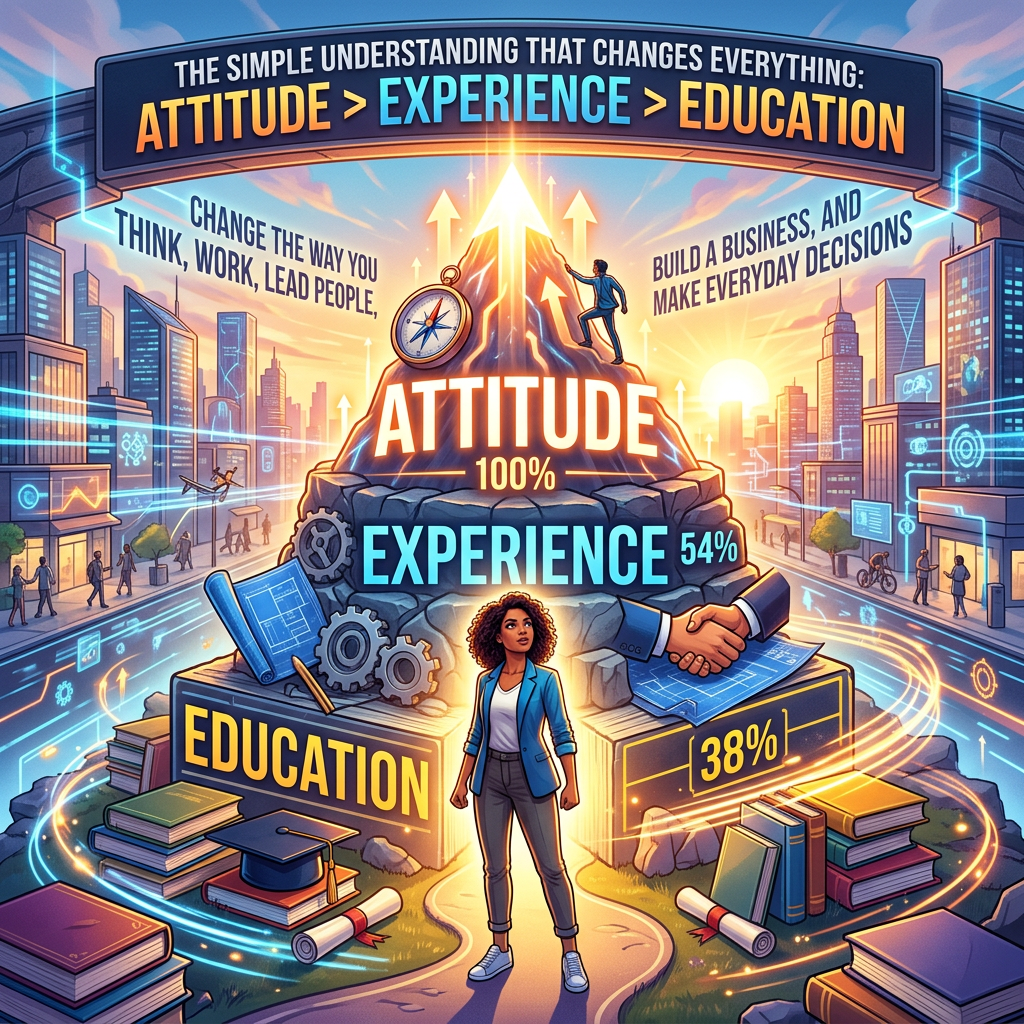
Personal Growth | Leadership | Entrepreneurship | Professional Excellence| Doctor’s Clinical Life
What if one simple understanding, discovered early in life, could change the way you think, work, lead people, build a business and make everyday decisions?
Here is a powerful principle:
Attitude > Experience > Education
Education gives us knowledge. Experience teaches us how to apply that knowledge. But attitude determines whether we are willing to learn, adapt, take responsibility and move forward.
This is not an argument against education. It is a reminder that knowledge alone cannot guarantee success.
Let’s understand why.
1. What Is Attitude, and Why Does It Matter?
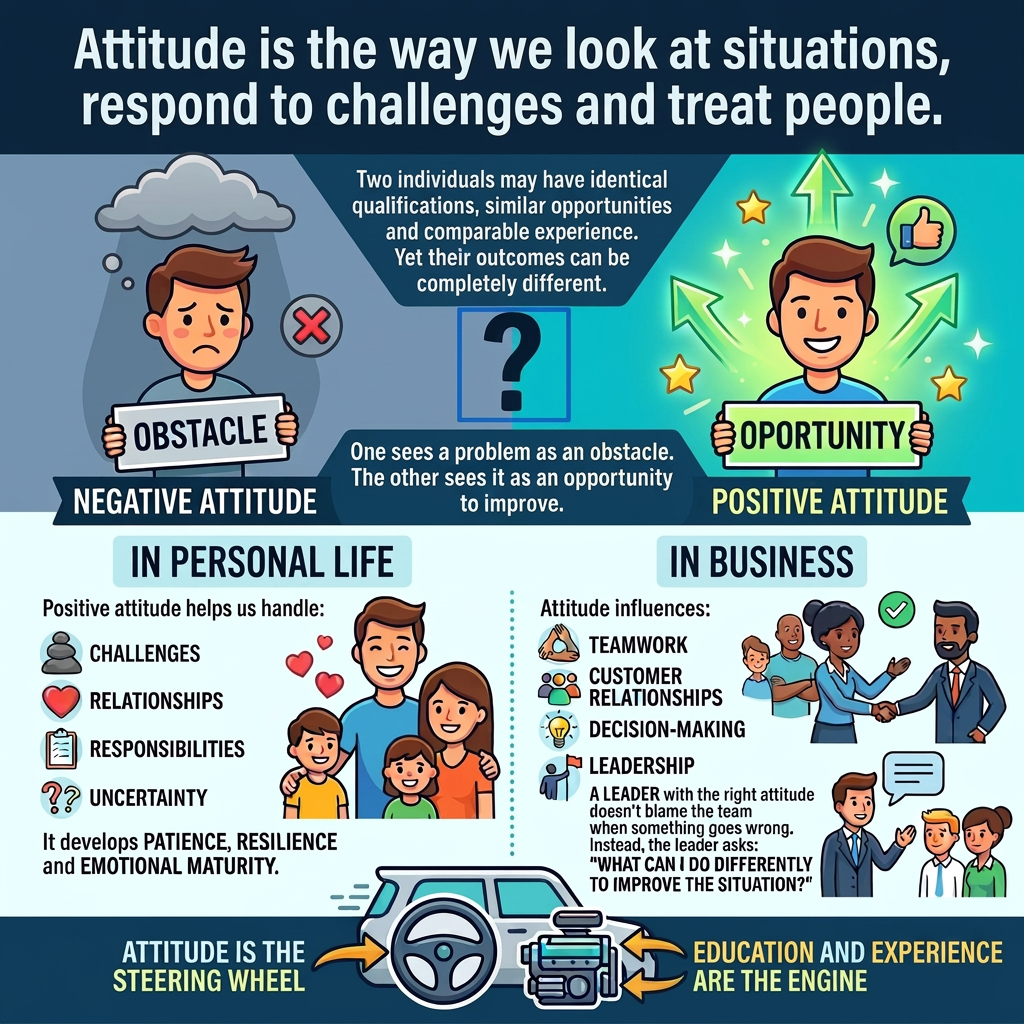
Attitude is the steering wheel; education and experience are the engine.
2. Why Is Attitude Greater Than Experience?
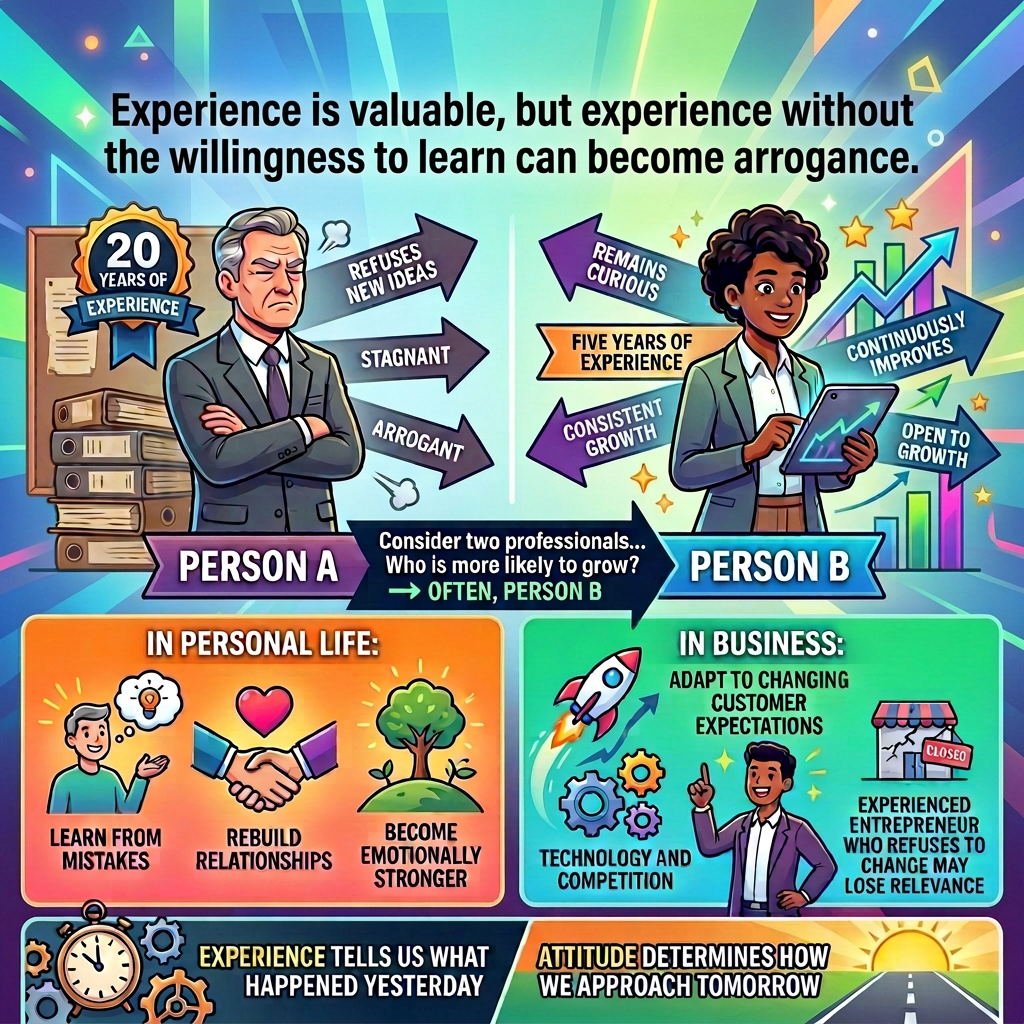
Experience tells us what happened yesterday. Attitude determines how we approach tomorrow.
3. Why Is Experience Greater Than Education?
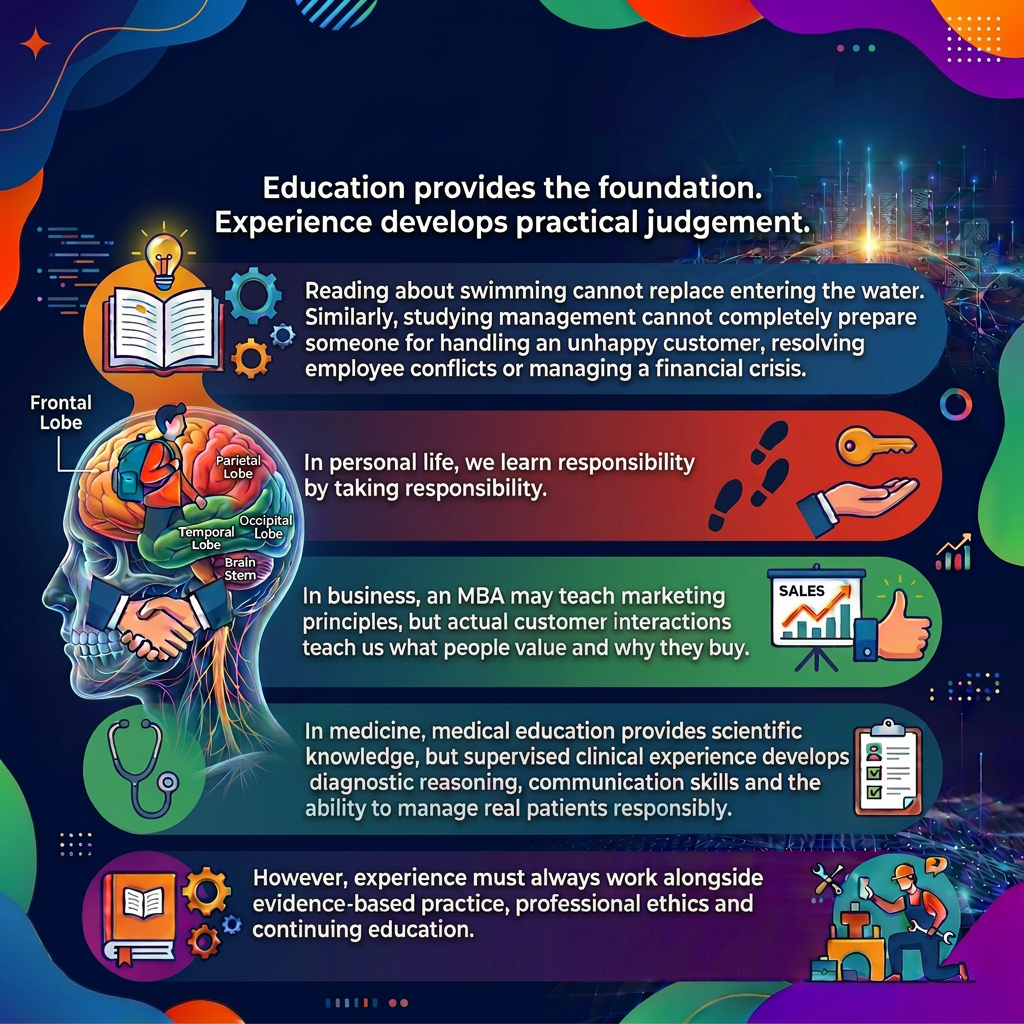
The important lesson is simple: Education teaches the principles; experience develops the judgement to apply them.
4. The Five Pillars of a Meaningful and Successful Life
The relationship between attitude, experience and education becomes clearer when we examine five important areas.
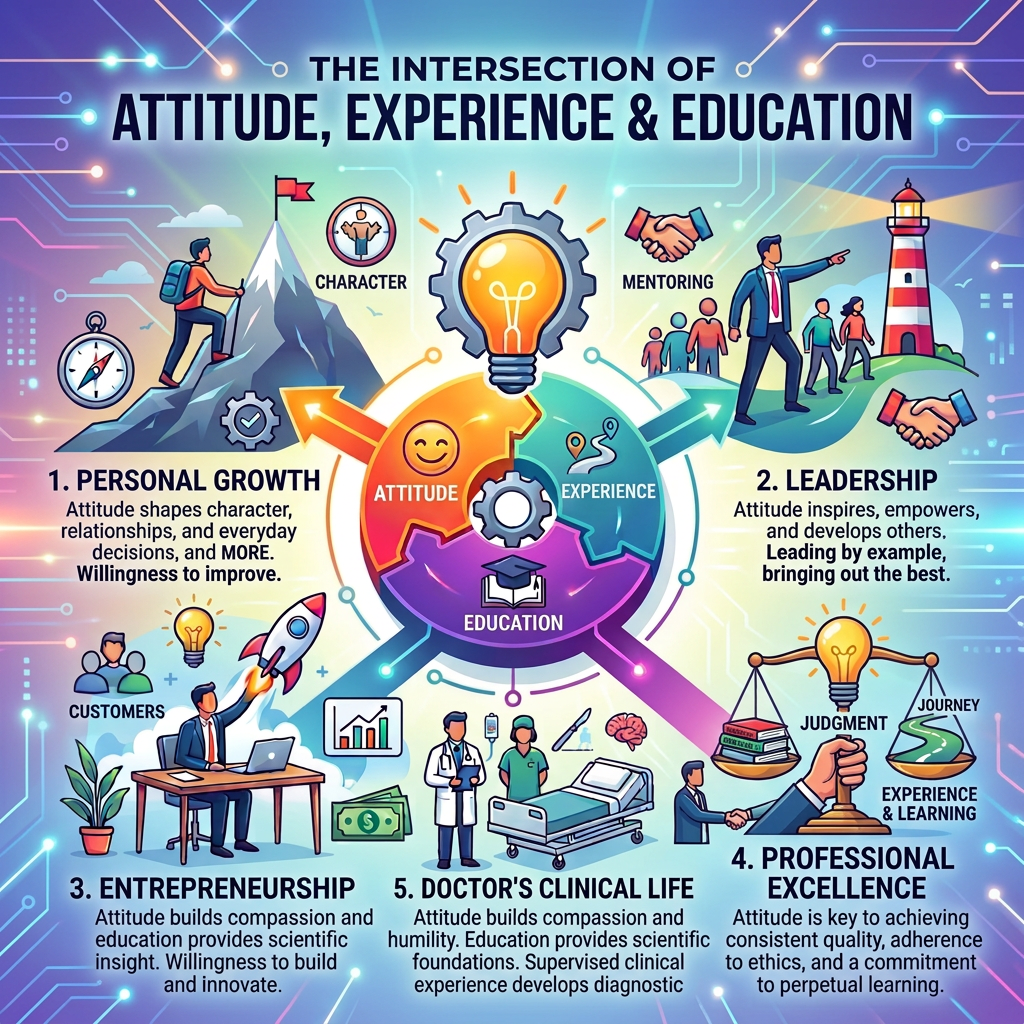
These five pillars may look different, but they share one foundation: the willingness to learn and improve every day.
5. Why This Principle Is Particularly Important in a Doctor’s Clinical Life
A medical degree makes someone academically qualified to practise within their competence. However, becoming a good clinician requires much more than academic achievement.
It requires the right attitude towards patients, respect for colleagues, willingness to learn from senior doctors, openness to new scientific evidence and the humility to recognise one’s limitations.
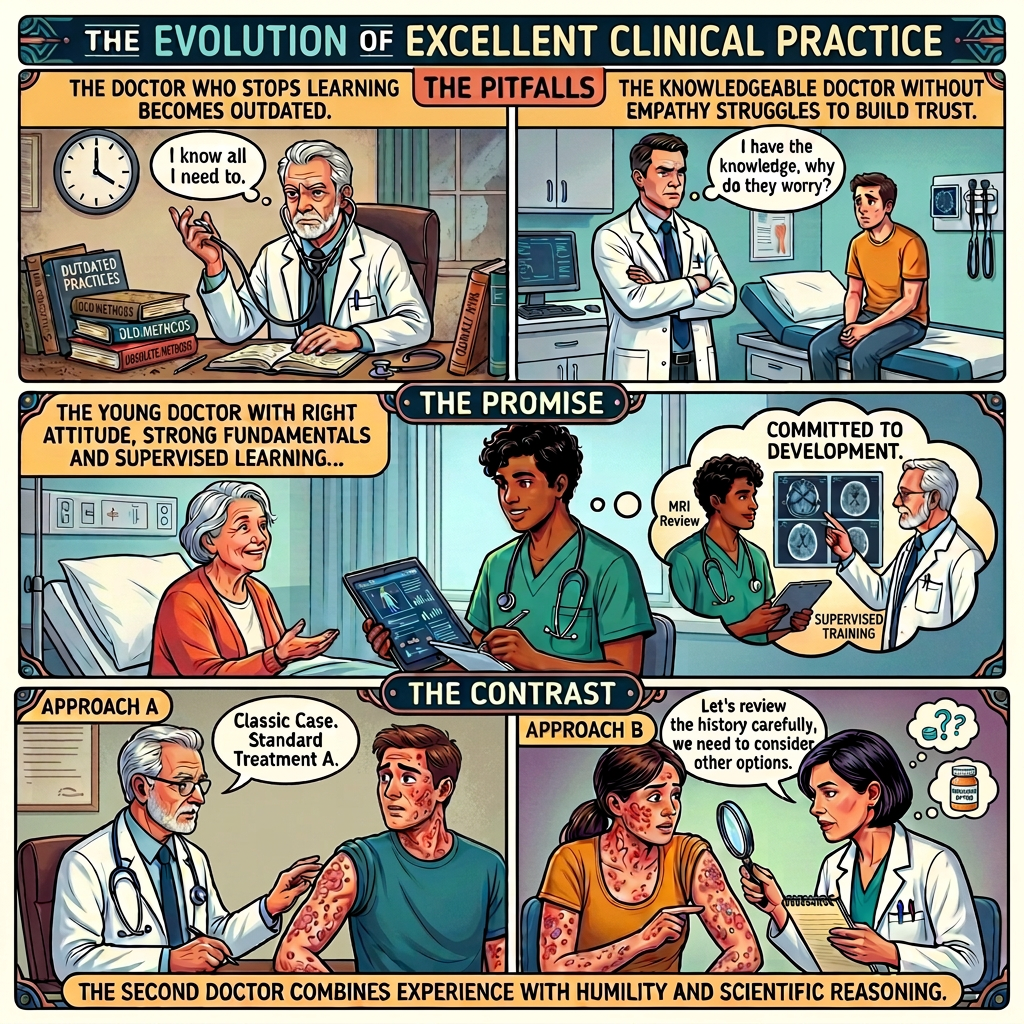
In medicine, attitude without knowledge is unsafe, knowledge without experience is incomplete, and experience without continuous learning can become dangerous.
This is why clinical excellence requires all three, working together.
6. Understanding the Thesis Early: The Power of Compounding
This is perhaps the most important lesson.
When we understand early in life that attitude drives learning, experience strengthens judgement and education provides the foundation, our daily decisions begin to change.
Think of it as compound interest.
A small improvement in attitude every day creates better decisions. Better decisions create valuable experiences. Valuable experiences improve professional judgement. Over several years, these small improvements can produce extraordinary results.
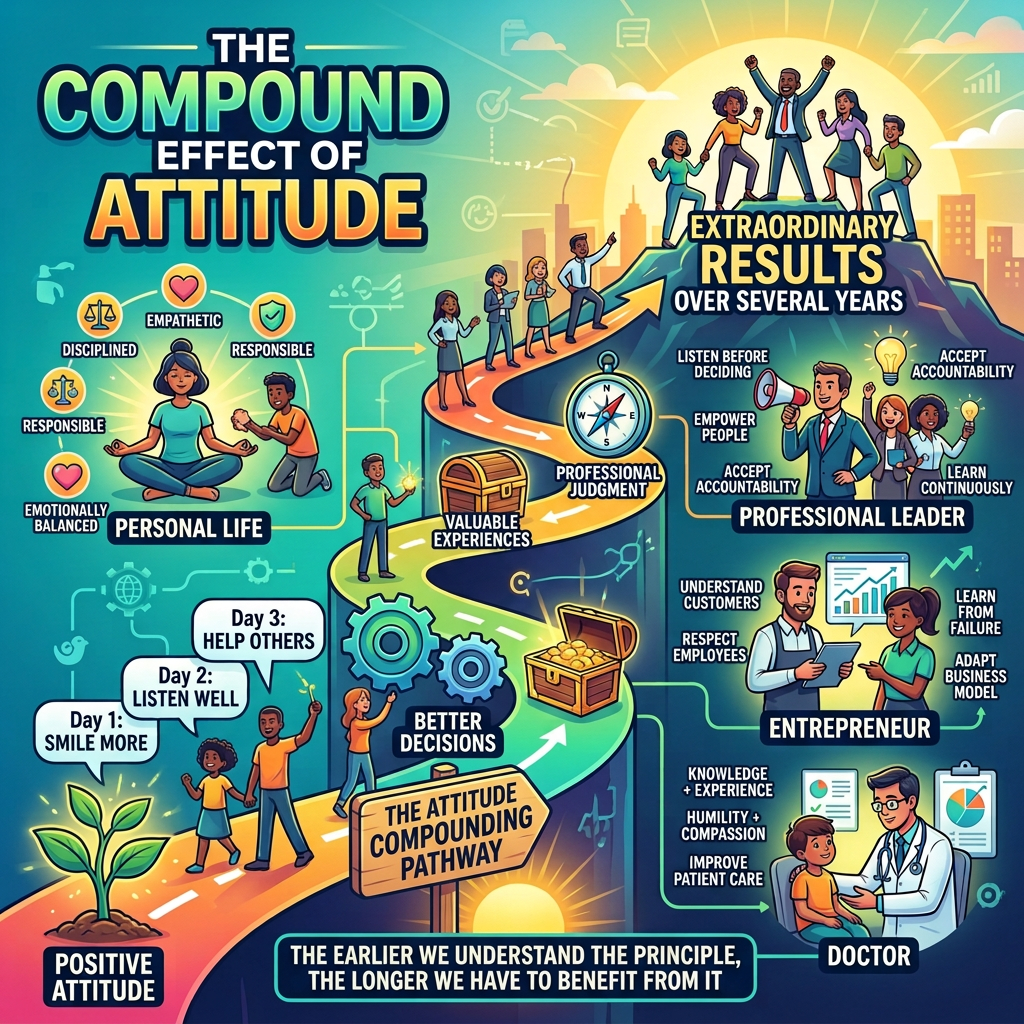
The earlier we understand the principle, the longer we have to benefit from it.
7. Lessons from Successful Indian and International Leaders
Several successful leaders demonstrate these principles through their journeys.
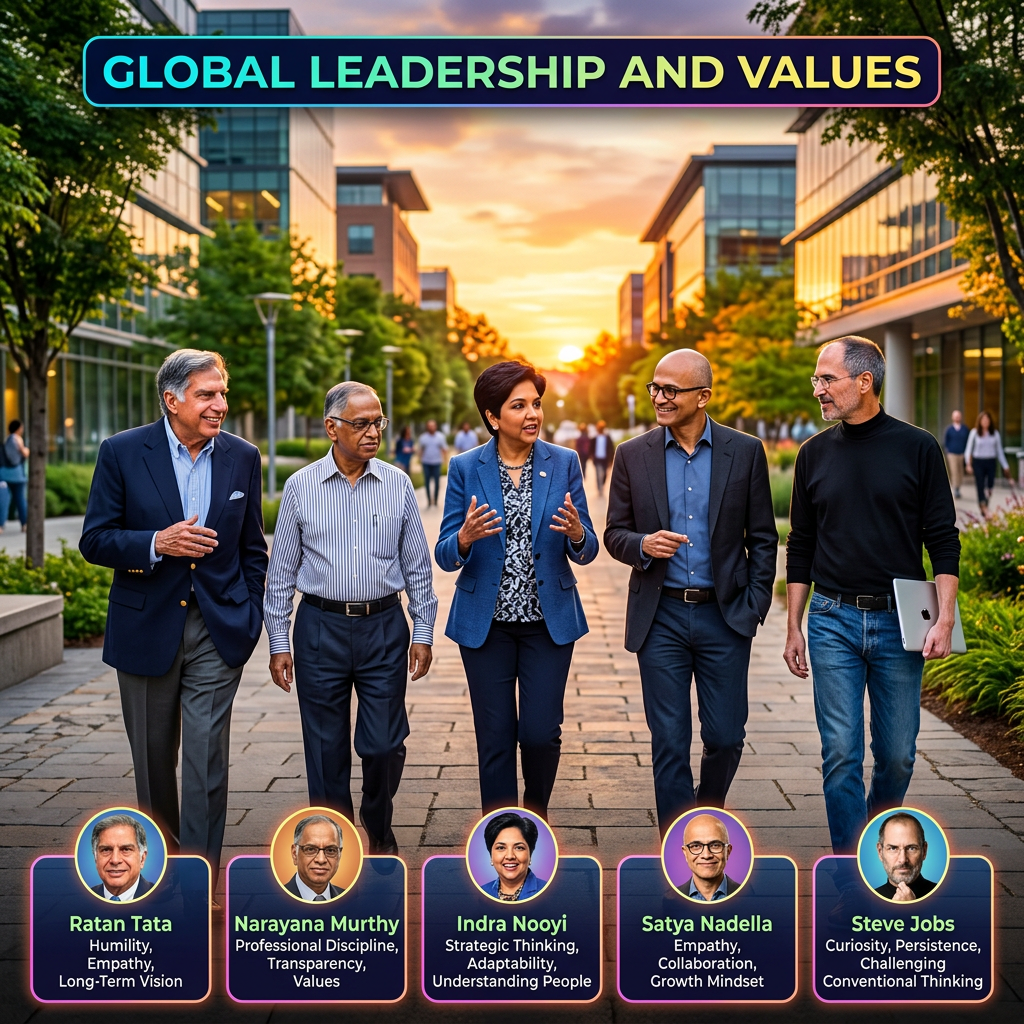
Their journeys were different, but a common thread connects them: the willingness to learn, adapt and lead with conviction.
8. A Practical Seven-Step Action Plan
Understanding a principle is useful only when we practise it.
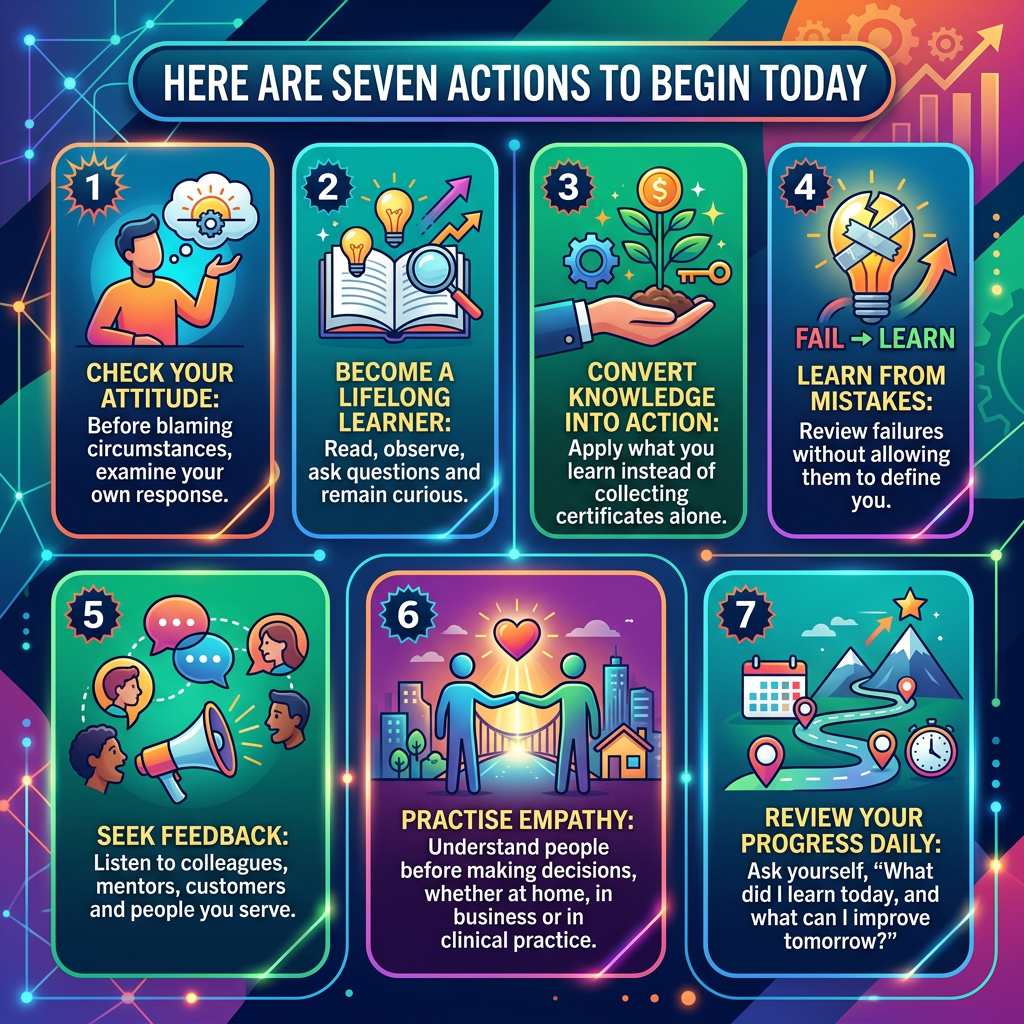
Small actions, consistently repeated, create remarkable long-term results.
9. Conclusion: Understand the Thesis Before Time Teaches It to You
Life is not simply about collecting degrees, accumulating years of experience or achieving professional titles.
It is about developing the right attitude, learning from experience and applying education with wisdom.
Whether you are a student, parent, employee, entrepreneur, business leader or doctor, this principle remains relevant.
Never allow experience to make you arrogant. Never allow education to make you complacent. And never allow circumstances to destroy your attitude.
Remember:
Your education may open the door. Your experience may help you navigate the room. But your attitude determines how far you are willing to go.
The earlier you understand this thesis, the more effectively you can compound its benefits throughout your personal and professional life.
A Small Request to Every Reader
If this article made you reflect on your own journey, please:
- Share your thoughts: What has contributed more to your success—attitude, experience or education? Please comment below.
- Share this article: Send it to at least one individual who needs to understand this principle early in life or career.
- Subscribe: If you haven’t subscribed yet, please enter your email address in the Subscription Box at the bottom of this page to receive future articles and insights.
Sometimes, one idea understood at the right time can change the direction of an entire life.
Stay tuned!!
Image Disclaimer: Images used in this article are provided for illustrative, educational, and informational purposes only. Any company names, brand names, logos, trademarks, products, services, or other identifiable brand elements appearing in an image are the property of their respective owners. Their inclusion does not imply any endorsement, sponsorship, partnership, affiliation, or association with the author, publisher, or this website. The images are intended solely to help explain or visualize the concepts discussed in the article.






Leave a Reply