We are naturally drawn to outcomes.
A child gets excellent marks, and we celebrate. A salesperson achieves the target, and we congratulate them. An entrepreneur makes a profit, and we call the strategy successful.
But there is a question beneath every outcome that deserves more attention:
What behaviour created it?
This simple shift in perspective can change the way we raise children, manage people, build careers and run businesses. Results matter, of course. But results are often influenced by circumstances, timing and luck. Behaviour is where our choices live.
When we learn to recognise the right behaviour before the final outcome arrives, we encourage the habits that make good outcomes more likely.
Behaviour or Outcome: What Are We Really Rewarding?
Behaviour is what we repeatedly do—preparing, practising, listening, following up, learning, exercising, asking questions, solving problems or keeping our commitments.
An outcome is what eventually happens—better marks, improved health, higher sales, promotion, profit or business growth.
The difference is important because we generally have much more control over behaviour than outcome.
Imagine two salespeople.
One has made 30 thoughtful customer calls, followed up consistently, listened carefully to objections and improved the sales pitch. Yet the market is slow, and the person misses the monthly target.
Another salesperson reaches the target after receiving two unusually large orders but has not developed a consistent sales process.
If we celebrate only the result, the second person appears to be the winner.
But if we recognise behaviour as well, we may notice that the first salesperson is quietly building something far more valuable: a repeatable capability.
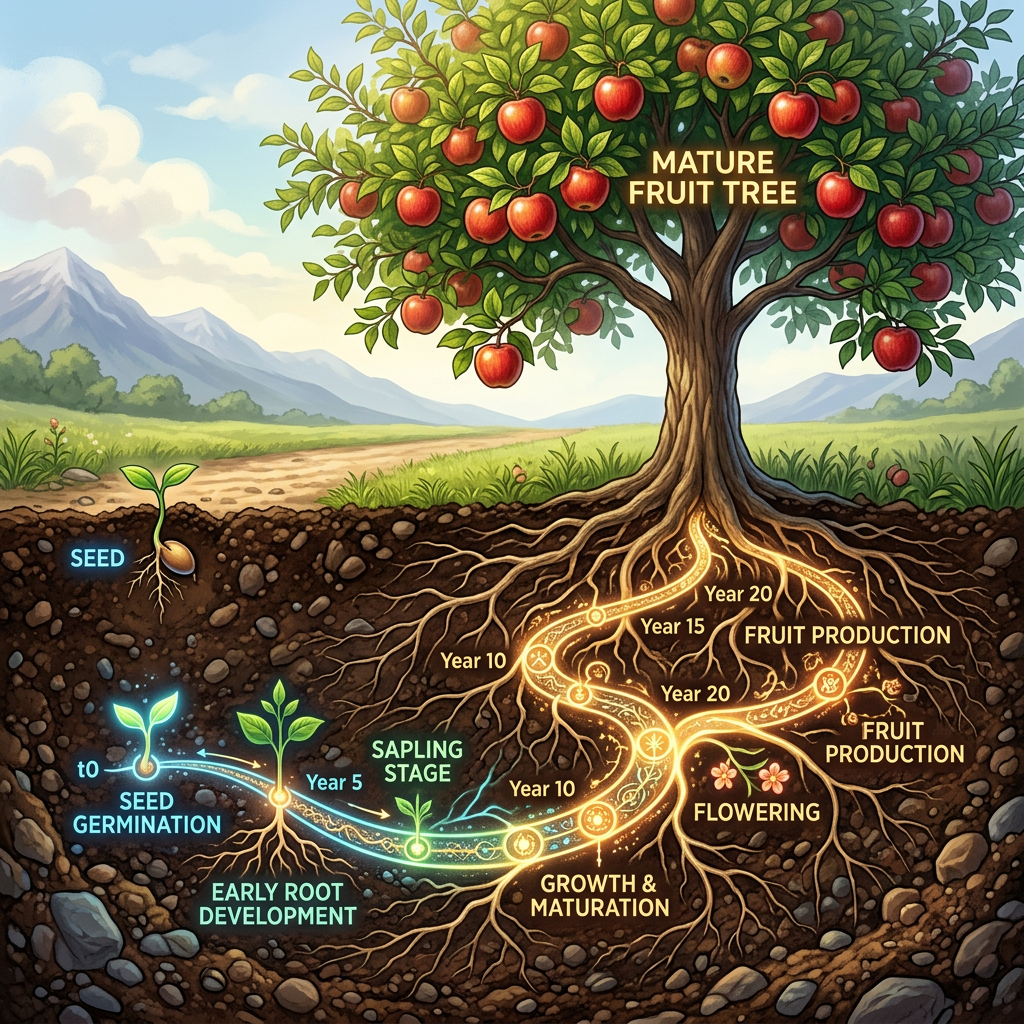
Why the Seed Deserves Attention Before the Fruit
Think about planting a tree.
Nobody expects fruit the day after planting the seed. We water it, protect it and give it time.
Personal growth and business growth are similar.
A student who studies consistently may not immediately become the top scorer. A new entrepreneur may speak to 50 customers without finding the right product. A manager may coach an employee for months before seeing a meaningful improvement.
That does not necessarily mean the behaviour is failing.
Sometimes the foundation is being built before the result becomes visible.
Rewarding the behaviour says, “I can see the effort, discipline and learning you are putting into this.” That kind of recognition can give people the confidence to continue when the scoreboard has not caught up yet.
A Small Lesson in Everyday Life
Consider a parent helping a child develop a reading habit.
If the child is praised only after finishing ten books, the focus can easily become the number of books.
But imagine the parent noticing something smaller:
“You sat down and read even though you weren’t in the mood today. That’s wonderful.”
The child learns that consistency matters.
The same principle applies to fitness, education, relationships and personal development.
A person trying to exercise may not lose weight immediately. Someone learning a new skill may make mistakes for months. Someone trying to become more patient may still have difficult days.
If we judge ourselves only by immediate results, we can become discouraged.
If we notice the behaviour we are gradually changing, the journey becomes more sustainable.
What Happens When Only the Outcome Gets Rewarded?
There can be an unintended cost.
A child may become afraid of mistakes because only high marks receive praise. An employee may hide problems because admitting them could affect their performance rating. A salesperson may pressure customers to close deals quickly. An entrepreneur may sacrifice long-term trust for short-term revenue.
People naturally learn from what gets rewarded.
That is why the question is not simply, “What result do we want?”
It is also, “What behaviour are we encouraging to get there?”
The Same Principle Can Transform a Business
Imagine a new salesperson joining a company.
During the first month, she spends time understanding customers, asking thoughtful questions, learning the product and following up properly. Her revenue is modest because she is still building her pipeline.
A purely numbers-driven manager might say, “Your sales are too low.”
A more empathetic manager might say, “I can see that you’re building the right habits. What are customers telling you, and what can we improve?”
The second conversation does not remove accountability.
It simply recognises that today’s behaviour may become tomorrow’s revenue.
This is particularly important for entrepreneurs. Customer interviews, experimentation, product improvement, learning from rejection and building a trustworthy team rarely produce instant rewards. Yet these behaviours can eventually become the foundation of a stronger business.
What Happens When Companies Reward Only Results?
The danger is that employees may optimise for the metric rather than the mission.
If only sales volume matters, customer relationships can suffer.
If only quarterly profit matters, long-term investments may be neglected.
If only individual achievement matters, people may stop helping colleagues.
The best leaders therefore pay attention to both sides:
Outcomes tell us where we are. Behaviours tell us how we are getting there.
Why Learning This Early Can Change a Life
This principle can quietly compound over decades.
A young person who learns to ask, “What can I control?” rather than “Why hasn’t success happened yet?” begins developing a different relationship with setbacks.
A missed promotion becomes an opportunity to examine skills and behaviours.
A failed business experiment becomes information.
A disappointing examination result becomes a reason to reconsider the study process rather than a judgement on personal worth.
Over time, small improvements in behaviour can create a dramatically different path.
The same is true for leaders.
Whether someone is leading a small team, a department or an entire organisation, people watch what gets recognised. If leaders consistently appreciate learning, integrity, customer care, collaboration and thoughtful execution, those behaviours gradually become part of the culture.
What Successful Leaders Can Teach Us
Ratan Tata is widely admired not only for business achievements but also for the values associated with his leadership—trust, integrity, people and long-term institution building. His legacy reminds us that enduring success is not simply about chasing the next number.
Satya Nadella placed significant emphasis on empathy, learning and a growth mindset during Microsoft’s transformation. The lesson is powerful: sometimes changing how people think and behave is a necessary step before changing the numbers.
Indra Nooyi consistently highlighted long-term thinking, people and broader stakeholder responsibilities alongside business performance. Her leadership illustrates that sustainable success can be built by looking beyond immediate outcomes.
Their stories differ, but the underlying lesson is familiar: lasting outcomes are usually connected to repeated choices, behaviours and values.
A Simple Way to Start Today
You don’t need a complicated framework.
Choose one outcome you care about.
Then ask yourself:
- What behaviours could make this outcome more likely?
- Which of those behaviours can I control?
- Am I recognising those behaviours in myself or others?
- What evidence will tell me whether they are working?
- What should I change if the expected outcome doesn’t appear?
Try the same exercise with your team, children or colleagues.
And remember, rewarding behaviour does not mean ignoring results. It means recognising the process that gives results a better chance of appearing consistently.
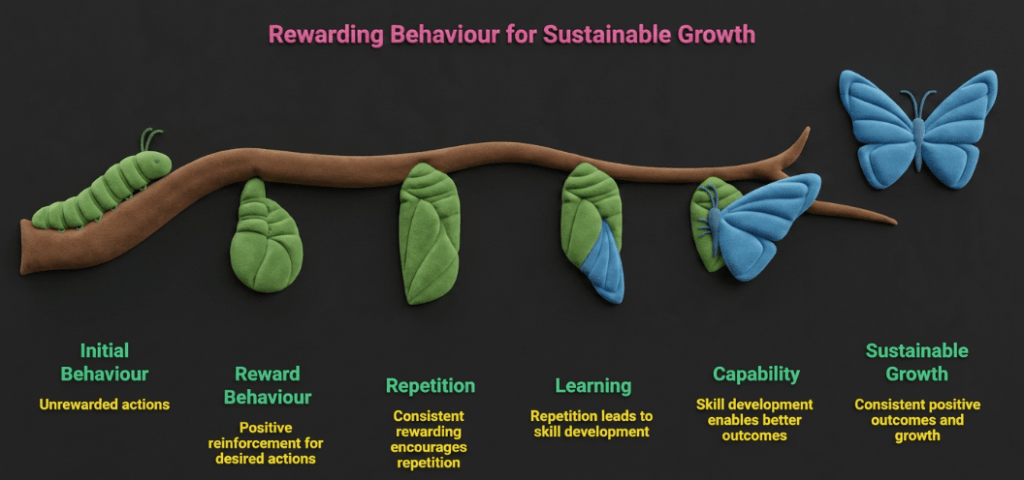
It makes the central idea instantly understandable and gives readers something useful to save or share.
Conclusion: What Are You Rewarding?
Perhaps the most important question is not, “Who achieved the best result?”
Perhaps it is:
“Who demonstrated the behaviour that we want to see repeated?”
Results will always matter. Businesses need revenue. Students need results. People have goals.
But when we learn to notice the behaviour behind those goals, we become a little more patient with ourselves and a little more thoughtful with others.
The next time someone is trying hard but hasn’t reached the finish line yet, pause before judging the outcome. Look at the journey. What are they learning? What are they doing consistently? What is beginning to improve?
And if you are a leader, parent, entrepreneur or simply someone trying to improve your own life, ask yourself one honest question today:
“Am I rewarding the behaviour that can create the future I want?”
I’d genuinely love to hear your perspective.
What behaviour has made the biggest difference in your life—even before the result became visible? Share your experience in the comment section below.
If this article made you think of someone who could benefit from this perspective, please share it with at least one person. Sometimes one simple idea reaches someone at exactly the right moment.
And if you haven’t subscribed yet, please subscribe through the email Subscription Box at the bottom of the page so you can receive future articles directly.
Frequently Asked Questions
1. Does rewarding behaviour mean results don’t matter?
Not at all. Results remain important. The idea is to recognise the behaviours that can consistently produce better results while still measuring the final outcome.
2. What behaviour should I reward?
Look for behaviours within a person’s control, such as consistency, preparation, learning, customer focus, honest communication, problem-solving, follow-up and resilience.
3. How can parents use this principle?
Parents can praise effort, discipline, curiosity and persistence rather than focusing exclusively on marks or achievements. This can help children develop healthier long-term habits.
4. How can business leaders apply it?
Leaders can recognise productive behaviours alongside results—for example, quality customer conversations, collaboration, learning from mistakes, innovation and disciplined execution.
5. What if someone keeps demonstrating good behaviour but gets no results?
That is an important signal to pause and review the process. Good effort does not automatically guarantee a good outcome. The behaviour may need to change, or the underlying strategy may need to be reconsidered. Recognition should encourage learning, not prevent honest evaluation.
Stay tuned!!






Leave a comment