

What if progress is not about doing the same thing more often, but about doing it a little better each time?
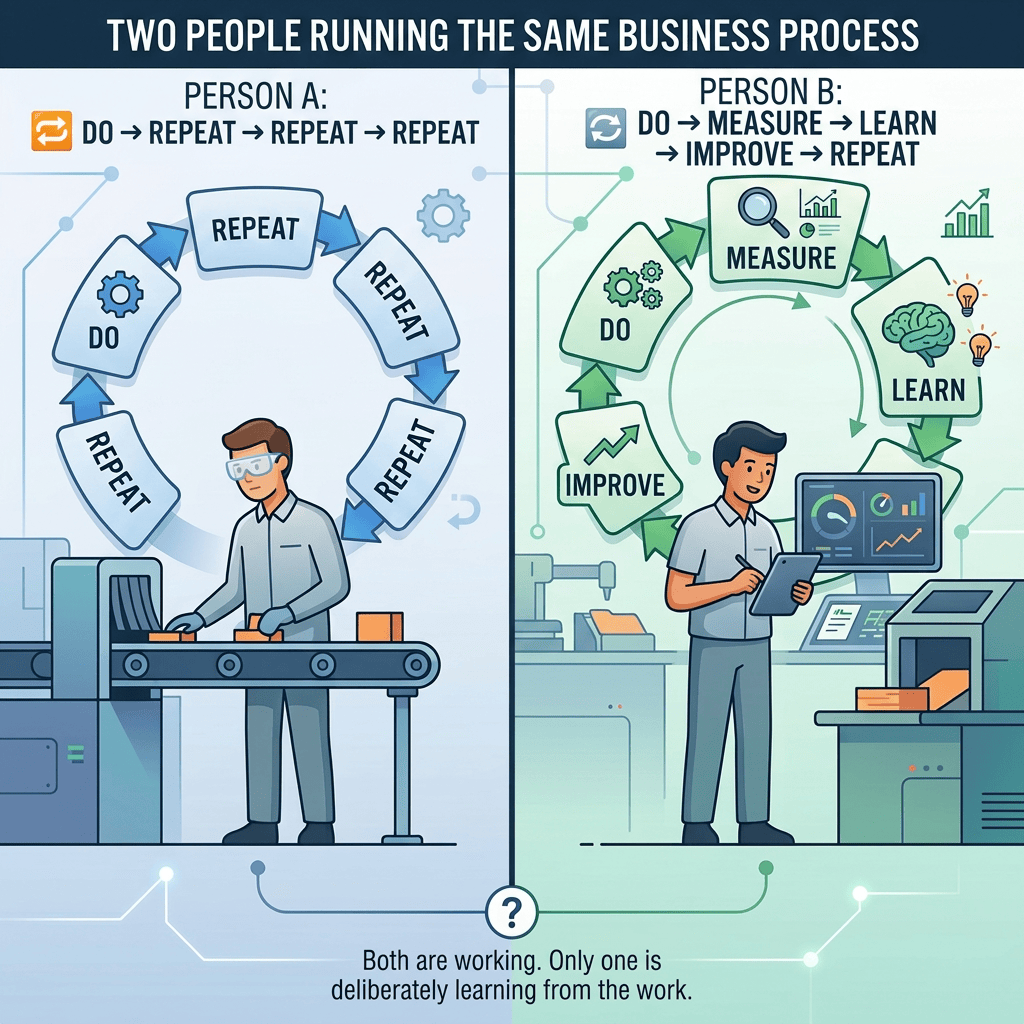
The illustration contrasts repetitive factory work with a deliberate cycle of measuring, learning, and improving.
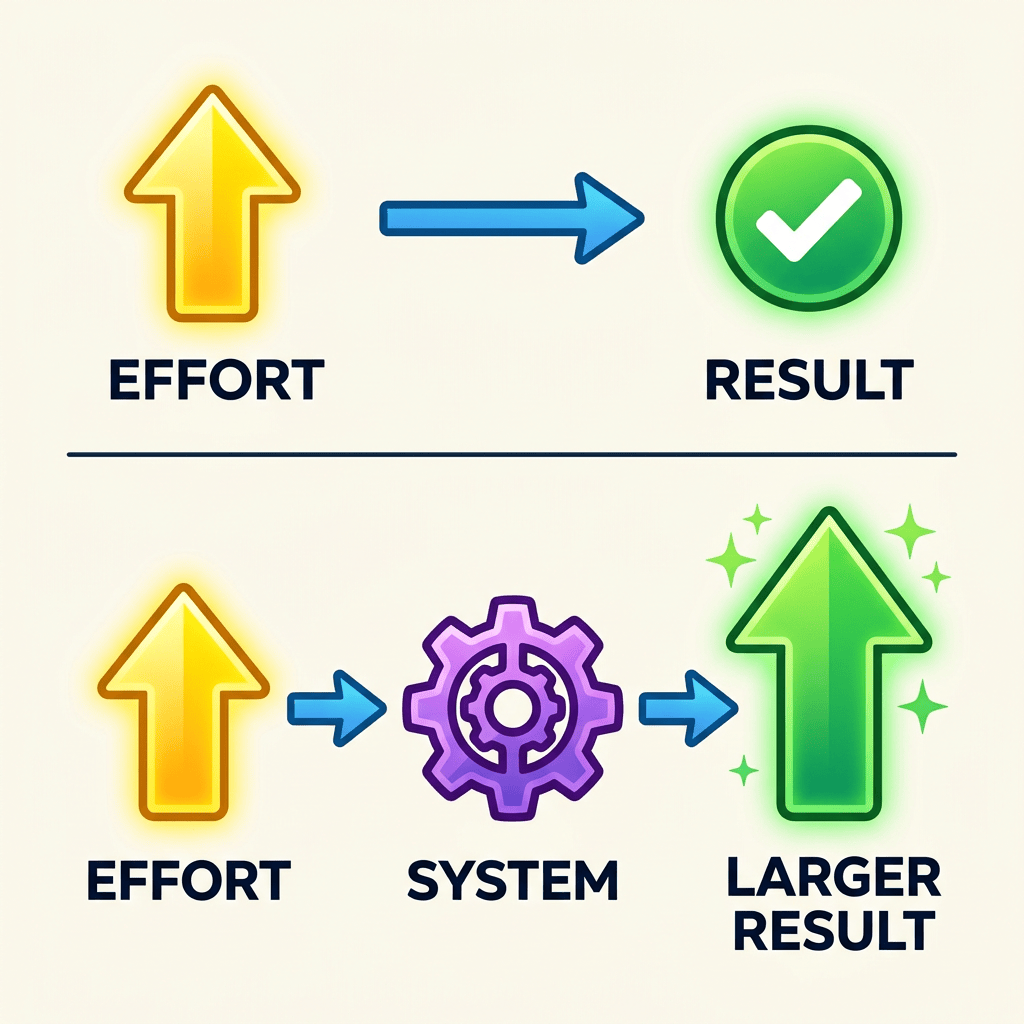
That is the difference between repetition and iteration. Add leverage to the process, and a small improvement can eventually create a much larger impact.
Iteration vs. Repetition
What Iteration Really Means
Repetition means doing something again. Iteration means doing it again after learning from the previous attempt.
A student who solves the same type of problem repeatedly is practising. A student who reviews mistakes, changes the approach and solves the next problem differently is iterating.
The same principle works at work:
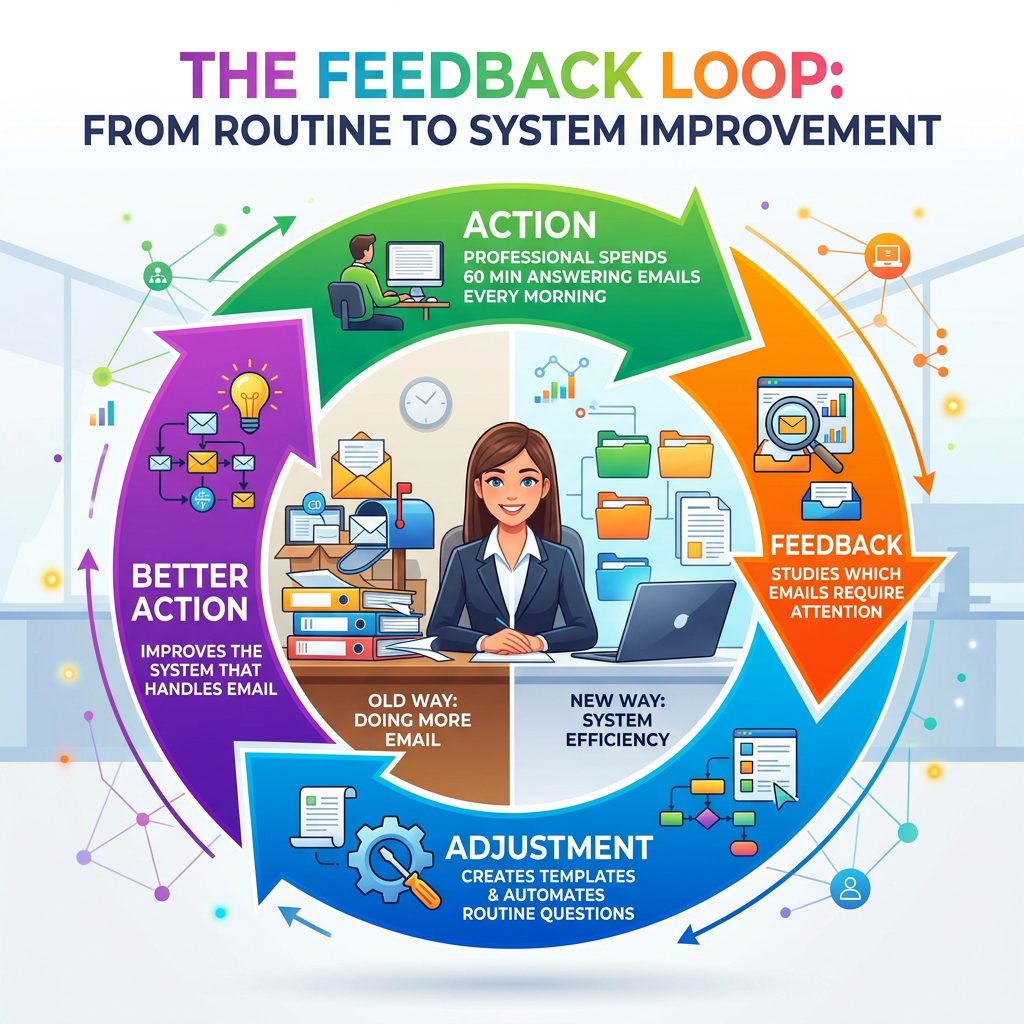
That is iteration.
Why Repetition Alone Can Keep Us Stuck
Repetition has value. Athletes, musicians and professionals need deliberate practice. But repetition without reflection can preserve an inefficient method.
Think of a treadmill. You can become exceptionally good at walking on it without changing your destination.
The useful question is therefore not simply:
“How many times have I done this?”
Ask instead:
“What did the last attempt teach me, and what will I change next time?”
That single question turns experience into improvement.
Understanding Leverage
Once an activity begins producing better results, the next question is: How can I multiply that result?
That is where leverage enters.
Leverage is the ability to use one resource to produce a larger output. In life and business, that resource could be technology, knowledge, capital, systems, people, content, relationships or reputation.
Leverage in Personal Life
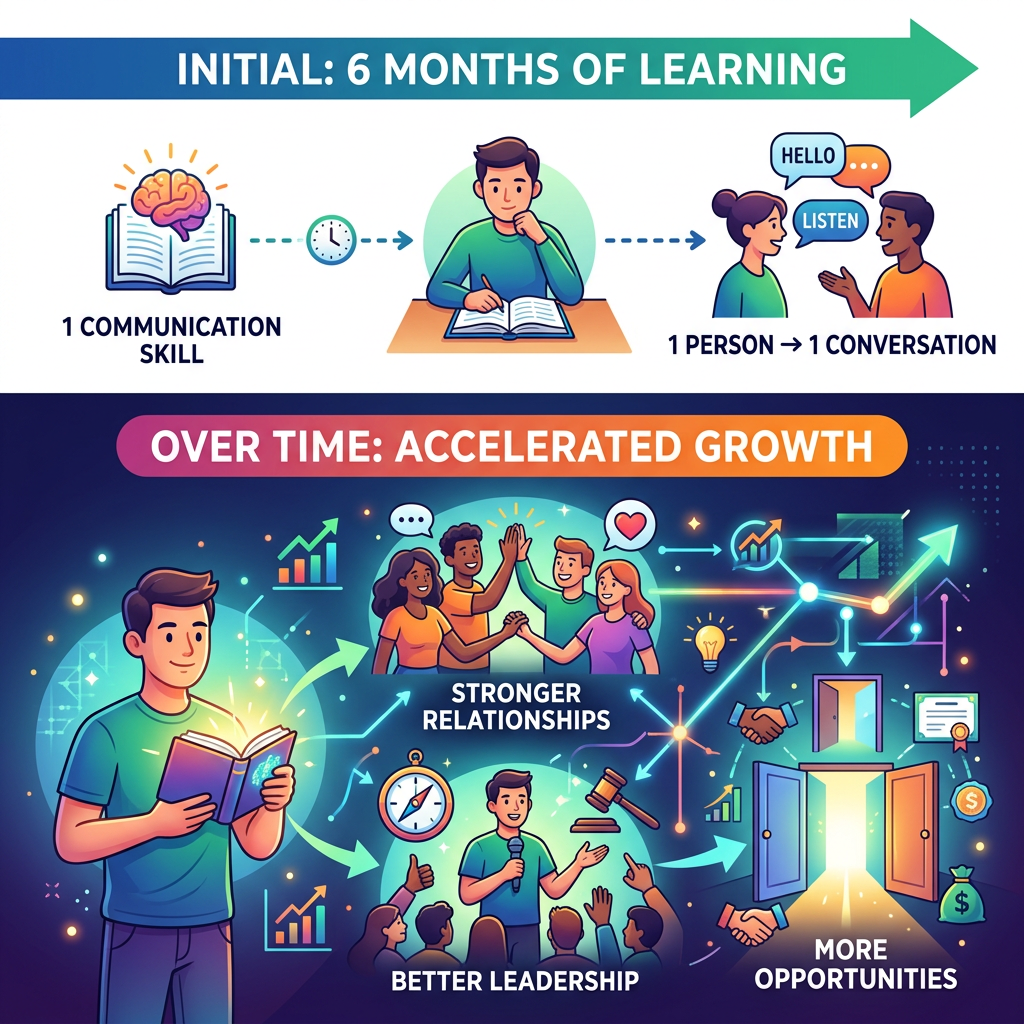
The original learning continues creating value long after the learning session has ended. That is personal leverage.
A useful habit can work similarly. If preparing tomorrow’s priorities takes 10 minutes each evening and consistently saves 30 minutes of confusion the following day, a small investment creates recurring value.
Leverage in a Doctor’s Clinical Practice
A doctor’s clinical practice provides a particularly powerful example because iteration and leverage must work together without compromising patient safety or professional judgment.
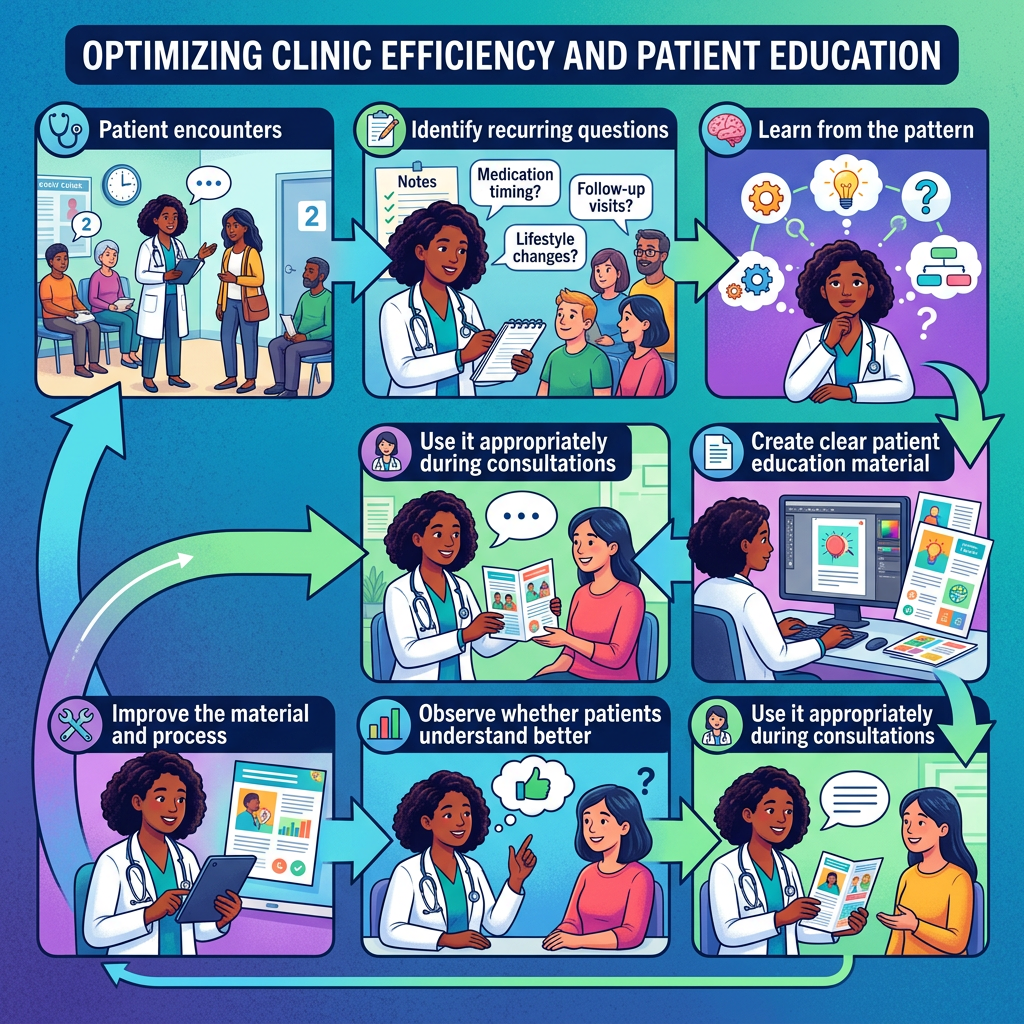
Without/With a support system:
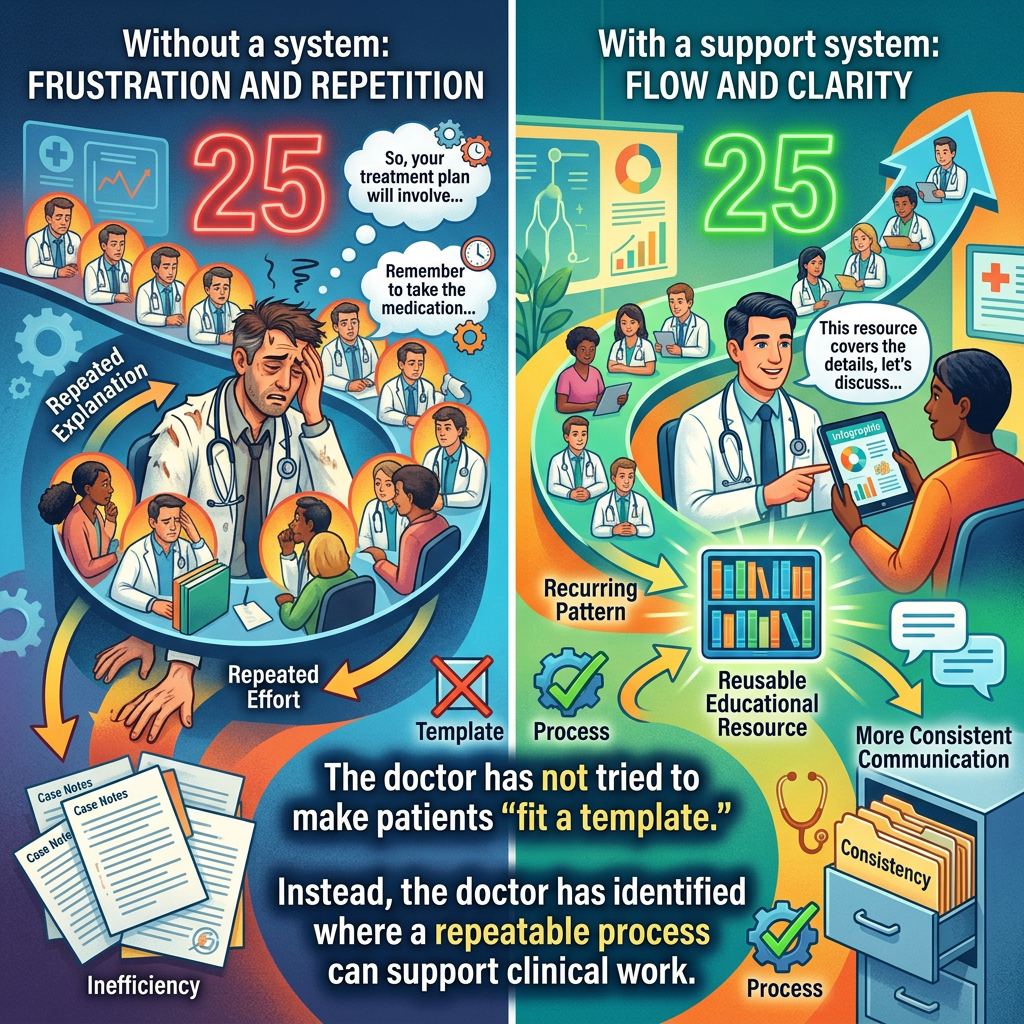
That is leverage.
And clinical iteration can go much deeper.
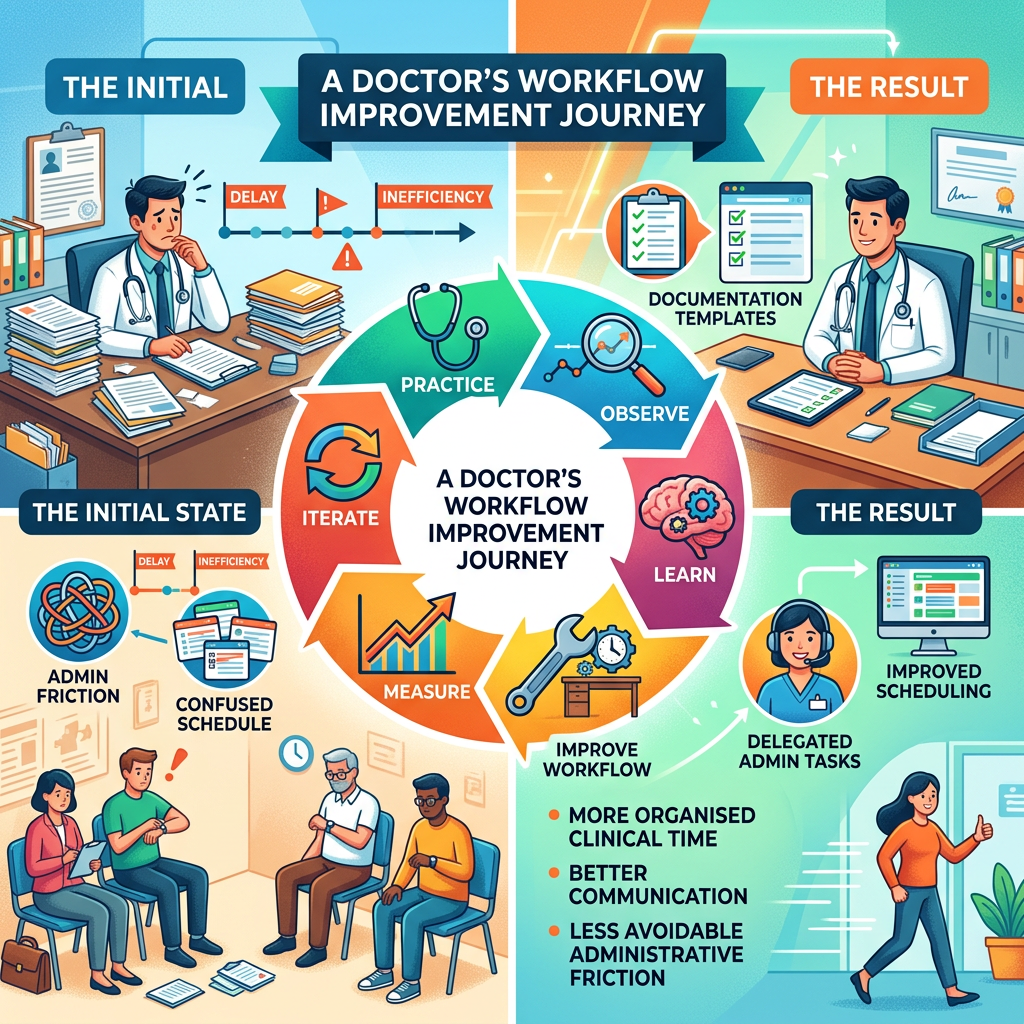
The key principle is simple:
A doctor should not merely repeat years of practice; the doctor should allow years of practice to improve the practice.
Experience becomes valuable when it produces learning.
Leverage in Business
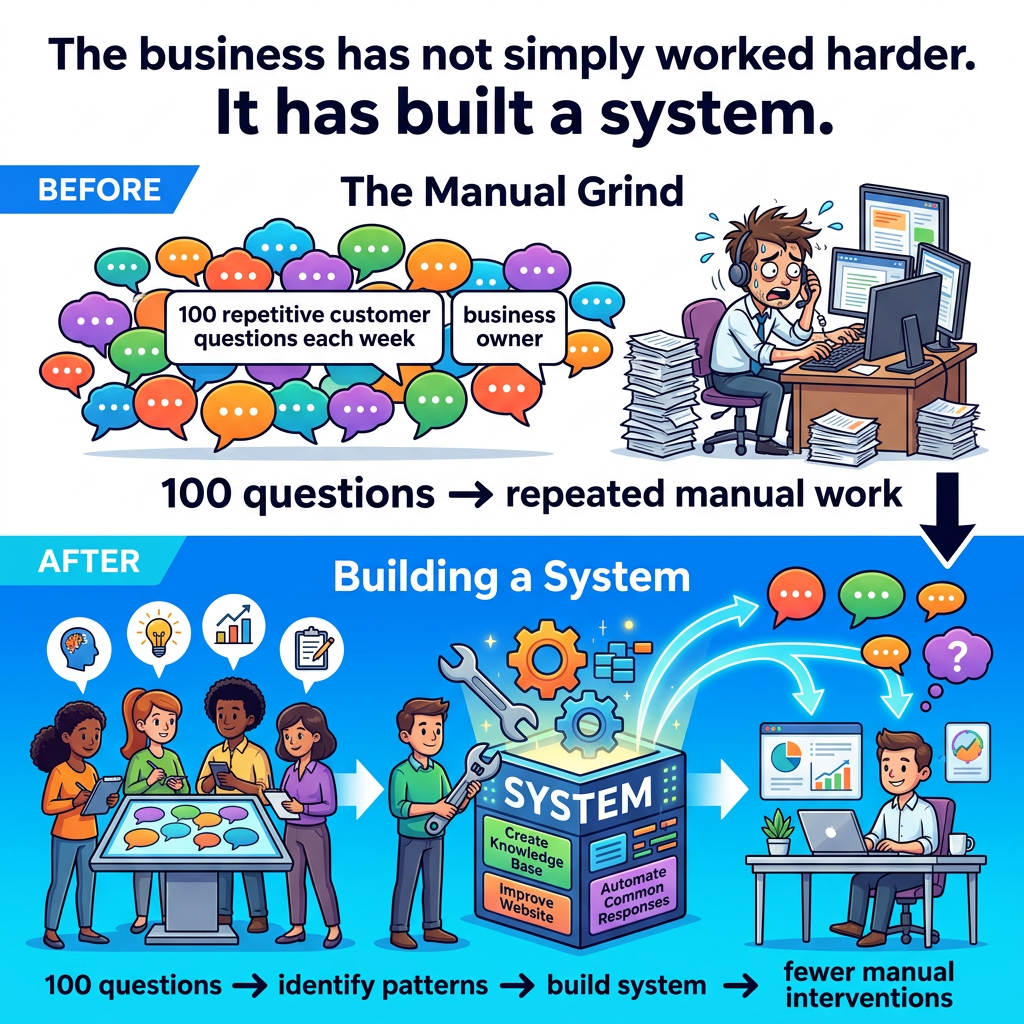
This is why iteration and leverage naturally belong together.
How Iteration and Leverage Work Together
Iteration discovers what works.
Leverage helps what works reach further.

Iteration found the improvement. Leverage multiplied it.
From Personal Growth to Leadership
This principle becomes increasingly important when an individual starts leading others.
A professional may initially improve through personal effort. A leader must eventually improve through systems and people.

The leader’s growth has moved from:
“How can I work better?”
to:
“How can I help the system work better?”
Understanding Your Thesis Early in Life
A personal thesis is a core belief about how you want to create value and make decisions.
It acts like a compass.
For example:
“I want to keep learning, build trusted relationships and create long-term value rather than chase short-term recognition.”
That thesis can influence hundreds of small decisions.
Should you learn another skill?
Should you build a relationship?
Should you accept an opportunity?
Should you spend another evening reacting to distractions?
Your thesis gives those decisions context.
A Thesis Shapes Professional Leadership
A leader might believe:
“People perform best when expectations are clear, responsibility is shared and feedback is honest.”
That belief can influence hiring, delegation, meetings and performance reviews.
The thesis does not guarantee success. It creates a consistent decision-making framework that can itself be improved through experience.
A Thesis Shapes Entrepreneurship
For an entrepreneur, the thesis might be:
“The strongest businesses solve an important customer problem repeatedly and profitably.”
That belief encourages the entrepreneur to listen to customers, test products, measure economics and improve the business model.
The thesis becomes the main path; iteration determines how effectively that path is travelled.
Lessons From Indian and Global Leaders
Several well-known business leaders demonstrate aspects of this thinking.
N. R. Narayana Murthy and Infosys provide an example of how professional processes, technology and organisational systems can help turn individual expertise into an enduring institution.
Ratan Tata operated within a large business group where long-term strategy, professional management and global expansion required decisions that extended well beyond any individual’s daily effort.
Satya Nadella’s leadership at Microsoft illustrates the importance of adapting an established organisation to changing technology and customer needs, particularly around cloud computing. The broader lesson is that even very large organisations must continue learning and adjusting.
Jeff Bezos and Amazon provide another widely discussed example of customer-focused experimentation and long-term thinking. Amazon’s development of technology infrastructure and services also demonstrates how capabilities created for one purpose can become leverage for entirely new businesses.
The common thread is not a single formula. It is the willingness to learn, adapt, build systems and scale useful capabilities.
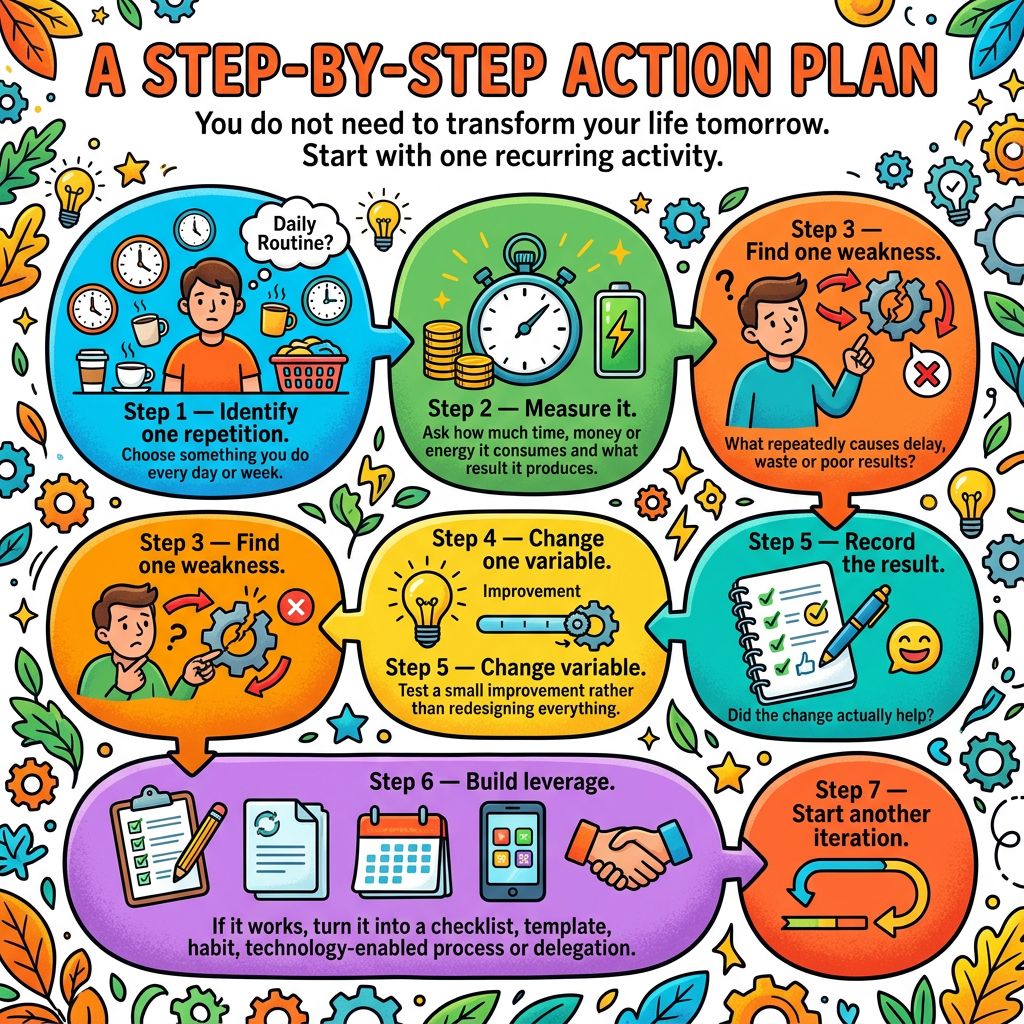
A Step-by-Step Action Plan
You do not need to transform your life tomorrow. Start with one recurring activity.
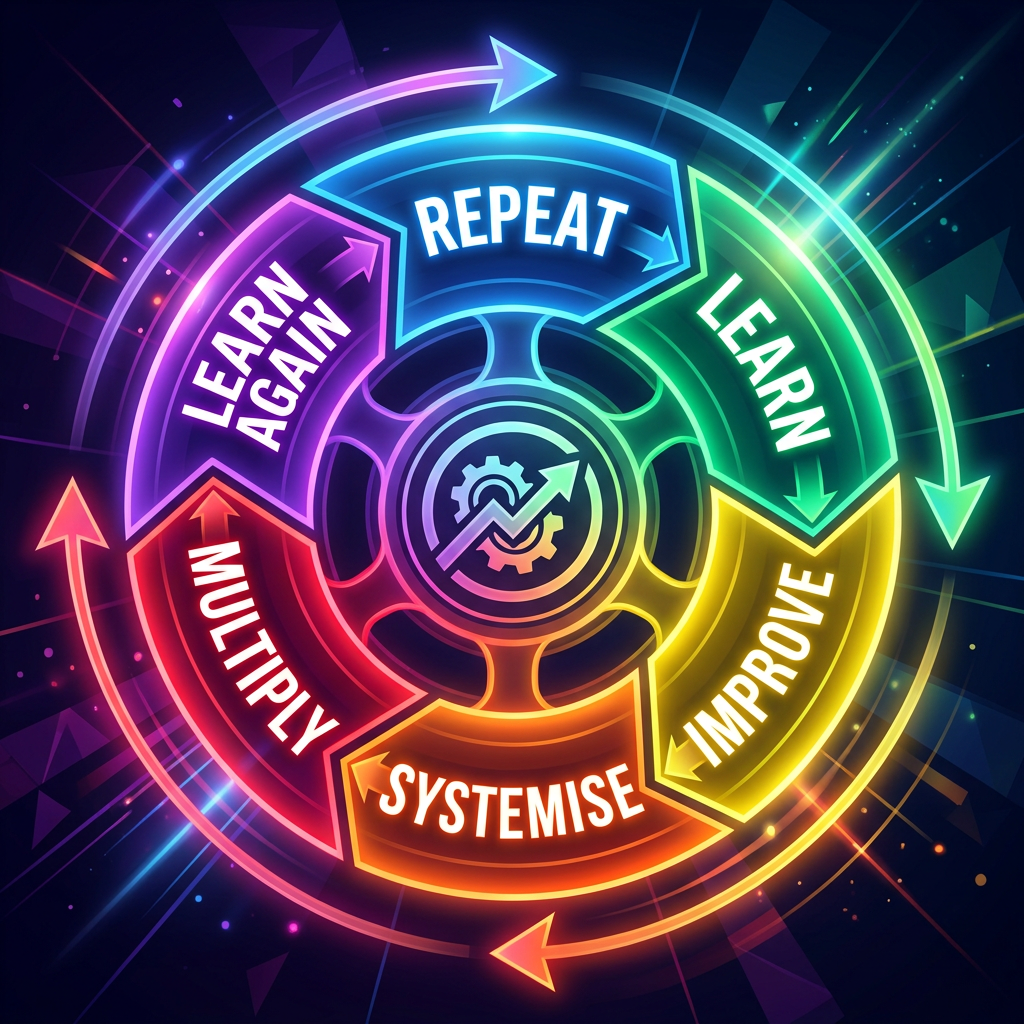
The flywheel becomes:
Conclusion: Change What You Repeat
The central lesson is simple:
Do not automatically repeat an activity just because you have always done it. Improve the activity, then build leverage around the improvement.
Your next step can be remarkably small.
Choose one recurring activity in your personal or professional life. Measure its result. Find one thing that can be improved. Test the change. If it works, build a system around it.
That is how ordinary actions can become extraordinary over time:
Iteration creates improvement.
Leverage multiplies improvement.
A clear thesis keeps improvement moving in the right direction.
💬 What is one activity in your life or business that you should stop merely repeating and start improving? Please share your experience in the comments below.
📤 If this article helped clarify the idea, please share it with at least one person who could benefit from understanding iteration and leverage.
📧 And if you haven’t subscribed yet, please subscribe through the Subscription Box at the bottom of the page for future articles on leadership, business and personal growth.
FAQs
1. What is the simplest difference between iteration and repetition?
Repetition repeats an action; iteration repeats an action after learning from the previous attempt and making an adjustment.
2. What is leverage in everyday life?
Leverage means using a resource—such as knowledge, technology, relationships, systems or habits—to create a result greater than the original input alone.
3. Why does iteration matter in business?
Markets and customers change. Iteration allows businesses to test assumptions, learn from evidence and improve products, processes and decisions before scaling them.
4. How can I find my personal thesis?
Look at the principles you want to guide your decisions over many years. Ask: “What kind of value do I want to create, and what do I want my daily choices to support?”
5. What should I do after reading this article?
Pick one recurring activity today, measure its outcome and identify one improvement. Don’t try to change everything at once. Start one iteration.
Stay tuned!!
Image Disclaimer: Images used in this article are provided for illustrative, educational, and informational purposes only. Any company names, brand names, logos, trademarks, products, services, or other identifiable brand elements appearing in an image are the property of their respective owners. Their inclusion does not imply any endorsement, sponsorship, partnership, affiliation, or association with the author, publisher, or this website. The images are intended solely to help explain or visualize the concepts discussed in the article.






Leave a comment