Design your inner-self, build your dream business!!
Boring Is Not Cool, But It Quietly Changes Life and Business
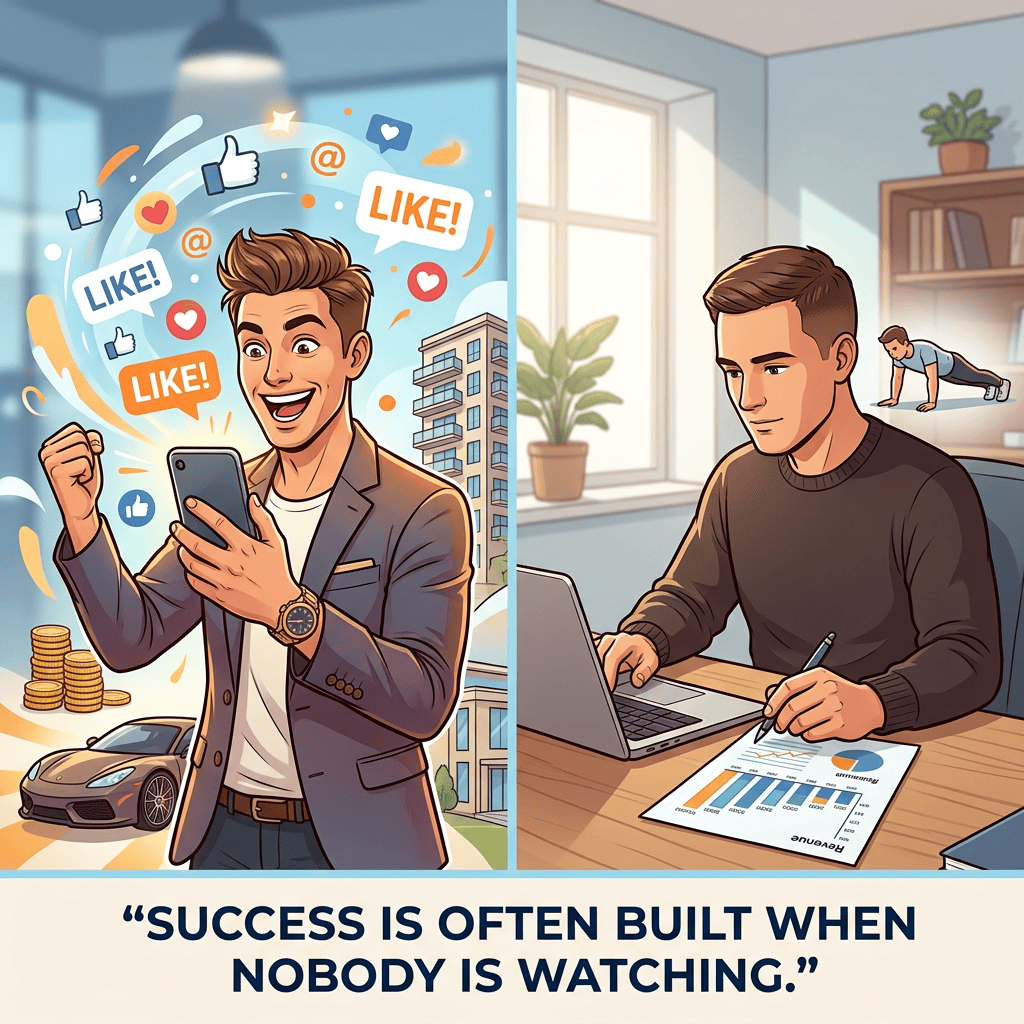
The illustration contrasts social-media excitement with the quiet, focused work behind lasting success.
We live in a world that celebrates new, fast and flashy. Social media shows us the launch, the celebration and the success story, but rarely the thousands of ordinary actions behind them.
The truth is uncomfortable: lasting success is often boring.
Reading, exercising, saving money, calling customers, checking business numbers and improving a product may not look spectacular. But repeated consistently, these ordinary actions can completely change a life or business.
“The magic is not in doing something extraordinary once. It is in doing ordinary things extraordinarily consistently.”
Why Boring Habits Create Extraordinary Results
“Small actions look insignificant today. Their accumulated effect can become enormous tomorrow.”
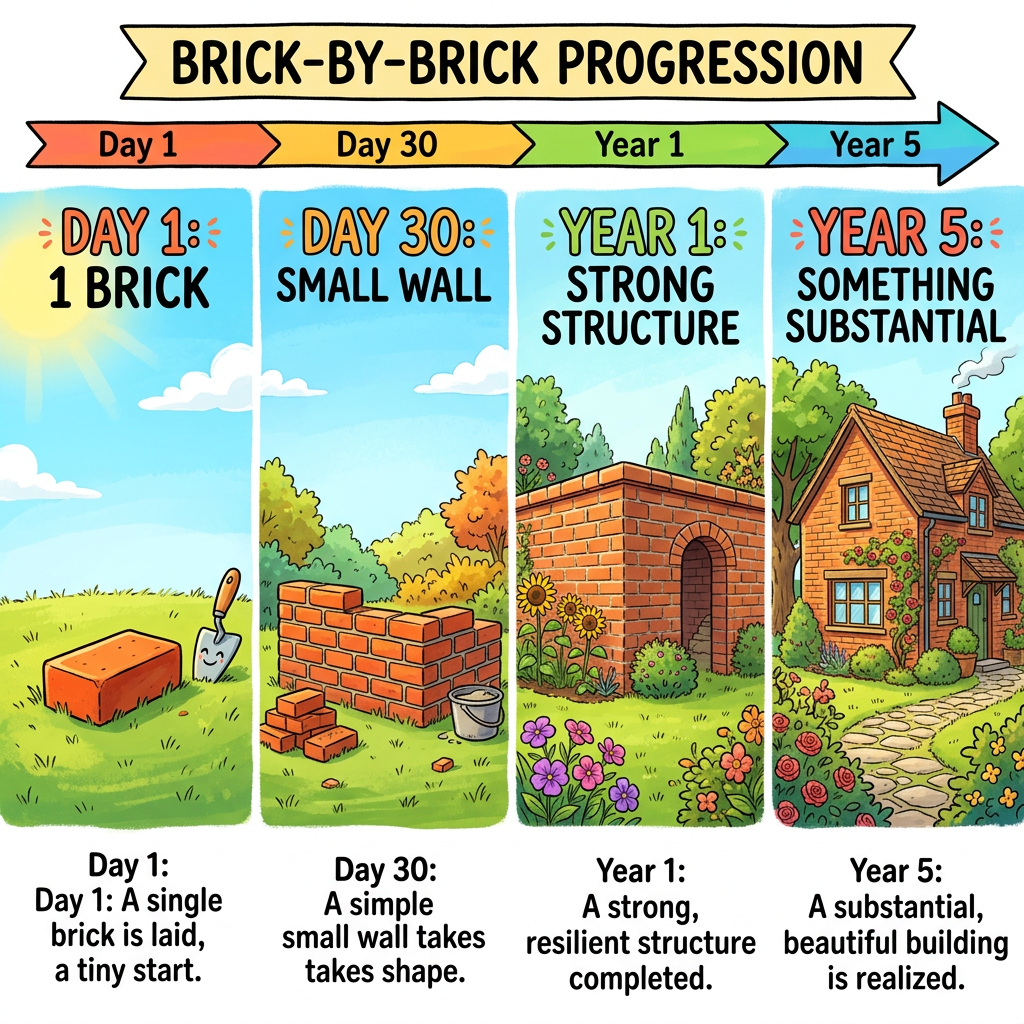
A colorful brick-by-brick timeline shows how small beginnings can become something substantial over five years.
Think about brushing your teeth. You don’t brush once and expect healthy teeth for life. You repeat the same ordinary action because you understand its long-term value.
Life and business work similarly. One sales call may achieve nothing. One workout may change nothing. One hour of reading may teach you very little.
But repeat those actions for years and the result can be completely different.
Takeaway: Don’t judge a valuable habit by today’s result. Judge it by what repeated effort could create over time.
Why Flashy Success Gets More Attention
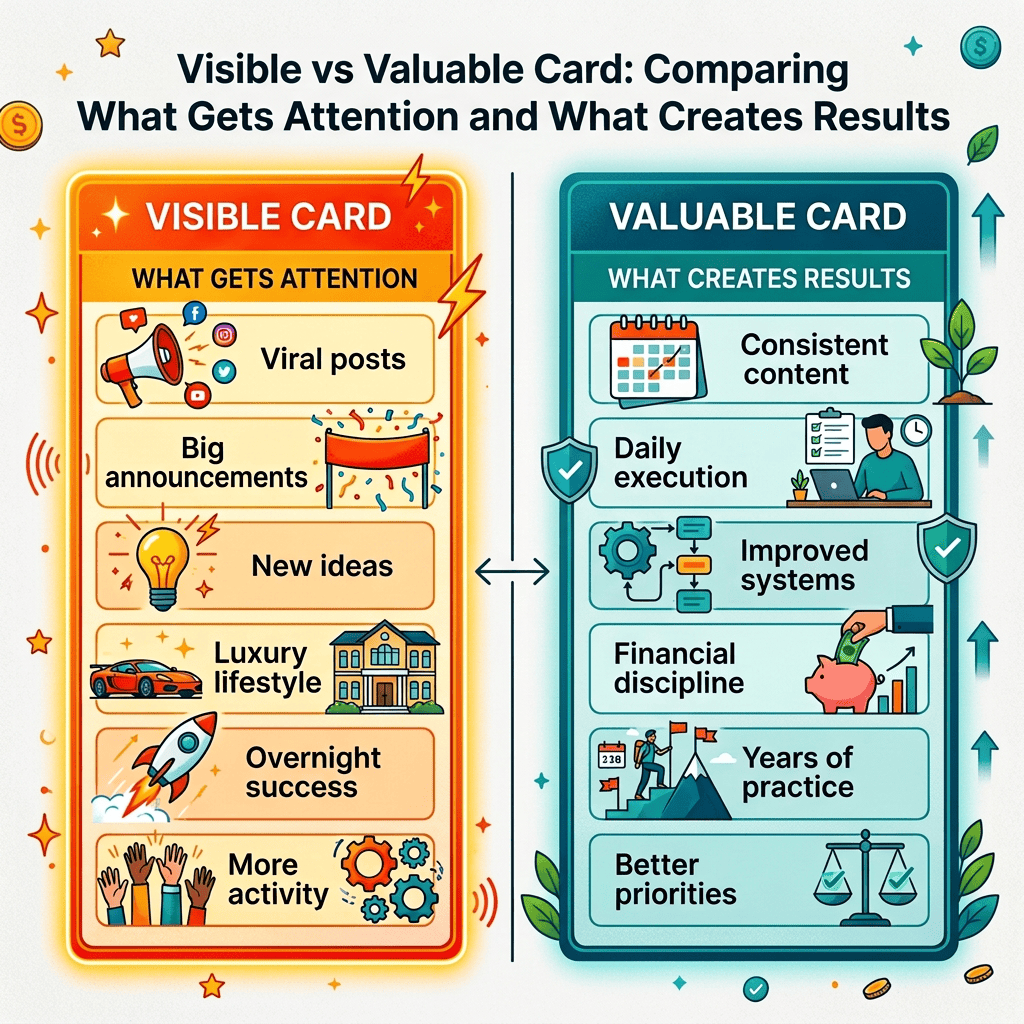
The comparison shows why lasting results come from consistent effort, strong systems, and disciplined priorities—not just attention-grabbing ideas.
We often confuse visibility with progress.
A company may have spectacular advertising but poor customer service. An entrepreneur may constantly announce new ideas but never execute them.
Meanwhile, a quieter competitor may be steadily improving its product, retaining customers and managing its finances.
Takeaway: Before chasing something exciting, ask: “Will this matter three years from now?”
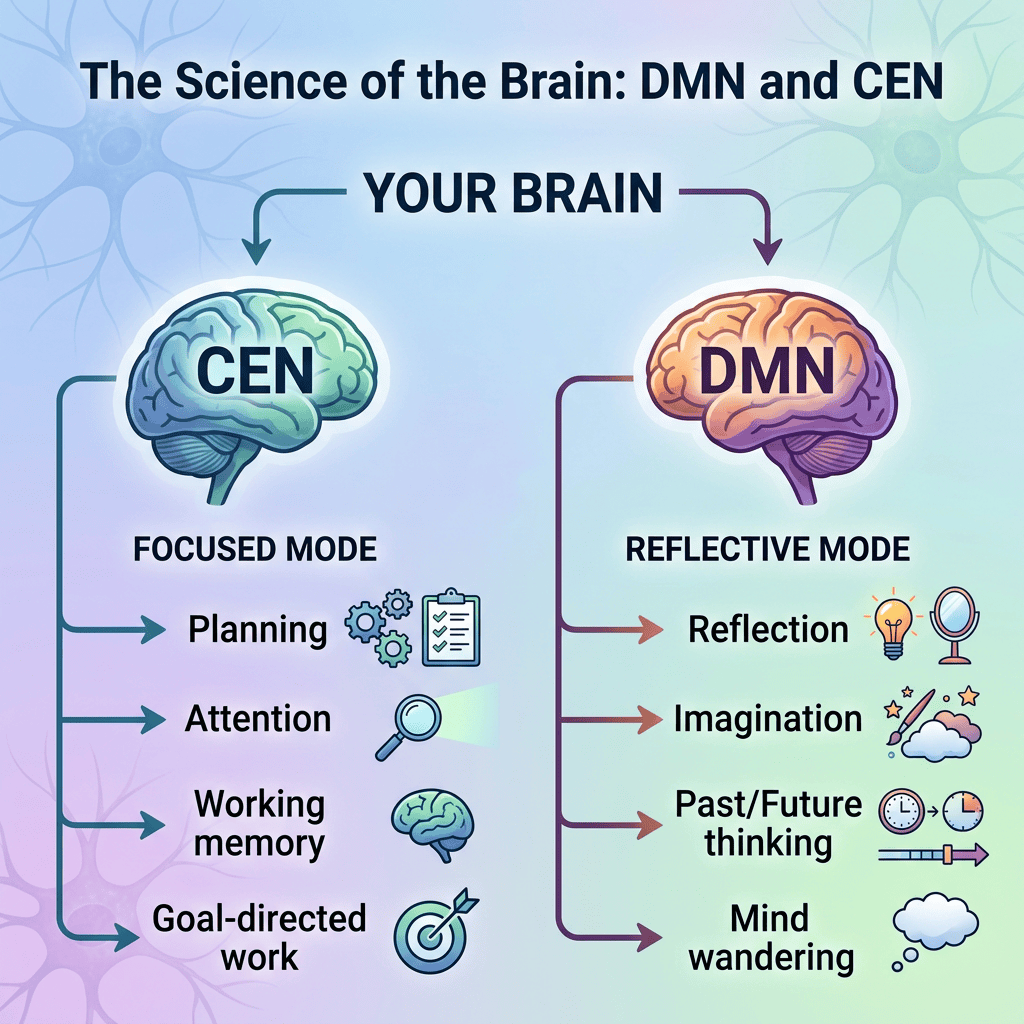
An illustrated comparison of the brain’s focused and reflective modes through the CEN and DMN networks.
The Central Executive Network (CEN) is strongly involved in goal-directed attention, planning and working memory.
The Default Mode Network (DMN) is associated with internally directed activities such as reflection, imagination and autobiographical thinking.
They aren’t simply an “on/off” productivity switch. But the concepts give us a useful way to understand why humans need both focused work and mental recovery.
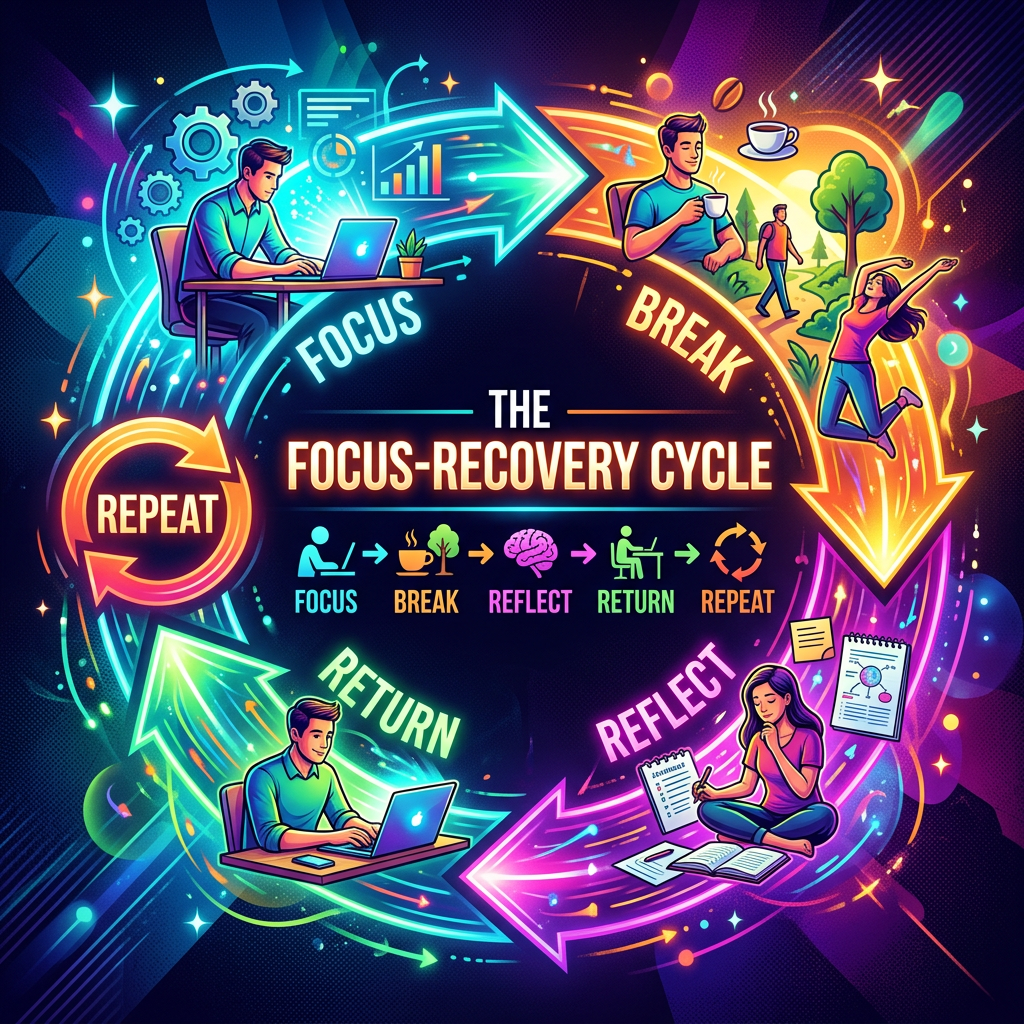
The Focus-Recovery Cycle
This vibrant infographic illustrates how focused work, restorative breaks, reflection, and returning create a repeatable productivity cycle.
“Don’t try to concentrate forever. Build a rhythm that your brain can sustain.”
If someone has ADHD, difficulty sustaining attention should not be treated as laziness. ADHD is a neurodevelopmental condition that can affect attention and executive functioning. Smaller work periods, external structure, reduced distractions and professional support can be helpful.
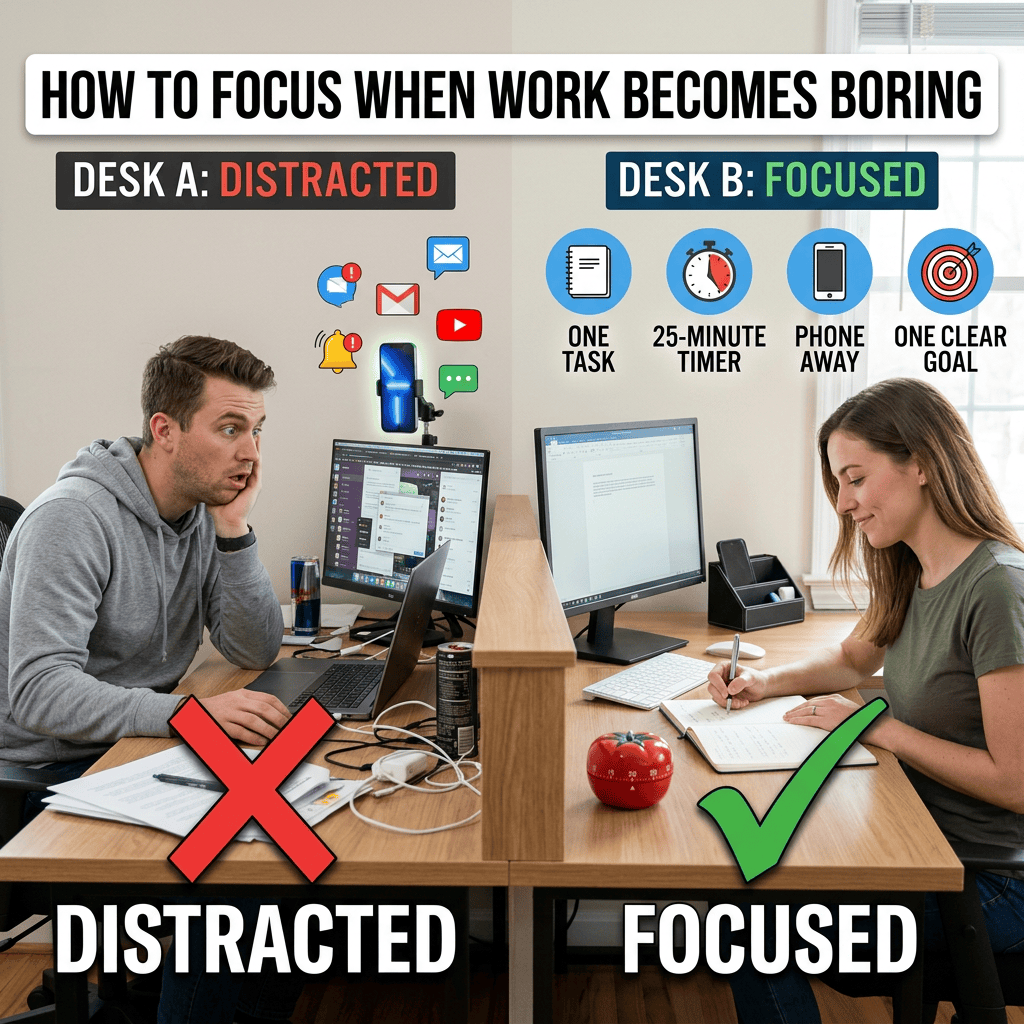
A split-screen comparison shows how reducing distractions and using focused-work habits can improve productivity.
Imagine you are trying to contact potential customers. You sit down at 9:00 a.m., but your phone buzzes. You check one message, then social media, then a video. Suddenly, 30 minutes are gone.
The problem may not be a lack of ambition.
The environment won.
So make the task specific:
“From 9:00 to 9:30, I will contact five potential customers.”
Put your phone away. Close unnecessary tabs. Set a timer.
Takeaway: Don’t depend entirely on willpower. Design your environment to protect your attention.
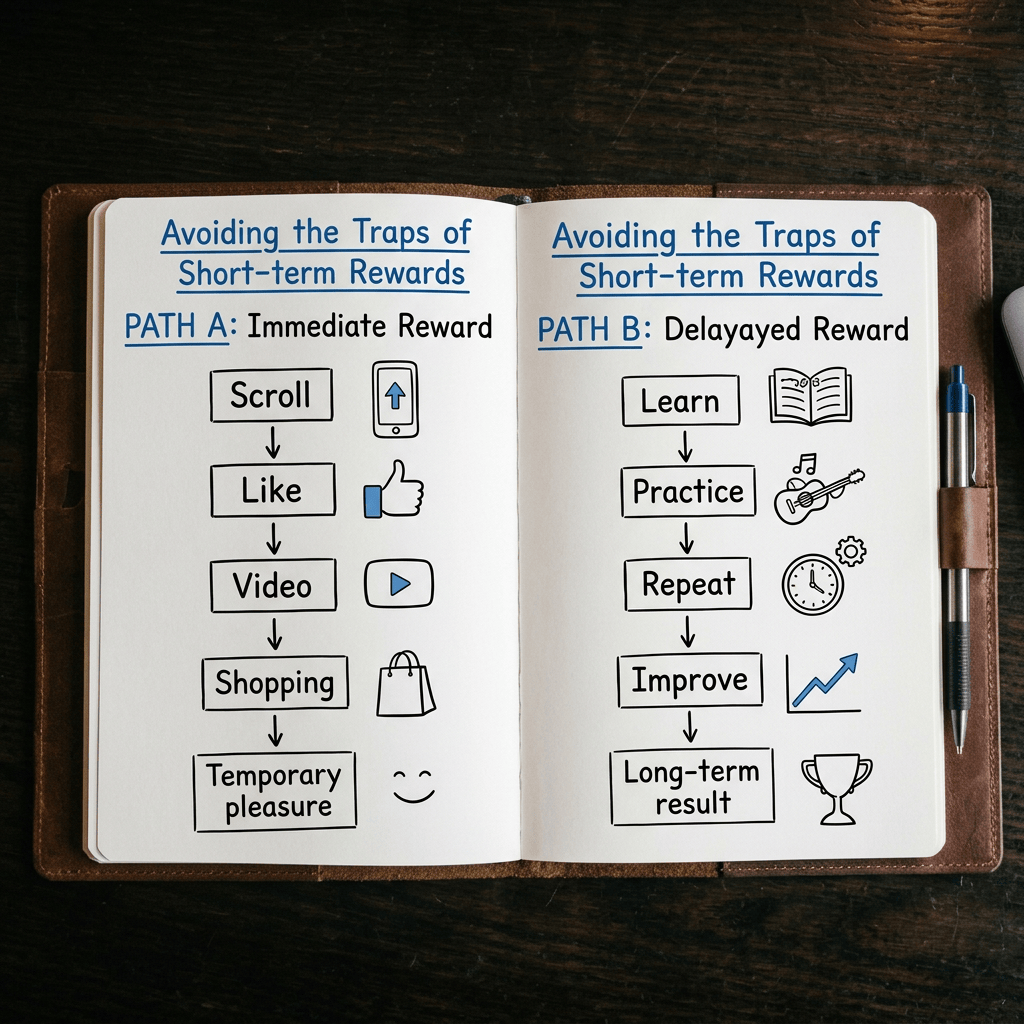
A notebook contrasts the cycle of instant gratification with the steps toward lasting improvement.
Short-term rewards aren’t automatically bad. The problem starts when they repeatedly steal time from important goals.
Ask yourself:
“Would I make the same choice if I could see its consequences three years from now?”
That pause can prevent an impulsive decision.
Successful Businesses That Mastered the Boring Stuff
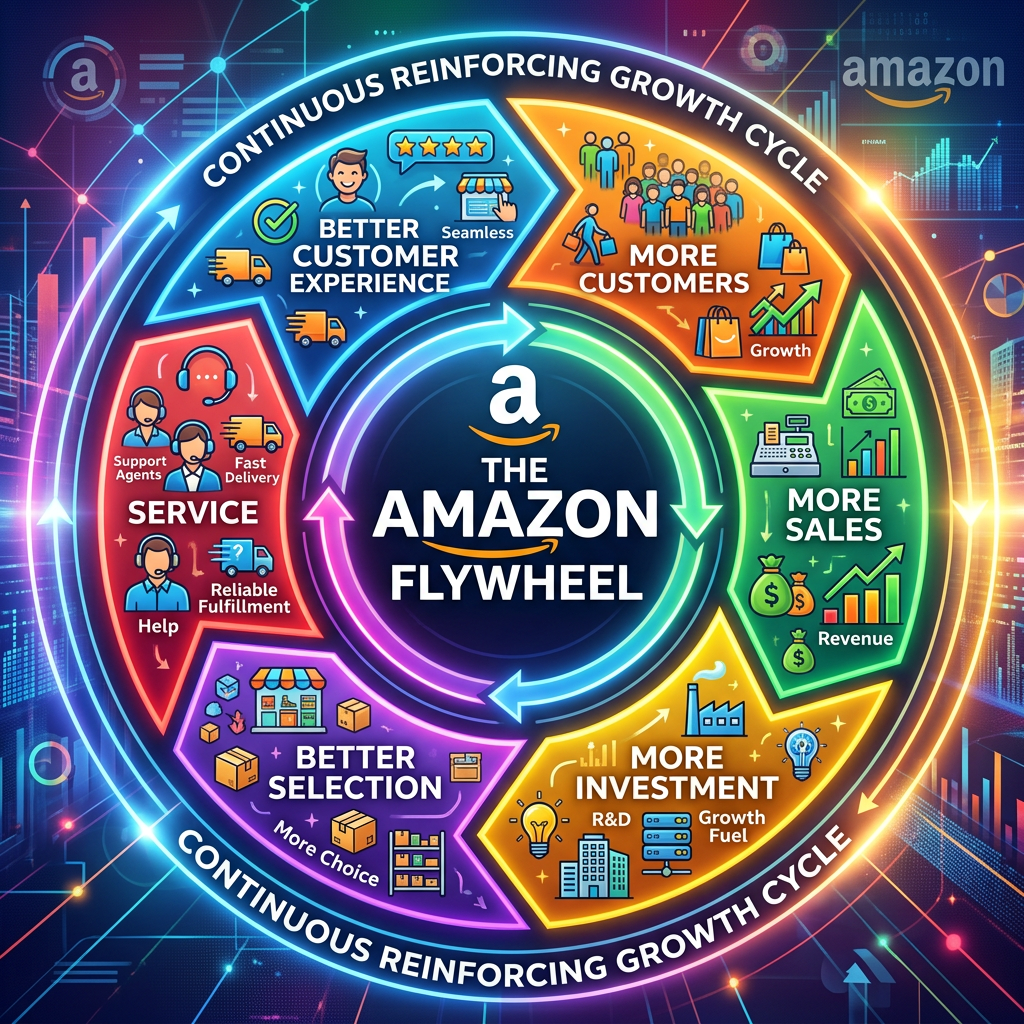
Amazon: Customer Obsession and Operations
The Amazon flywheel illustrates how customer experience, selection, service, and investment reinforce growth and sales.
Amazon is associated with innovation, but its growth also required repetitive execution—improving logistics, reducing customer friction, expanding selection and refining operations.
Jeff Bezos emphasized long-term market leadership in Amazon’s early shareholder communications.
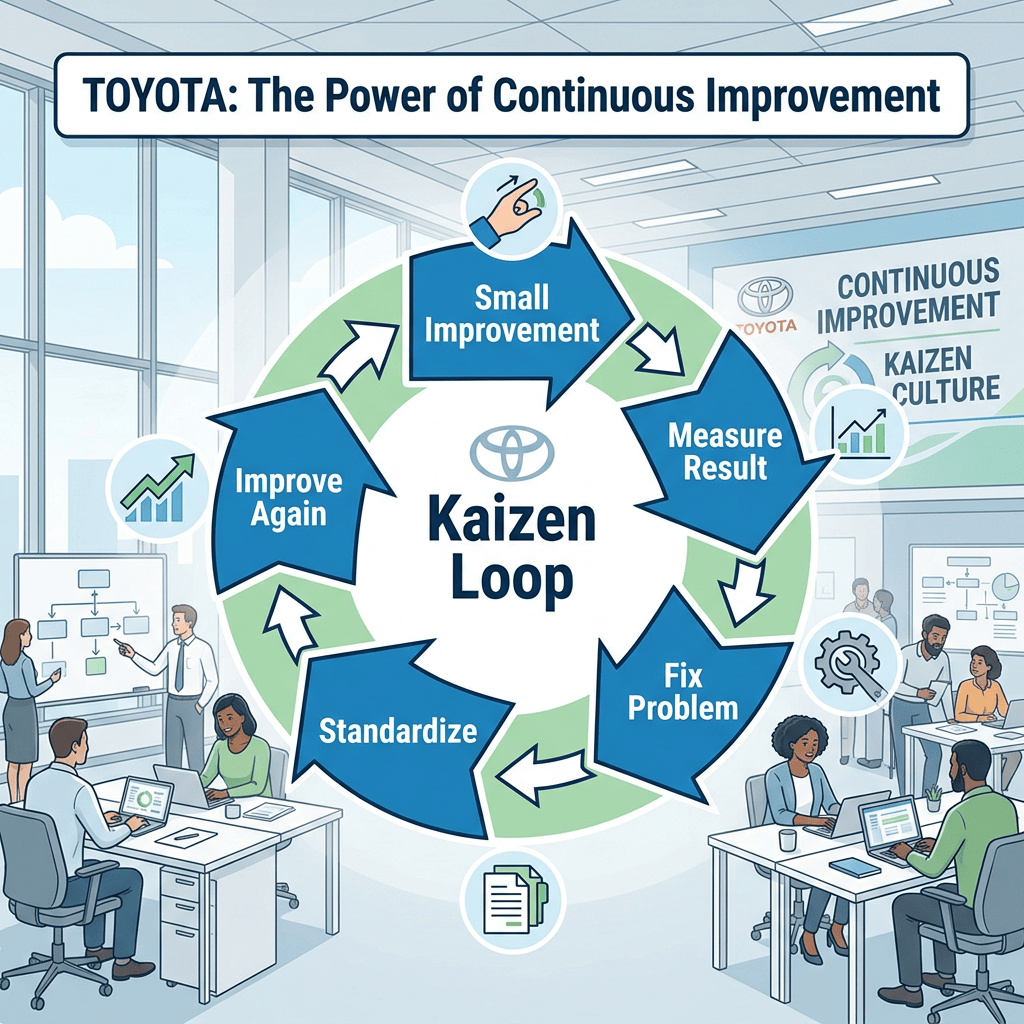
Toyota’s Kaizen Loop illustrates how small improvements drive measurable, repeatable progress.
Toyota’s Production System became globally influential through concepts including standardized work, waste reduction and continuous improvement.
None sounds glamorous.
That’s exactly the point.
Takeaway: The process everybody ignores may contain your biggest competitive advantage.
Successful Individuals Who Embraced Consistency
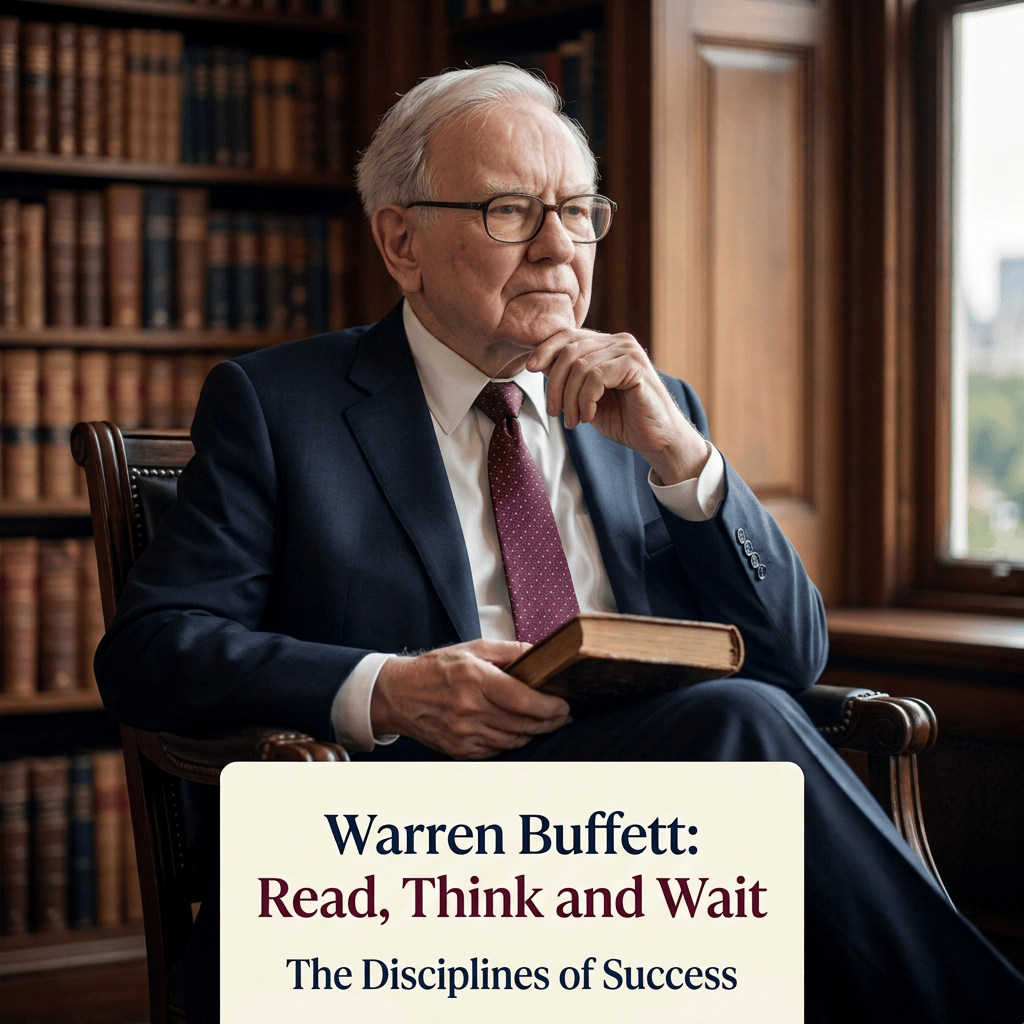
A contemplative portrait of Warren Buffett highlights reading, patience, and disciplined thinking.
“The stock market is designed to transfer money from the Active to the Patient.” — Warren Buffett
Buffett’s career demonstrates the value of reading, thinking carefully and waiting for opportunities rather than constantly acting.
The broader lesson is powerful:
Sometimes your competitive advantage is knowing when not to act.
Ratan Tata: Quiet, Long-Term Leadership
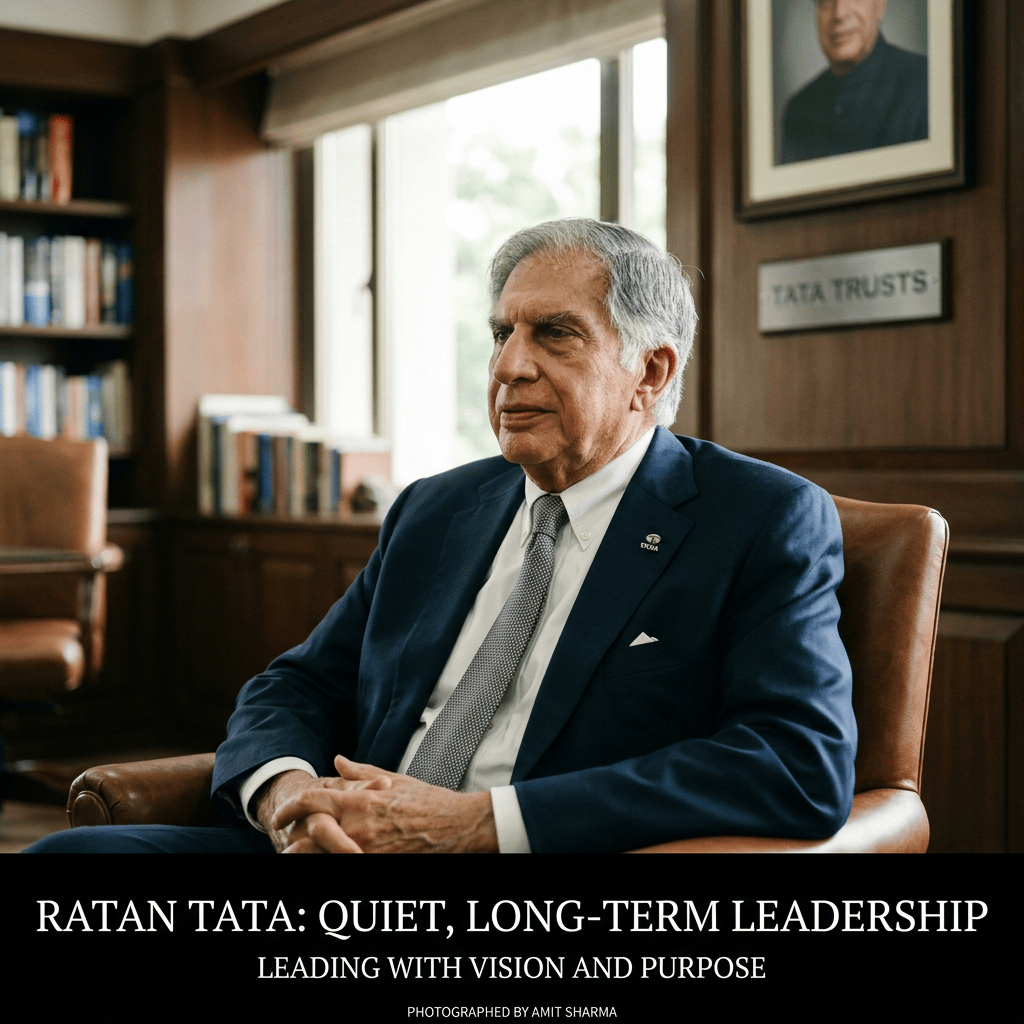
Ratan Tata sits thoughtfully in an office portrait titled “Quiet, Long-Term Leadership.”
His leadership became associated with institution building, values and long-term thinking.
His example reminds us:
Leadership isn’t about being the loudest person in the room. It’s about making responsible decisions when nobody is watching.
How Leaders and Entrepreneurs Can Apply This
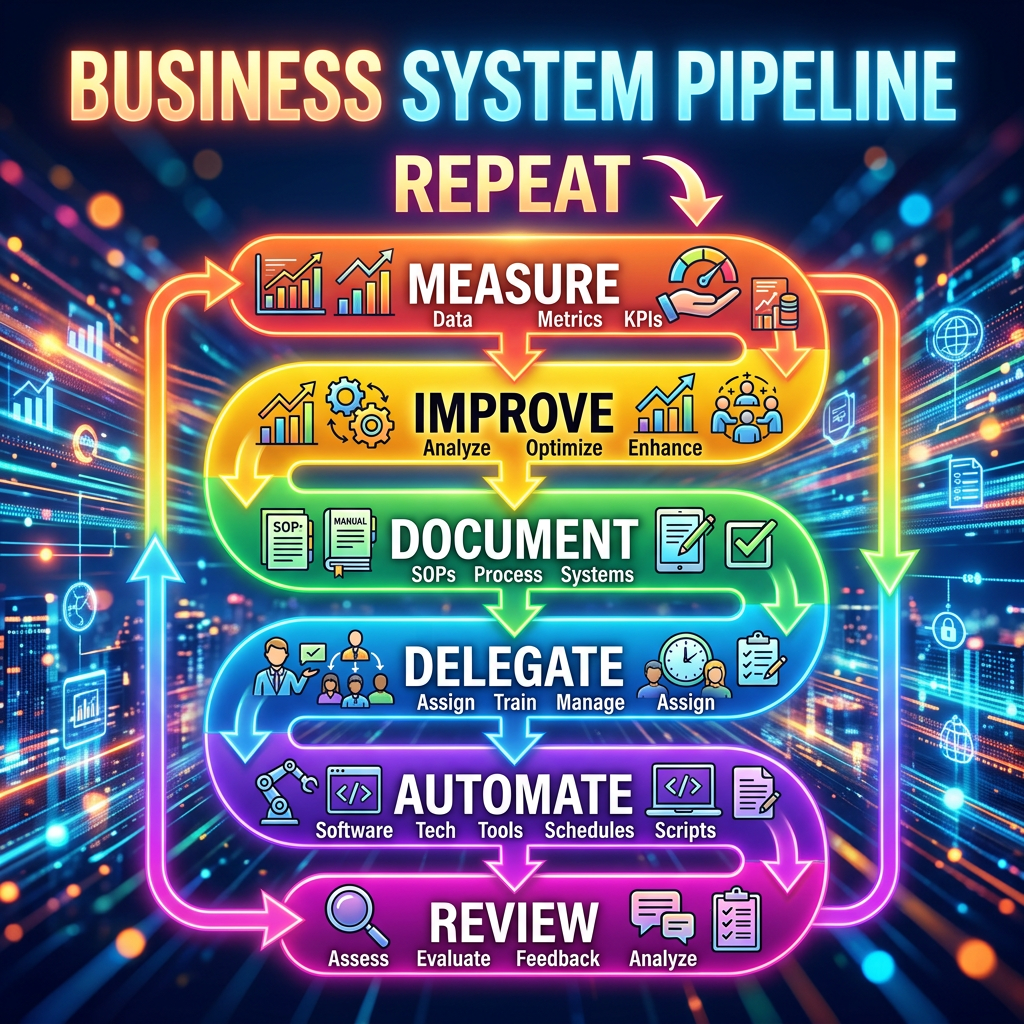
A vibrant pipeline illustrates how businesses measure, improve, document, delegate, automate, and review operations in a repeating cycle.
A leader should recognize more than dramatic achievements. Reward reliability, customer service, process improvement and problem prevention.
Entrepreneurs should identify their boring growth engine—customer follow-ups, sales calls, financial reviews, product testing, content creation or employee coaching.
The objective isn’t to remain stuck doing repetitive work forever.
The objective is to turn repetition into a system.
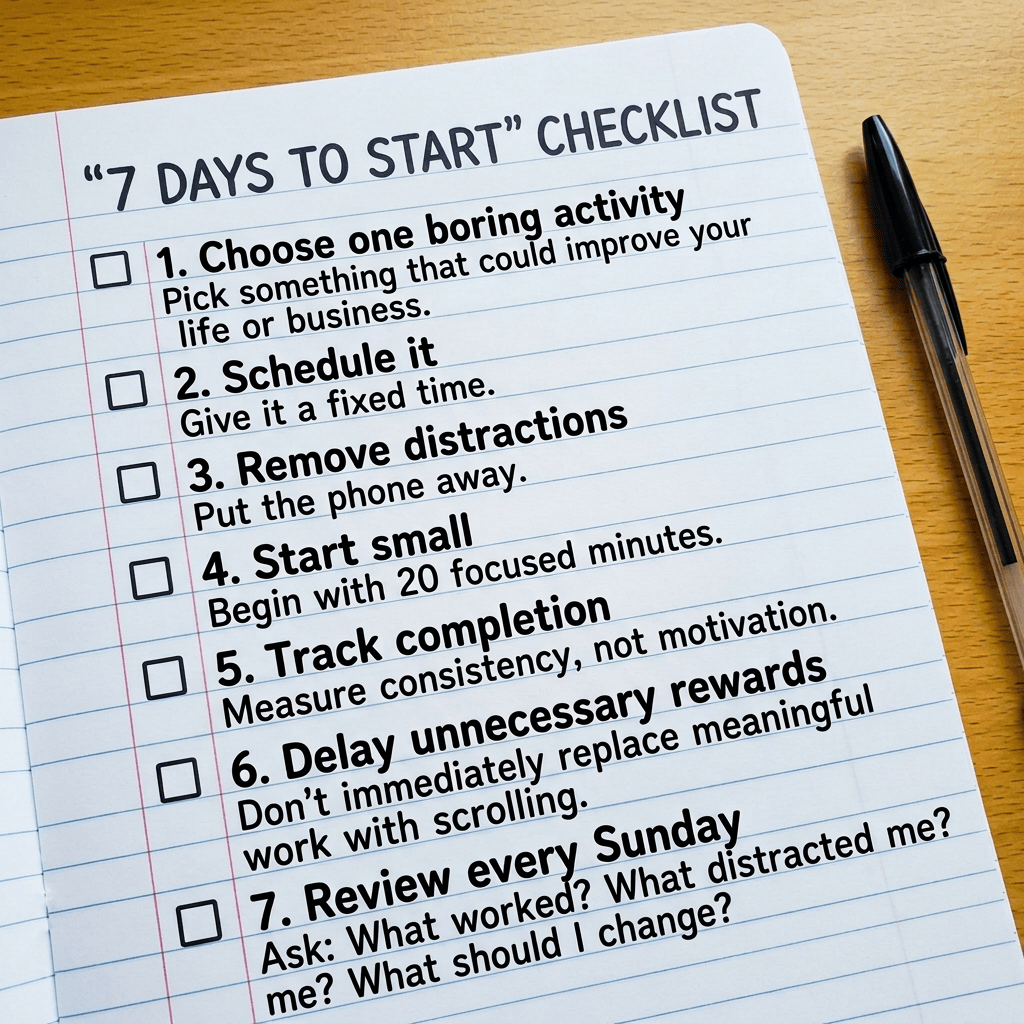
A Simple 7-Step Action Plan
A practical seven-day checklist outlines simple steps for building consistent, focused habits.
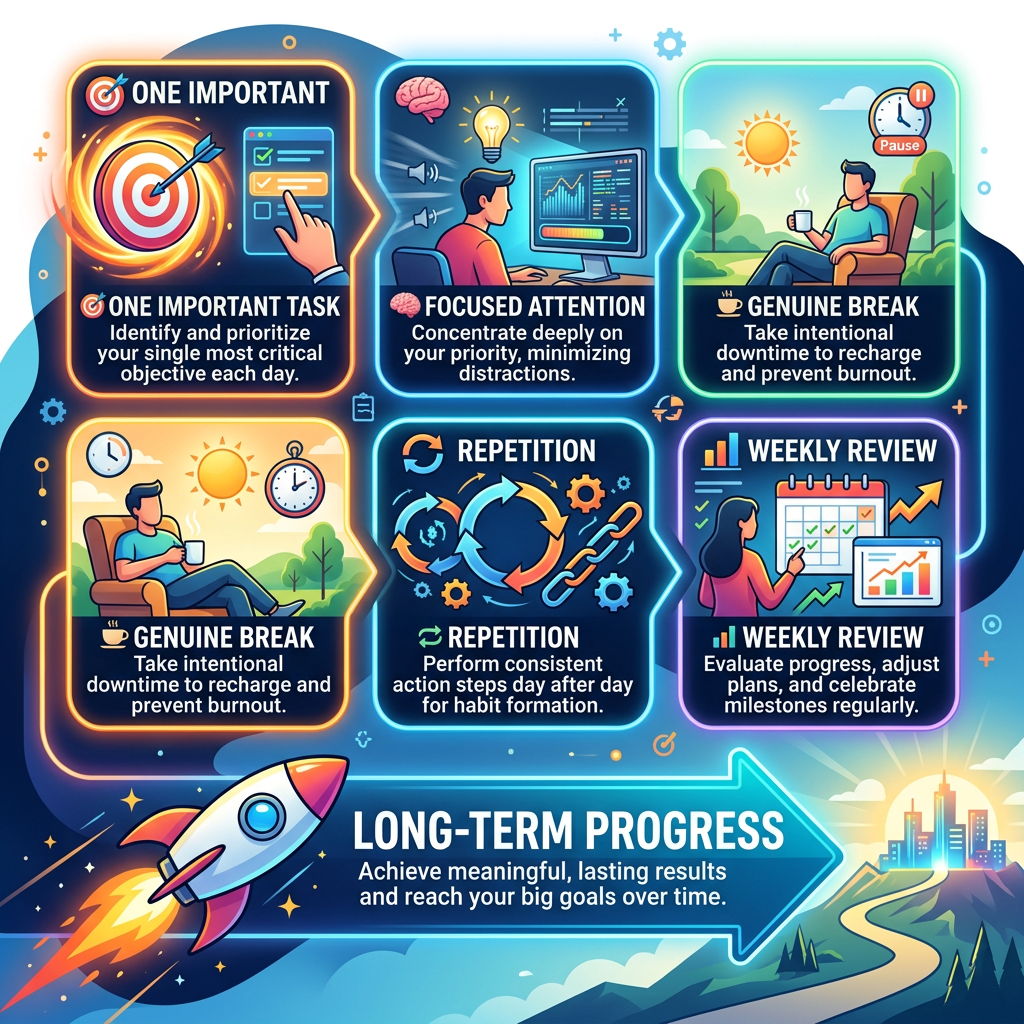
Your Daily Formula
This colorful infographic outlines six practical habits for turning daily focus into long-term progress.
Conclusion: The Quiet Advantage
Don’t focus on other people’s progress, stay focus on your progress!
“Stop competing for attention. Start competing with your yesterday.”
Boring is not cool. But boring can be incredibly powerful.
The habits that build successful lives and businesses rarely create fireworks. They look ordinary: another page read, another customer called, another workout completed, another financial review, another product improvement and another day of showing up.
The people who learn to tolerate boredom, delay unnecessary rewards and protect their attention gain something increasingly valuable in today’s distracted world: the ability to stay focused on what actually matters.
You don’t need to eliminate excitement from your life. Enjoy creativity, adventure and new opportunities. Just don’t allow novelty to become the boss of your attention.
Your future may be hiding inside the boring things you keep postponing today.
So, here’s the challenge:
What is one boring activity that could transform your life or business if you repeated it for the next 12 months?
Tell us in the comment section below. Your answer might give another reader the push they need.
If this article changed the way you think about consistency, pleaseshare it with at least one person who needs to understand this message.
And if you haven’t subscribed yet, please enter your email in the Subscription Box at the bottom of the page. Stay connected and receive future articles directly in your inbox.
Image Disclaimer: Images used in this article are provided for illustrative, educational, and informational purposes only. Any company names, brand names, logos, trademarks, products, services, or other identifiable brand elements appearing in an image are the property of their respective owners. Their inclusion does not imply any endorsement, sponsorship, partnership, affiliation, or association with the author, publisher, or this website. The images are intended solely to help explain or visualize the concepts discussed in the article.
The content emphasizes that lasting success stems from consistent, ordinary actions rather than flashy achievements celebrated on social media. It discusses the importance of developing boring yet effective habits, such as reading and improving processes, which yield significant long-term results. Focusing on these habits can lead to sustainable growth and progress.
Gen Z, shaped by technology and social media, has unique traits that influence their workplace behavior. Understanding their motivations, like seeking purpose and feedback, can unlock their potential. Instead of viewing them as challenging, leaders should embrace flexibility, trust, and meaningful communication to foster innovation and improve workplace dynamics.
The phrase “Fly high, but keep your feet anchored on the ground” embodies the balance between ambition and humility. It emphasizes the importance of learning from past experiences while pursuing future goals. This principle applies across various domains, including personal growth and business, encouraging individuals to remain grounded even as they strive for greatness.
The article explores the relationship between light reflection and human behavior, emphasizing that while we absorb challenges and negativity, we can choose how to reflect positivity and resilience. It highlights the importance of intentional behavior in personal and professional life, shaping reputation and leadership identity through consistent actions and values.
The content emphasizes that personal growth is the most valuable asset in both life and business. It argues that knowledge, attitude, and relationships are crucial for overcoming challenges. By investing in oneself early and consistently, individuals enhance their ability to lead and create value, transforming both their lives and businesses over time.







 Wining Life & Business
Leave a comment