

What if achieving success is not just about working harder, but also about learning to stop resisting the very things that can help you move forward?
One powerful concept I came across through David Bayer is the equation:
Desire + Non-Resistance = Desired Result
A simple philosophy with profound implications for life, leadership and business.
At first glance, this equation looks simple. But understanding and practising it can fundamentally change how we approach our personal lives, professional responsibilities, leadership roles and businesses.
1. Understanding the Equation: Desire + Non-Resistance = Desired Result
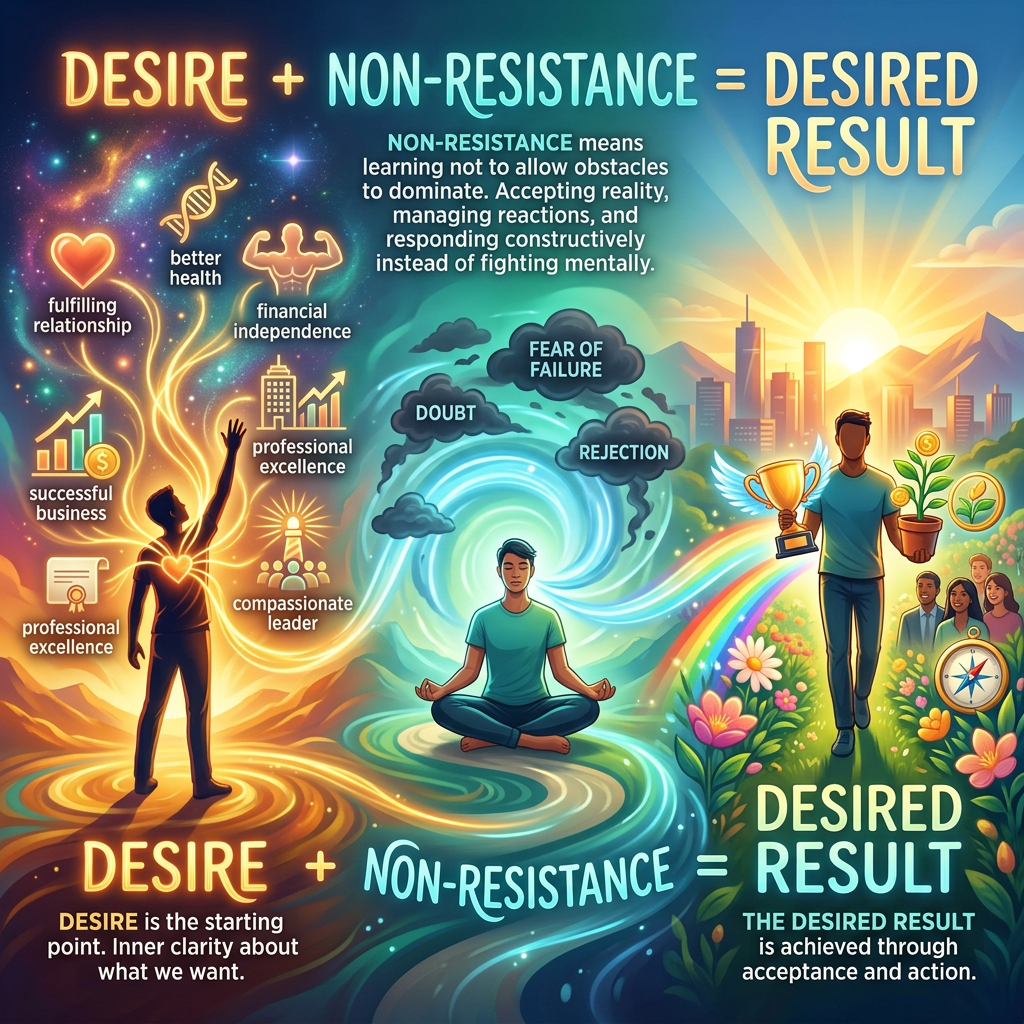
Desire is the starting point of every meaningful achievement. It is the inner clarity about what we want to become, accomplish or experience. It could be better health, a fulfilling relationship, professional excellence, financial independence, a successful business or becoming a compassionate leader.
However, desire alone is not enough. Many people have wonderful dreams but unknowingly create resistance through fear, self-doubt, overthinking, negative assumptions, impatience and the constant need to control outcomes.
Non-resistance means learning not to allow these internal obstacles to dominate our thinking and actions. It does not mean giving up, avoiding challenges or accepting injustice. It means accepting reality as it is, managing our emotional reactions and responding constructively instead of fighting circumstances mentally.
When desire provides direction and non-resistance removes unnecessary internal obstacles, our actions become more focused, consistent and effective.
2. The Impact of Non-Resistance in Personal Life

Imagine someone who desires a healthy and happy family life. However, every disagreement becomes an argument, every mistake becomes an accusation and every unexpected situation creates frustration.
The desire is present, but resistance prevents its fulfilment.
Practising non-resistance means listening before reacting, accepting that people have different perspectives and choosing understanding over unnecessary conflict. It allows us to respond thoughtfully rather than emotionally.
Similarly, a person aspiring to achieve professional success may constantly compare themselves with others, fear failure or become frustrated by delays. Non-resistance helps them accept their present circumstances without abandoning their ambition.
The real transformation happens when we stop wasting energy resisting what has already happened and start investing that energy in what we can influence.
3. The Impact of Non-Resistance in Business

In business, desire represents the vision: growth, profitability, customer satisfaction, innovation and long-term sustainability.
But entrepreneurs often resist market realities, customer feedback, competition, changing technology and even their own mistakes.
A successful entrepreneur does something different. They accept feedback without taking it personally, recognise mistakes without becoming defensive and adapt their strategies when circumstances change.
Non-resistance does not mean compromising business standards. It means being flexible about the approach while remaining committed to the objective.
Desire gives an entrepreneur the vision; non-resistance gives the entrepreneur the adaptability to achieve it.
4. Why Understanding This Early Matters in Leadership and Clinical Practice

Understanding this philosophy early in life can create a compounding advantage. It influences everyday decisions, relationships, emotional maturity and the way we respond to challenges.
As a professional leader, it encourages us to listen, delegate, accept constructive criticism and empower people rather than controlling every situation.
For an entrepreneur, it creates resilience, customer orientation and the ability to recognise opportunities during uncertainty.
For a doctor, the principle has equally meaningful applications. A doctor may desire excellent clinical outcomes, but cannot control every patient’s response to treatment. Practising non-resistance means accepting clinical uncertainty, listening carefully, communicating honestly, adapting treatment plans based on evidence and learning from difficult outcomes.
It never means becoming passive about patient safety or accepting preventable errors. Rather, it helps doctors remain compassionate, objective and composed while making evidence-based decisions.
The earlier we develop this mindset, the more naturally it becomes part of our character and leadership style.
5. How Successful Indian and International Leaders Demonstrated These Principles
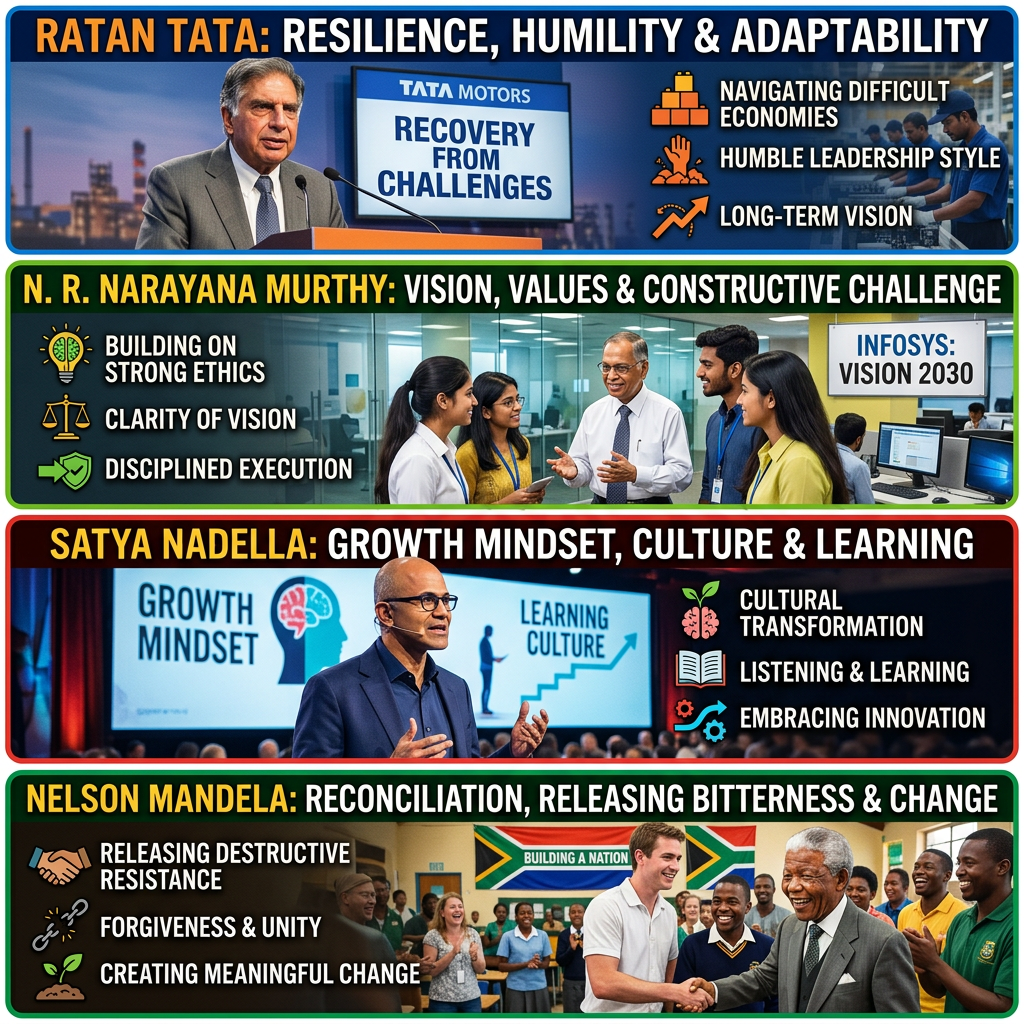
Several respected leaders offer inspiring examples of behaviours consistent with this philosophy.
- Ratan Tata: His leadership demonstrated the importance of resilience, humility and adaptability, particularly through challenging business circumstances and long-term organisational transformation.
- N. R. Narayana Murthy: His journey with Infosys highlights the importance of a clear vision, institutional values, discipline and responding constructively to challenges.
- Satya Nadella: At Microsoft, he encouraged a growth mindset and cultural transformation, demonstrating the importance of listening, learning and moving beyond organisational rigidity.
- Nelson Mandela: His ability to move beyond bitterness and focus on reconciliation illustrates how releasing destructive resistance can create opportunities for meaningful change.
These leaders should not be assumed to have followed David Bayer’s exact equation. Their journeys, however, provide powerful real-world illustrations of the underlying principles.
6. A Practical Step-by-Step Action Plan

How can we bring this equation into our everyday lives?
- Identify your desire: Clearly define what you genuinely want in your personal or professional life.
- Recognise your resistance: Identify fears, limiting beliefs, anger, overthinking and the need to control everything.
- Accept the present reality: Acknowledge the situation without unnecessary emotional struggle.
- Separate what you can control: Focus on your decisions, attitude, preparation and actions rather than other people’s behaviour or unpredictable outcomes.
- Take consistent action: Convert your desire into small, measurable daily steps.
- Welcome feedback and change: Treat mistakes as learning opportunities rather than personal defeats.
- Review your progress: Reflect regularly on whether your thoughts and actions are supporting your desired outcome.
Practise this consistently. The equation becomes powerful when it moves from intellectual understanding to daily behaviour.
7. Conclusion: Stop Resisting, Start Creating
Desire without action remains a dream. Desire with resistance becomes a struggle. Desire with non-resistance, supported by consistent and purposeful action, creates the possibility of extraordinary results.
Whether you are a student, parent, doctor, entrepreneur, corporate professional or organisational leader, this principle can help you approach life with greater clarity, emotional balance and effectiveness.
Remember, non-resistance does not mean surrendering your dreams. It means surrendering unnecessary mental and emotional struggles while remaining committed to your purpose.
The next time you face a challenge, ask yourself one simple question:
Am I resisting the situation, or am I responding intelligently to create my desired result?
That small shift in thinking could make a remarkable difference to your life and business.
I would love to hear your thoughts! Please share your experiences and insights in the comment section below. If you believe someone needs to understand this principle, please share this article with at least one individual who could benefit from it.
And if you haven’t subscribed yet, please subscribe through the Subscription Box at the bottom of this page to receive future articles directly in your email.
Let’s learn, grow and lead with greater awareness!
Stay tuned!!
Image Disclaimer: Images used in this article are provided for illustrative, educational, and informational purposes only. Any company names, brand names, logos, trademarks, products, services, or other identifiable brand elements appearing in an image are the property of their respective owners. Their inclusion does not imply any endorsement, sponsorship, partnership, affiliation, or association with the author, publisher, or this website. The images are intended solely to help explain or visualize the concepts discussed in the article.









Leave a Reply