

What if the problem isn’t that you want more money—but that you haven’t decided what your money is supposed to do for you?
Money can buy comfort, but it can also buy back an hour with your family. It can fund a business, develop a skill, protect a family during a crisis, or create opportunities for others.
That is the difference between having money and using money well.
Money is a tool—not the destination. Used thoughtfully, it can create growth, freedom, convenience, security and impact. Used without awareness, it can become the very thing we spend our lives chasing.
The better question isn’t, “How much money can I make?”
It is:
“What can I build, protect, improve and contribute with the money I earn?”
Use Money to Create Growth and More Choices
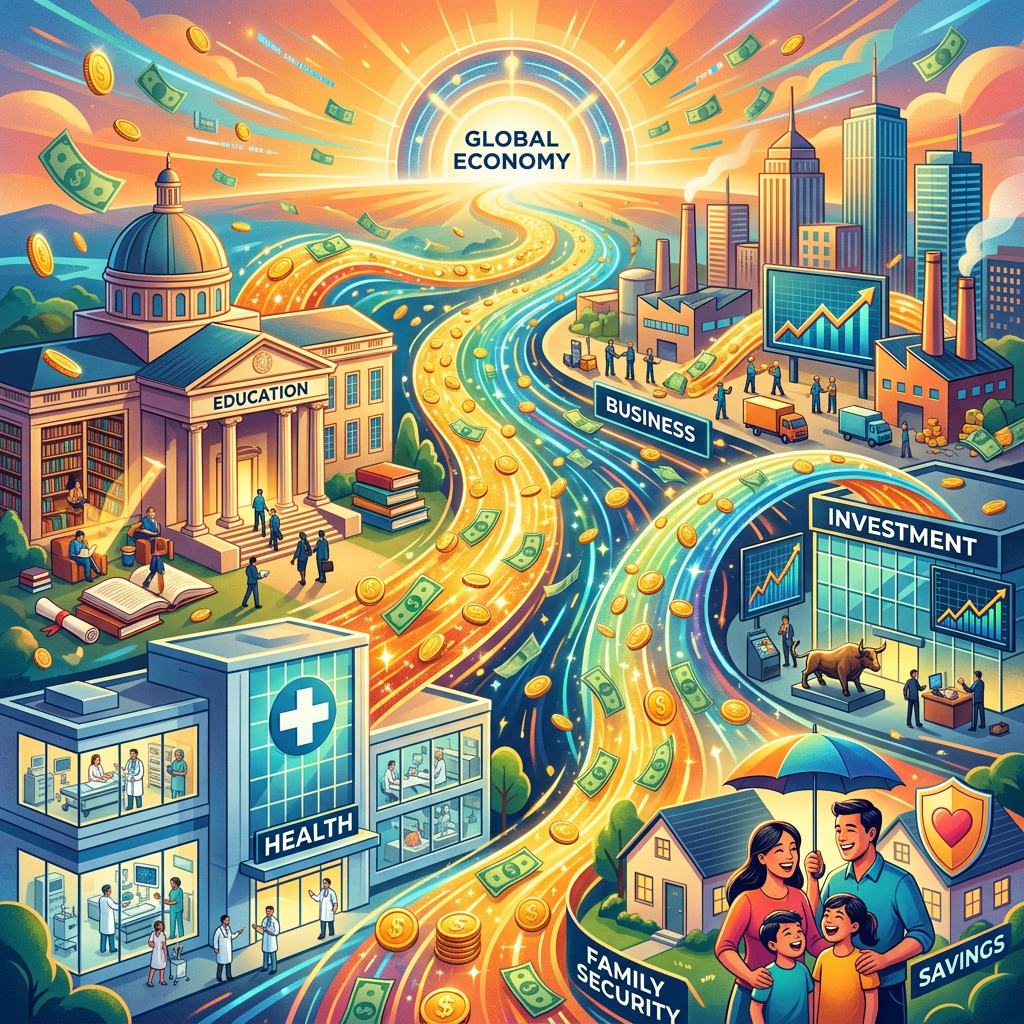
A vibrant visual shows money flowing through education, business, investment, health, and family security.
Money becomes powerful when it is converted into something productive.
You can use it to learn a skill, improve your health, purchase useful technology, start a business, invest for the future or create financial security. Financial stability also gives you choices—the ability to handle an emergency, leave an unhealthy situation, pursue an opportunity or support someone you love.
The goal isn’t necessarily enormous wealth. Sometimes financial freedom simply means making important decisions without money controlling every move.
Buy Back Time—Don’t Buy Laziness
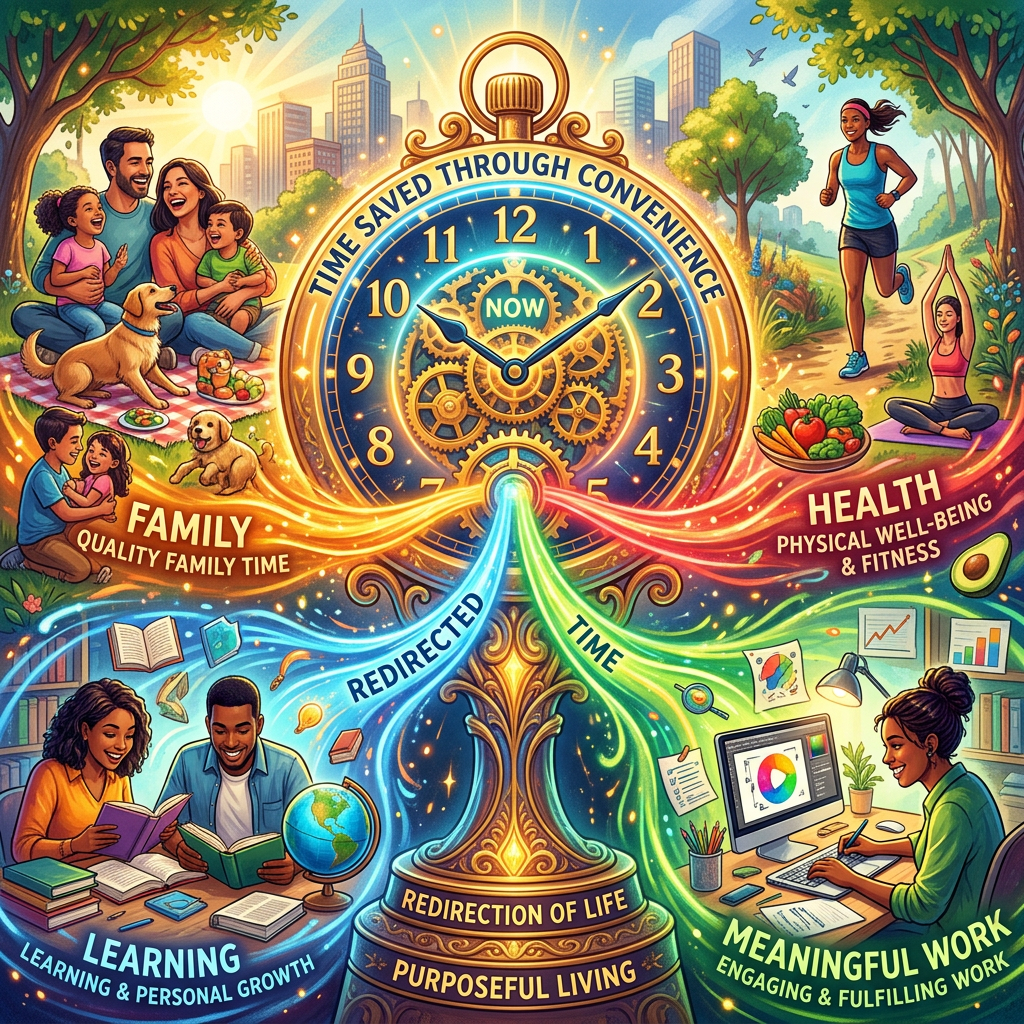
An illustrated clock shows redirected time flowing into family, health, learning, and meaningful work.
Is paying for convenience laziness?
Not necessarily.
If paying someone to complete a repetitive task saves you two hours that you then use for your family, health, learning or business, you haven’t simply bought convenience.
You have bought back time.
Before spending money for convenience, ask:
“What will I do with the time this purchase gives me?”
If the answer is meaningful, the expense may create real value. If the time simply disappears into endless scrolling or unnecessary consumption, convenience may have become dependency.
Understand What Money Can—and Cannot—Buy
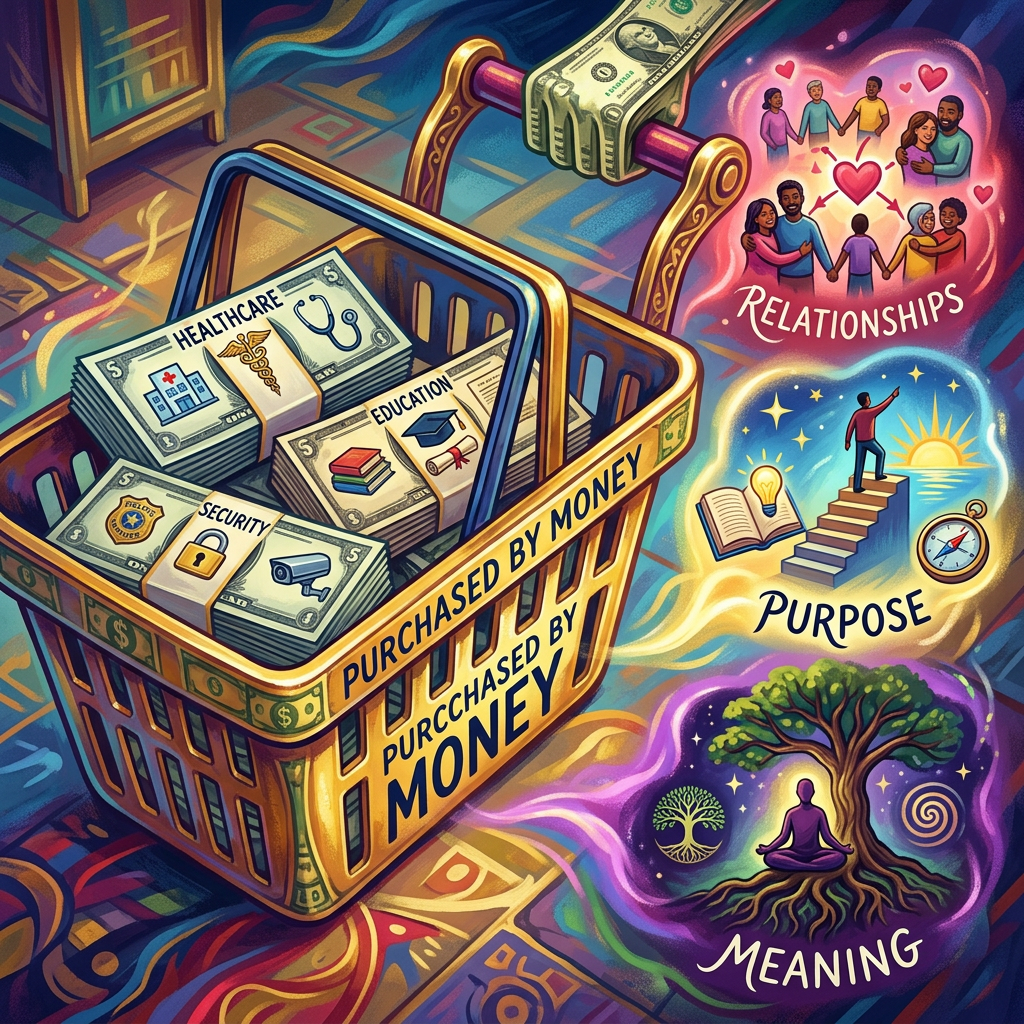
A colorful illustration contrasts money-funded necessities with relationships, purpose, and meaning.
Money can buy things that support well-being: food, housing, healthcare, education, security and experiences.
But it cannot automatically buy meaningful relationships, purpose or inner peace.
There is always a bigger house, newer car or more expensive experience. If happiness depends on the next purchase, the finish line keeps moving.
Money can create comfort and opportunity. What you do with those opportunities determines much of their meaning.
Stop Chasing Money. Start Creating Value.

A mentor guides an older man through repairing an electronic device in a hands-on community workshop.
Money is often an outcome, not the activity itself.
A doctor solves health problems. An engineer solves technical problems. A teacher develops knowledge. An entrepreneur solves customer problems at scale.
This doesn’t mean every valuable contribution produces high income. But sustainable business revenue generally comes from solving problems people are willing to pay to have solved.
So instead of constantly asking, “How can I make more money?”, ask:
“How can I become more useful?”
Create value first. Wealth can follow as an outcome of valuable, scalable work.
Learn From Businesses That Turned Wealth Into Impact

An illustrated city hub brings together business, healthcare, education, transit, and vibrant public spaces.
Tata Group
The Tata Group offers a well-known Indian example of commercial business existing alongside significant philanthropic institutions. Tata-linked trusts have supported areas including education, healthcare, research and community development.
The lesson is simple: wealth doesn’t have to end with consumption. Capital can be allocated toward building institutions and creating broader opportunity.
Microsoft
Microsoft created enormous commercial value by bringing computing technology to individuals and organizations around the world. Bill Gates later devoted substantial attention and resources to philanthropy through the Gates Foundation, including work in global health and development.
The broader lesson is that wealth creates choices: consume it, invest it, build with it, give it—or combine all four.
Learn From Individuals Who Treat Wealth as a Responsibility
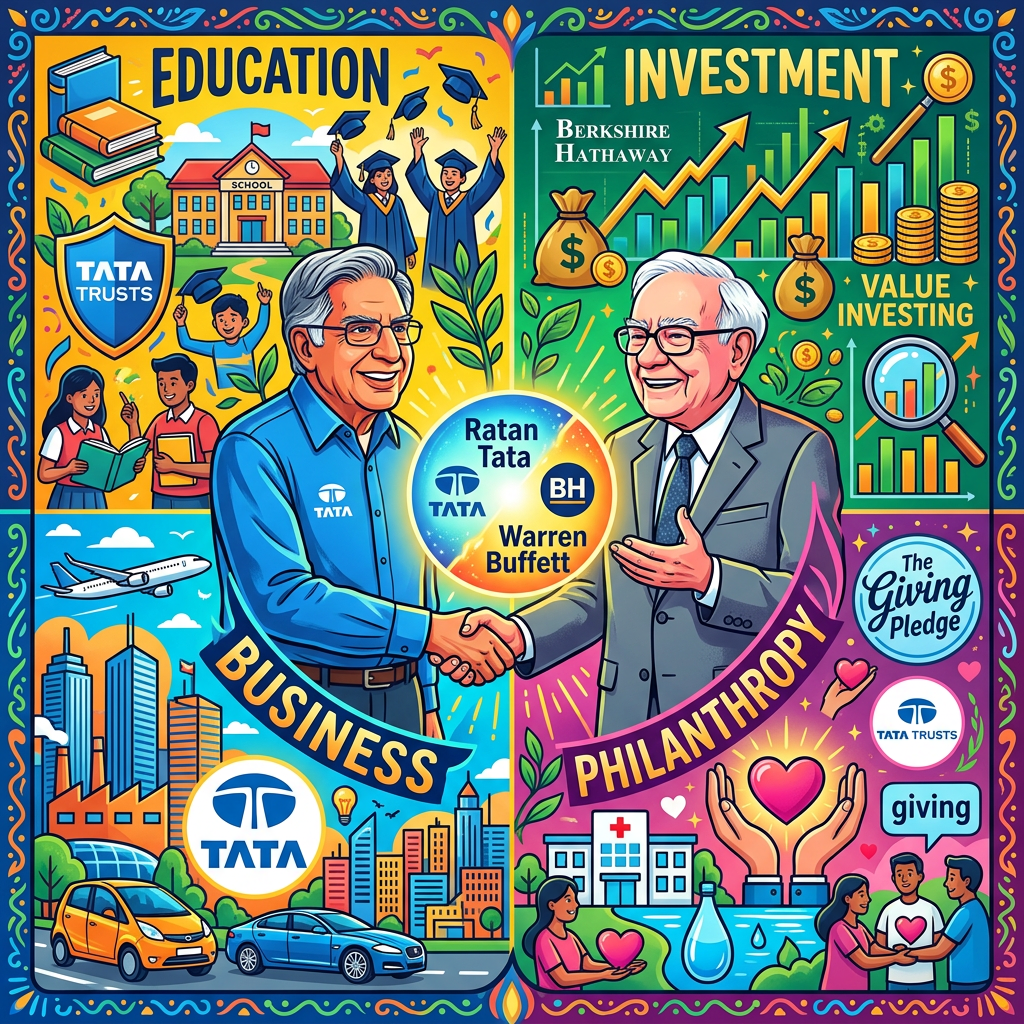
A vibrant illustrated collage connects Ratan Tata and Warren Buffett through education, business, investment, and philanthropy.
Ratan Tata
Ratan Tata’s public legacy is associated not only with business leadership but also with philanthropy and institution building.
His example raises an important question:
“What will remain valuable because I was here?”
It could be a company, a trained employee, a better product, an institution—or an opportunity created for someone else.
Warren Buffett
Warren Buffett’s career demonstrates the power of long-term investing, disciplined capital allocation and patience.
There is nothing glamorous about reading financial statements, avoiding unnecessary decisions and waiting patiently.
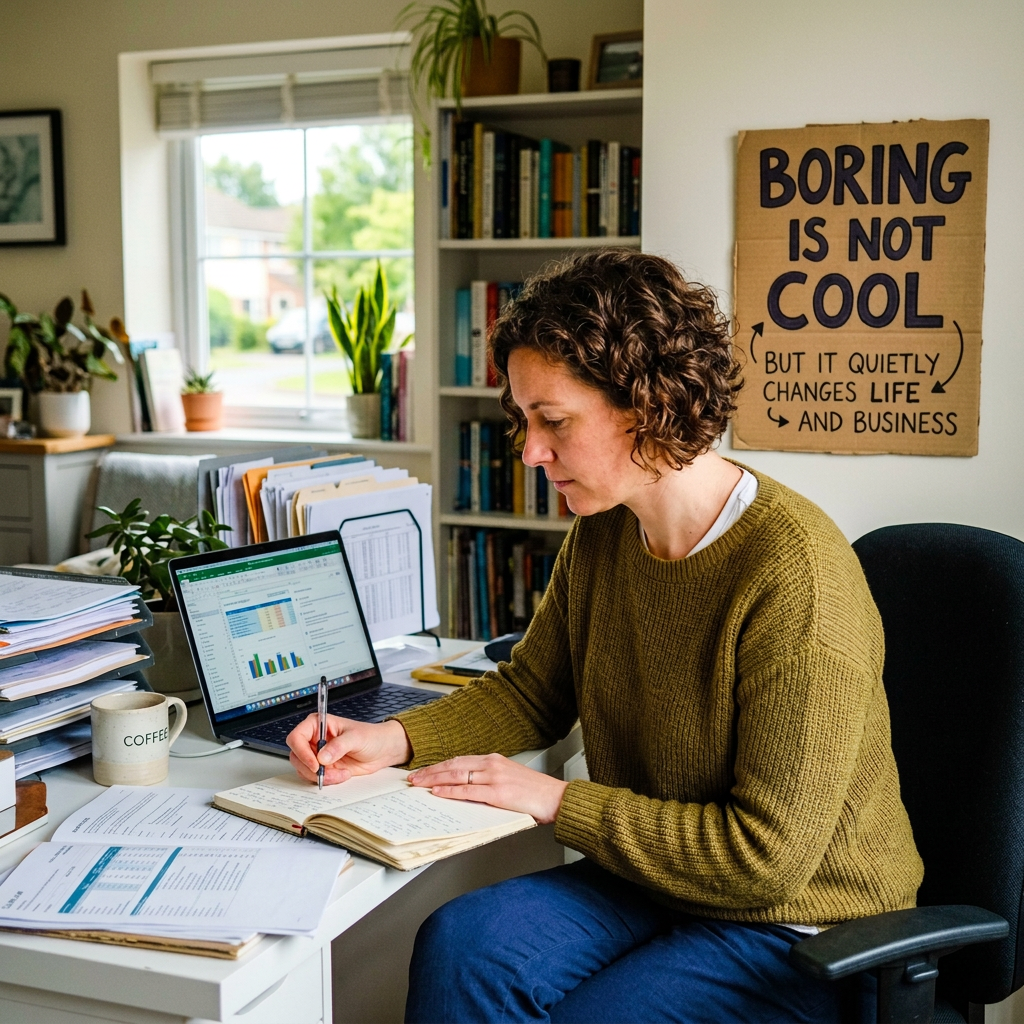
Yet wealth often compounds through boring behavior.
Extraordinary results can come from ordinary disciplines repeated for years.
Use Money Differently as an Individual, Leader and Entrepreneur

Travelers follow distinct paths toward impact, leadership, and entrepreneurship in a vibrant mountain landscape.
As an individual, track spending, maintain financial reserves, invest consistently and develop skills that increase your ability to create value.
As a leader, treat money as capital allocation. Invest in people, technology, customer experience and capabilities that create long-term value rather than simply cutting costs.
As an entrepreneur, distinguish business wealth from personal consumption. Reinvest intelligently in employees, products, technology, marketing, systems and cash reserves so the business becomes stronger.
The Boring Habits That Build Extraordinary Results
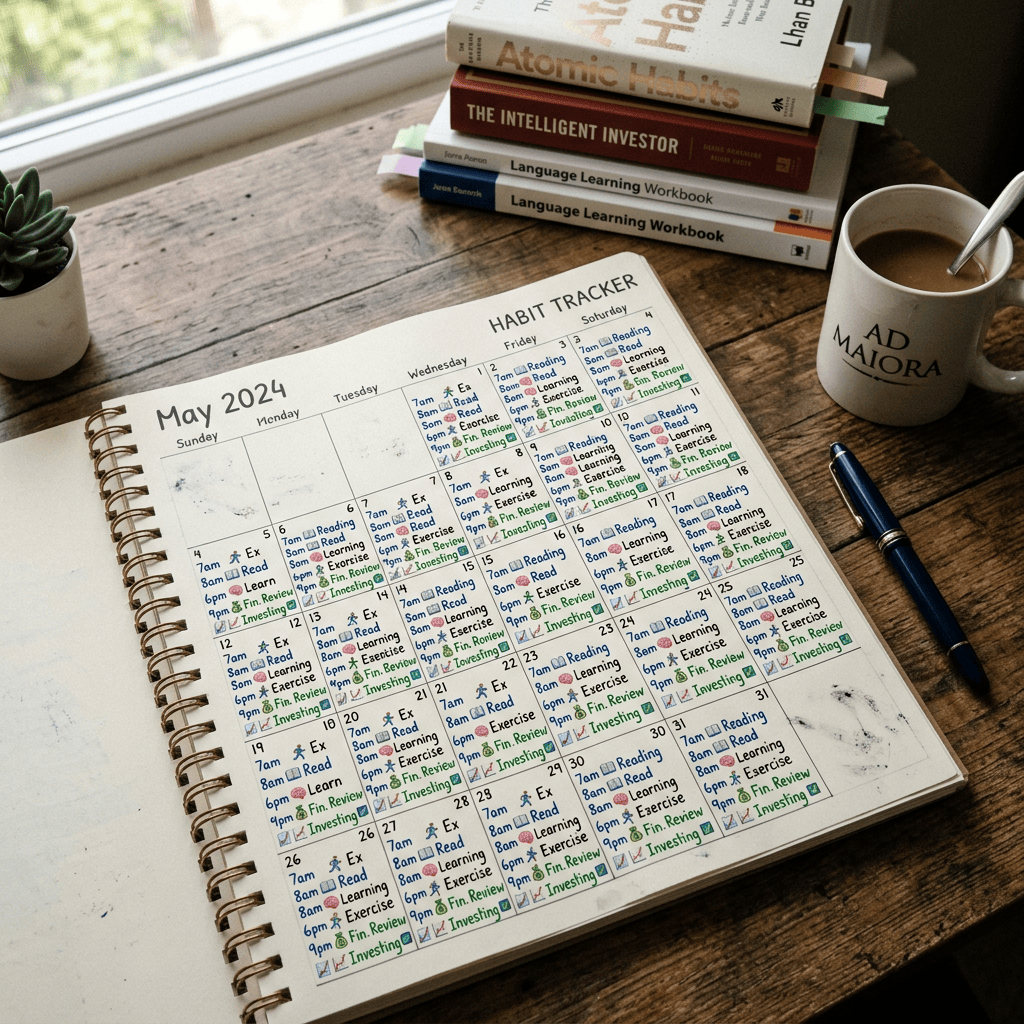
A detailed May 2024 habit tracker sits beside books, coffee, and a pen.
Successful people often do surprisingly ordinary things repeatedly: learn, prepare, exercise, review numbers, build relationships, manage priorities and delay gratification.
Nobody becomes exceptional because of one perfect day.
They become exceptional because they repeatedly do useful things when nobody is watching.
The 1% is often built through small improvements repeated for years.
A 7-Step Money Action Plan
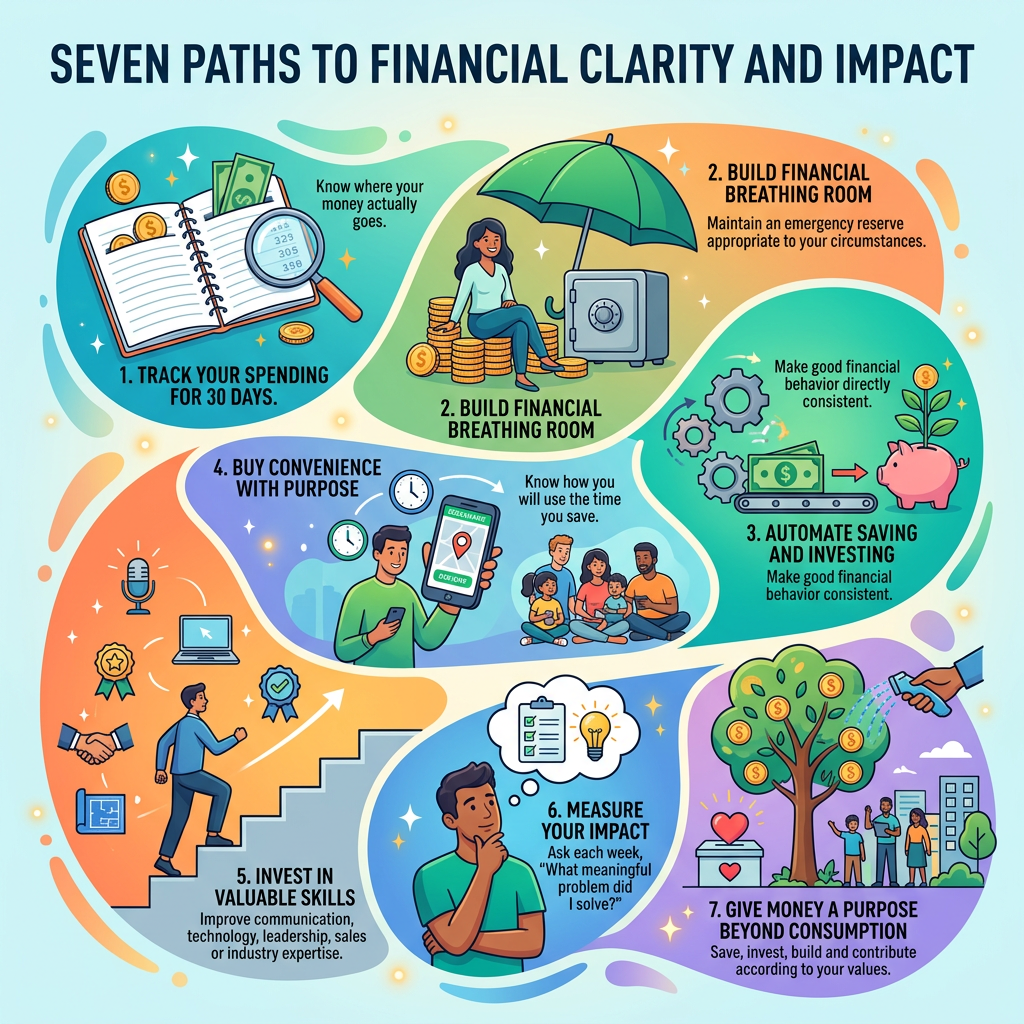
This colorful infographic presents seven practical ways to build healthier, more purposeful finances.
Conclusion: Make Money Work for Your Life

A vibrant illustration connects family, education, business, healthcare, and community action through shared prosperity.
Money matters. It can protect your family, buy back time, fund ideas, build businesses and create opportunities.
But money works best when it has a purpose.
Don’t make accumulating money the only definition of success. Build your skills. Solve meaningful problems. Manage what you earn. Invest patiently. Use your resources to create a life that reflects what matters to you.
The goal isn’t simply to have more money.
It is to create more value, gain more meaningful choices and use your money responsibly.
Your Next Step
Take 15 minutes today and review your last month’s spending.
Choose one expense to reduce, one investment in yourself to increase, and one meaningful use for the money you free up.
Then please share your thought in the comment section below. Your experience may give another reader an idea they can use.
If this article gave you a fresh perspective, please share it with at least one person who needs a healthier understanding of money, wealth and growth.
And if you haven’t subscribed yet, enter your email in the Subscription Box at the bottom of the page to receive future articles on money, leadership, entrepreneurship and personal growth.
Stay tuned!!
Image Disclaimer: Images used in this article are provided for illustrative, educational, and informational purposes only. Any company names, brand names, logos, trademarks, products, services, or other identifiable brand elements appearing in an image are the property of their respective owners. Their inclusion does not imply any endorsement, sponsorship, partnership, affiliation, or association with the author, publisher, or this website. The images are intended solely to help explain or visualize the concepts discussed in the article.



 Wining Life & Business
Leave a comment