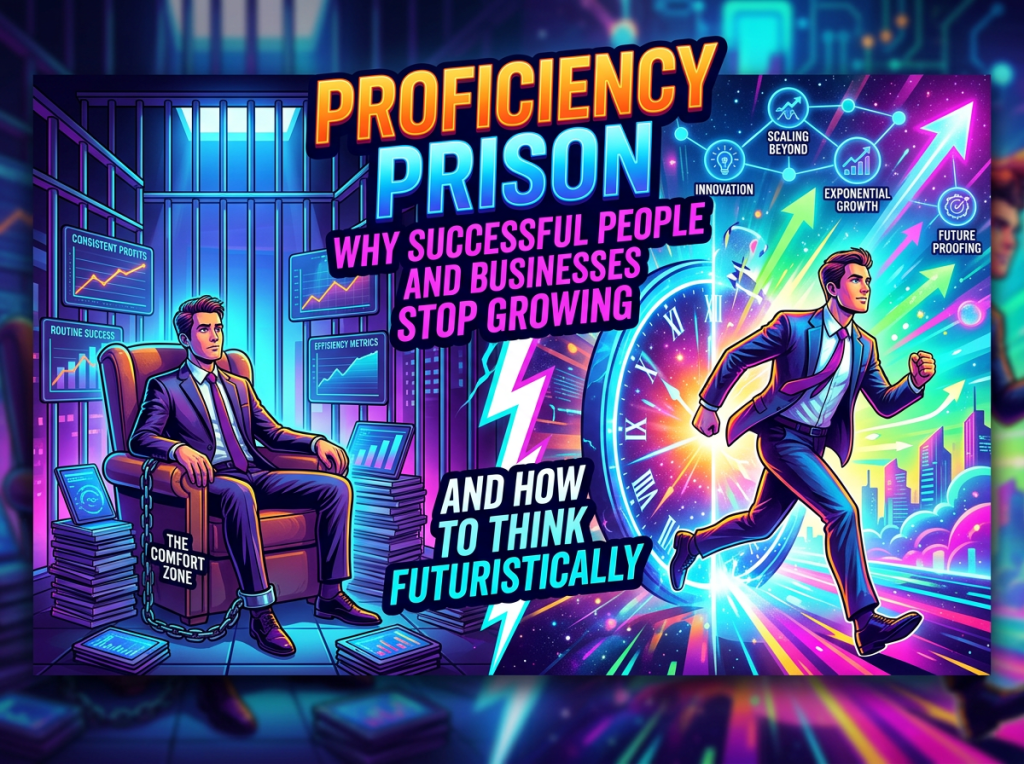
Introduction: When Your Strength Becomes Your Biggest Weakness
Have you ever wondered why intelligent, experienced and successful people sometimes stop growing? Why do established businesses lose their competitive advantage despite having talented leaders, strong financial resources and years of experience?
The answer may lie in what I call the Proficiency Prison.
Success often comes from mastering a particular skill, developing expertise and repeatedly doing things exceptionally well. However, the very proficiency that creates success can eventually become a barrier to the next level of growth.
We become so comfortable with what we know that we stop exploring what we don’t know. We continue improving yesterday’s methods while the world moves towards tomorrow.
The real challenge is not becoming proficient. It is recognising when our proficiency is restricting our ability to evolve.
1. What Is Proficiency Prison?
Proficiency Prison is a psychological and professional condition in which individuals or organisations become excessively dependent on their existing knowledge, expertise, experience and successful practices, limiting their ability to imagine, accept and implement future possibilities.
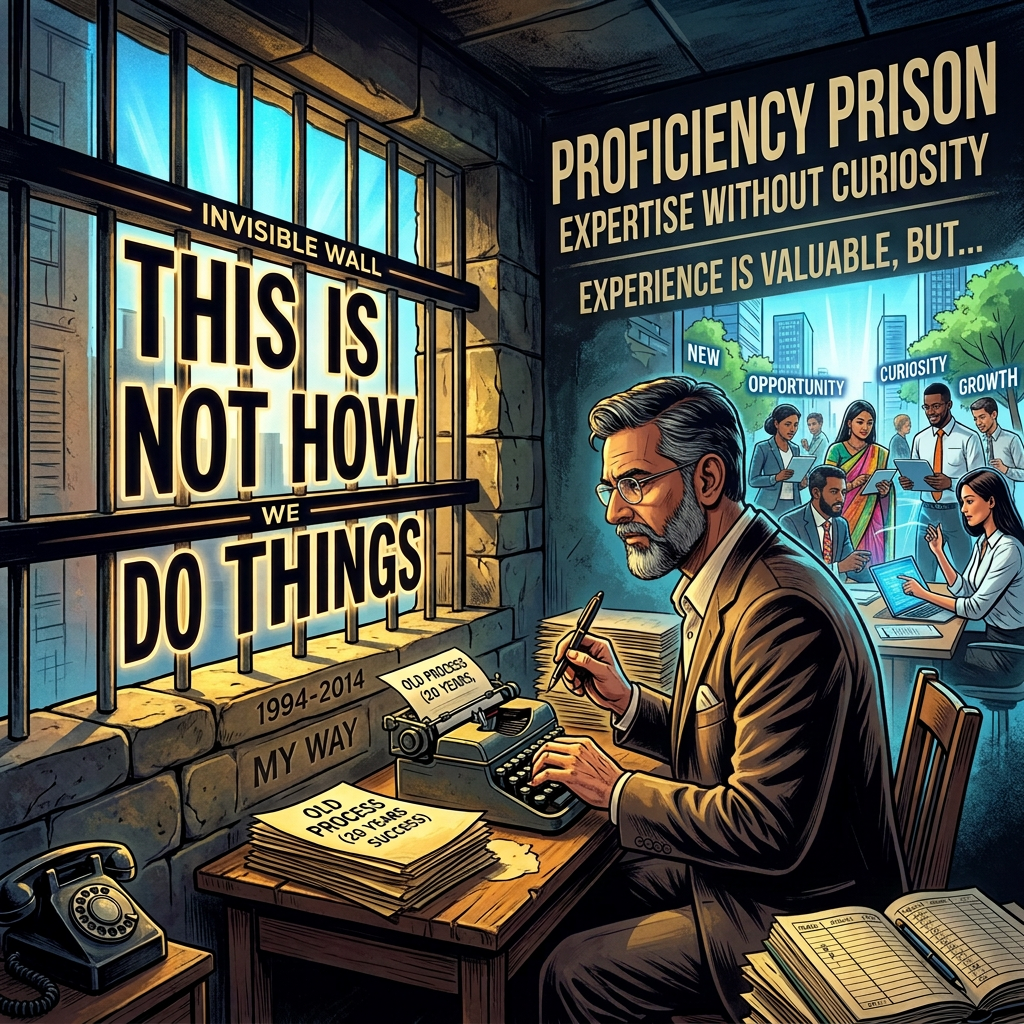
Think about a person who has been successful using the same approach for 20 years. When a new opportunity emerges, the immediate response is often, “This is not how we do things.”
That sentence can become the invisible wall of Proficiency Prison.
Expertise is valuable, but expertise without curiosity can become outdated. Experience should guide our decisions, not imprison our thinking.
The ultimate danger is confusing being exceptionally good at something with being prepared for what comes next.
2. How Proficiency Prison Impacts Personal Life

Consider a professional who has built a successful career through hard work, technical knowledge and discipline. Over time, the person becomes comfortable with a particular lifestyle, income level and professional identity.
Although opportunities for learning, entrepreneurship, investing or personal development emerge, the individual avoids them because the existing approach feels safer.
The result? Years pass, but personal growth becomes limited.
Example: A highly experienced manager refuses to learn artificial intelligence because traditional management techniques have always worked. A younger professional who embraces technology, continuous learning and new working methods may eventually become more valuable in the organisation.
The lesson is simple: Never allow your past achievements to become limitations on your future possibilities.
3. How Proficiency Prison Impacts Business
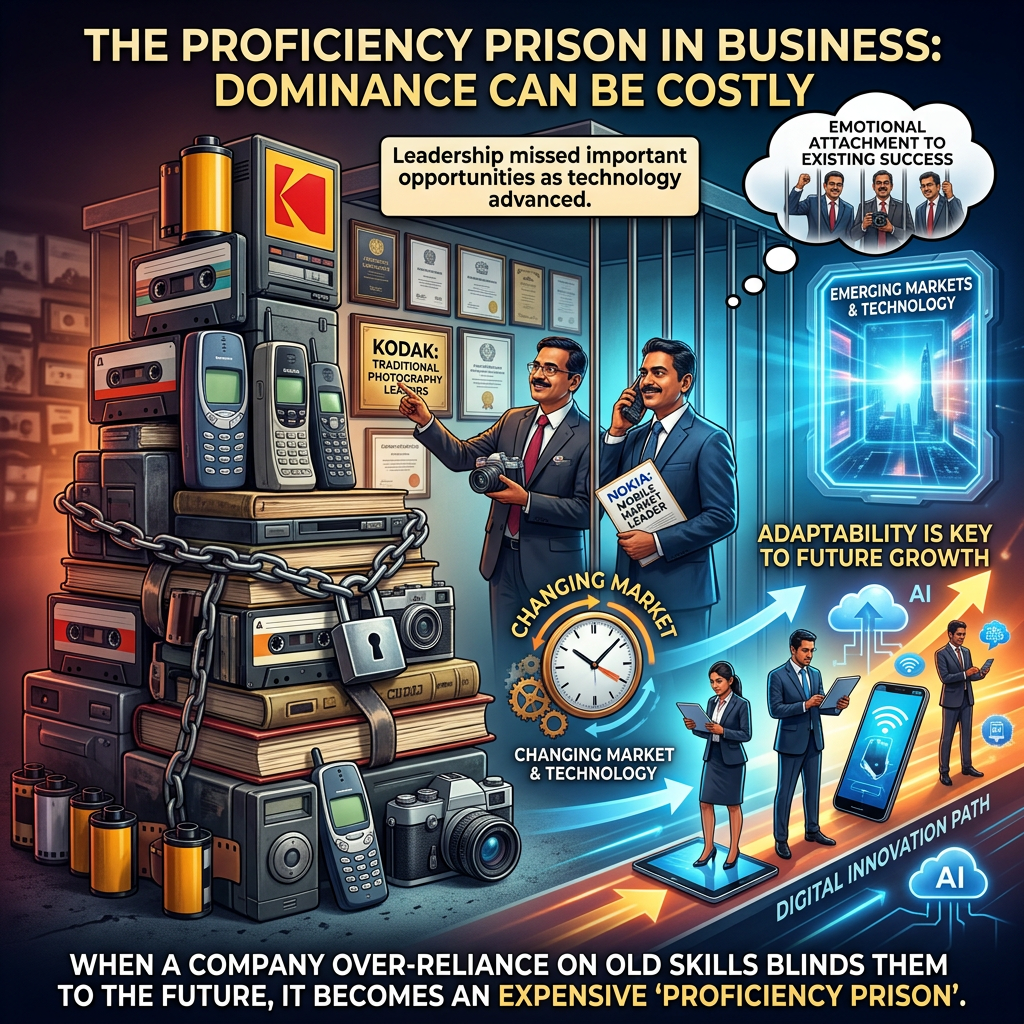
In business, Proficiency Prison can be even more expensive.
A company may dominate its industry for decades because of a successful product, distribution model or customer relationship strategy. However, markets change, technology advances and customer expectations evolve.
When leadership becomes emotionally attached to existing success, the organisation may miss important opportunities.
Example: Kodak had enormous expertise in traditional photography but struggled to transition successfully as digital photography transformed the industry. Nokia also lost its leadership position in mobile phones during the smartphone revolution.
These examples demonstrate how established capabilities and market leadership do not automatically guarantee future success.
A company must continuously question whether its current strengths will remain relevant tomorrow.
4. How Leaders Become Trapped in Proficiency Prison
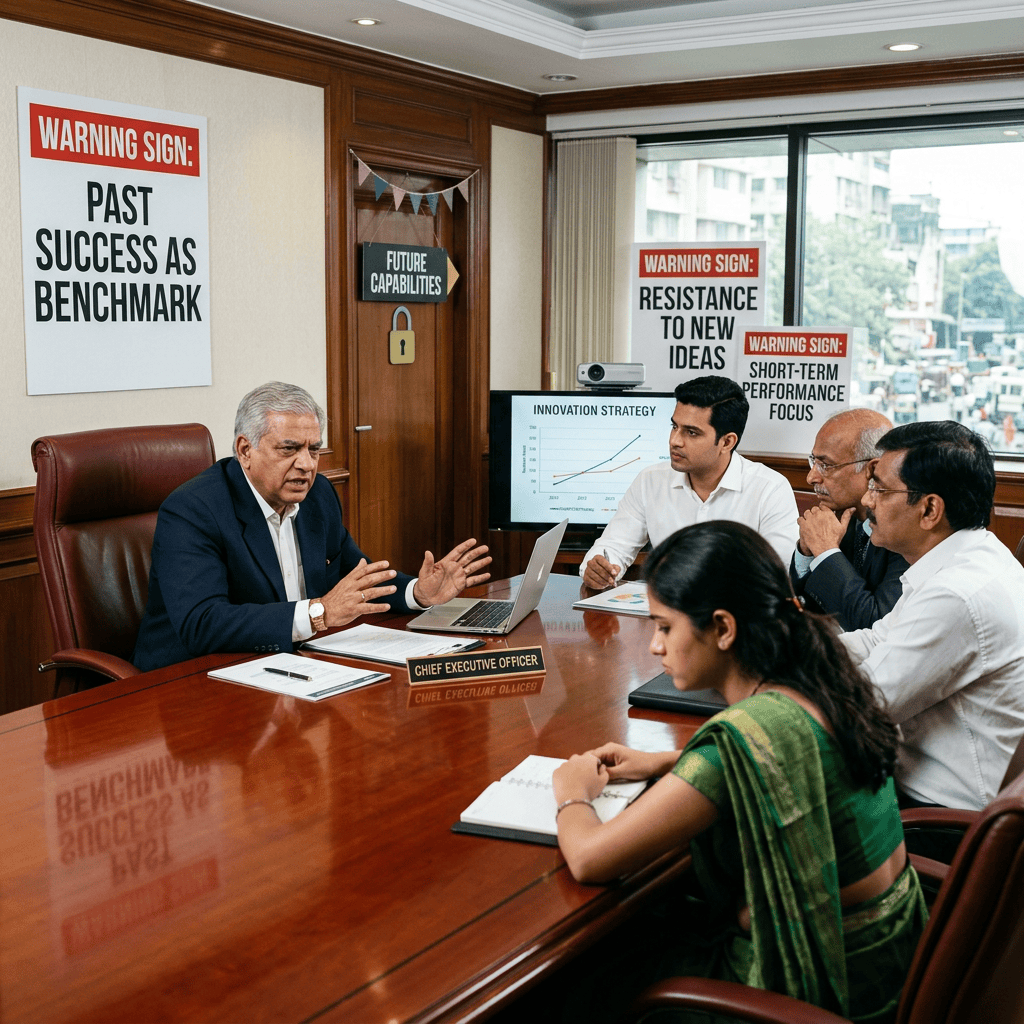
Some leaders become prisoners of their own achievements.
They surround themselves with people who agree with them, prefer familiar strategies and interpret suggestions for change as criticism of their leadership.
Three warning signs are particularly important:
- Past success becomes the benchmark: Leaders repeatedly use yesterday’s achievements to justify today’s decisions.
- New ideas face resistance: Innovation is discouraged because it challenges established authority or processes.
- Short-term performance dominates: Leaders protect existing profitability instead of investing in future capabilities.
Eventually, talented employees lose enthusiasm, innovation slows and competitors move ahead.
A leader’s greatest responsibility is not merely protecting what has been created. It is preparing the organisation for what has not yet been created.
5. Learning from Successful Indian and International Leaders
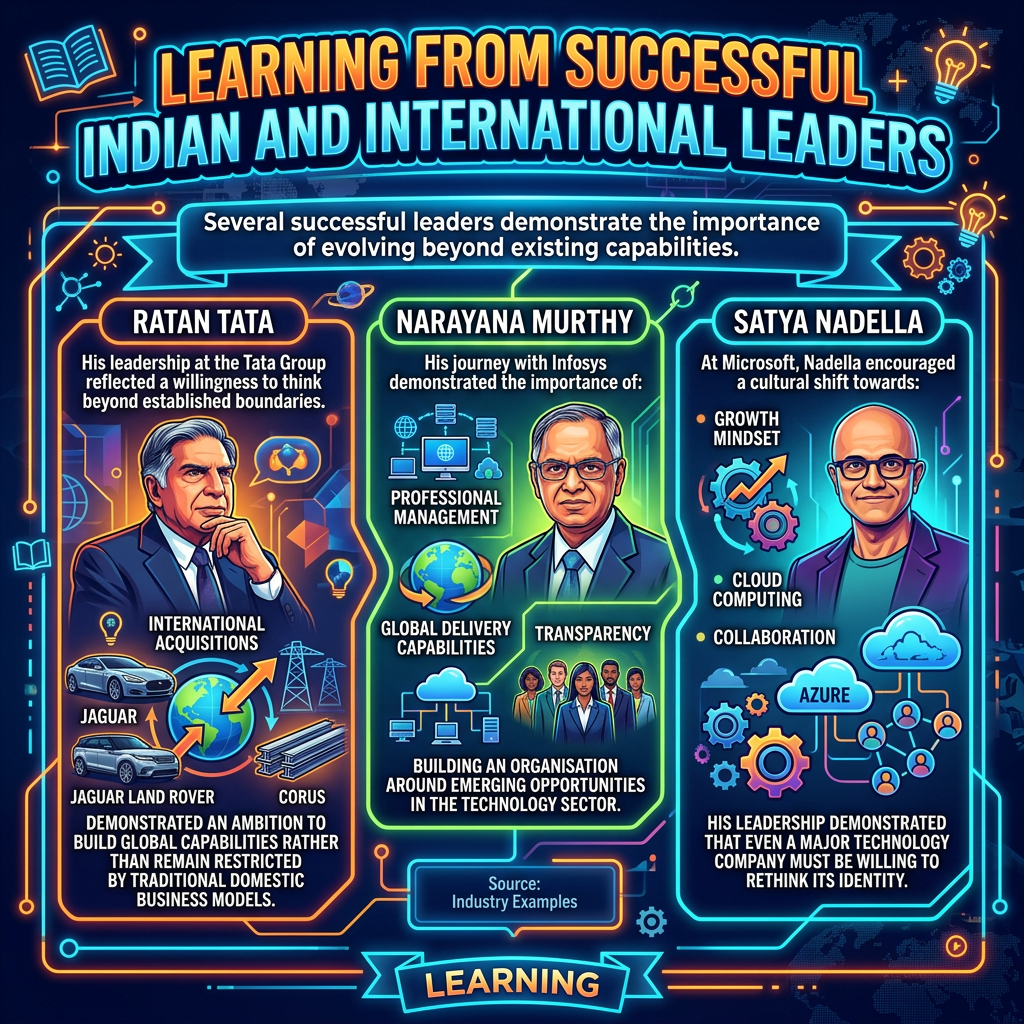
Several successful leaders demonstrate the importance of evolving beyond existing capabilities.
Ratan Tata: His leadership at the Tata Group reflected a willingness to think beyond established boundaries. International acquisitions, including Jaguar Land Rover and Corus, demonstrated an ambition to build global capabilities rather than remain restricted by traditional domestic business models.
Narayana Murthy: His journey with Infosys demonstrated the importance of professional management, global delivery capabilities, transparency and building an organisation around emerging opportunities in the technology sector.
Satya Nadella: At Microsoft, Nadella encouraged a cultural shift towards a growth mindset, cloud computing and collaboration. His leadership demonstrated that even a major technology company must be willing to rethink its identity.
Jeff Bezos: Amazon continuously expanded beyond its original online bookstore model into cloud computing, logistics and other businesses. This reflects the importance of thinking beyond the boundaries of an existing successful business.
The common lesson is that long-term success requires the courage to challenge your own success formula.
6. Why Understanding Proficiency Prison Early Changes Your Life
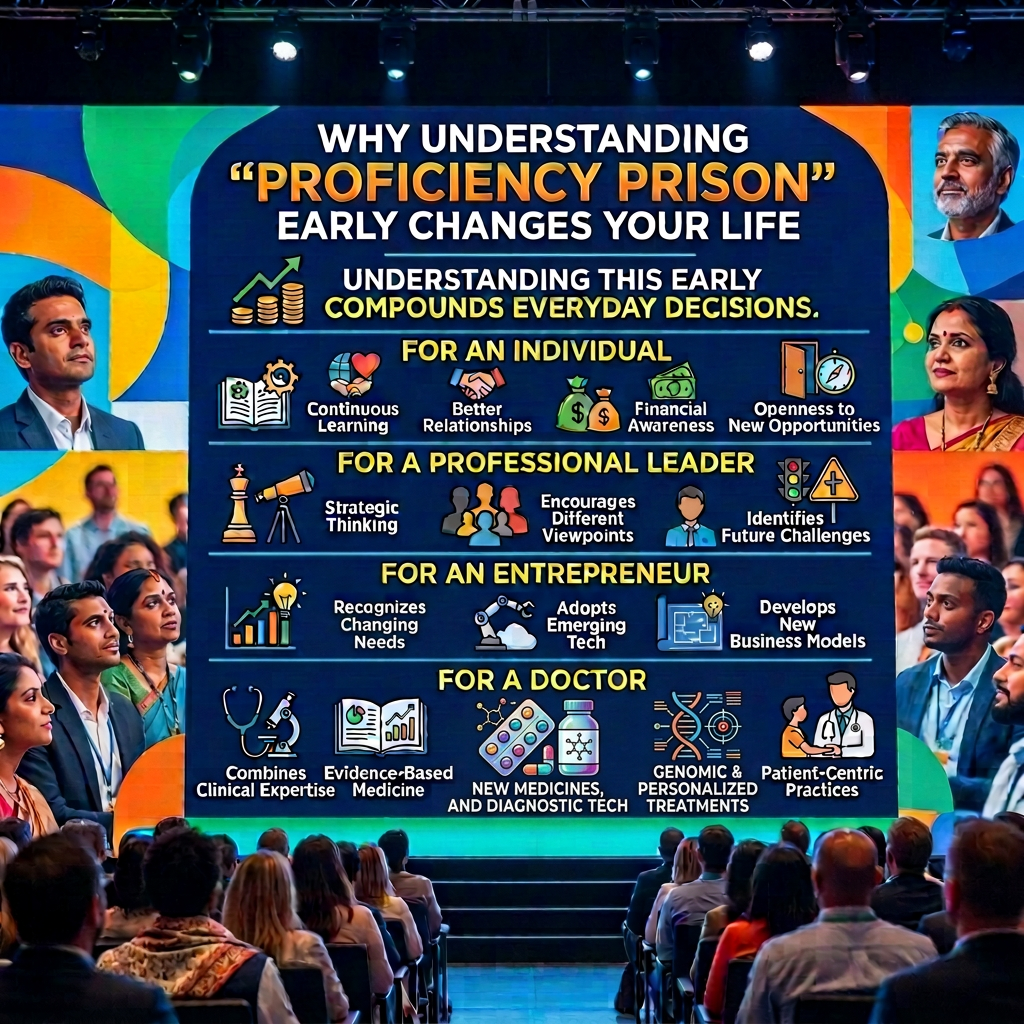
Understanding this concept early can compound the quality of everyday decisions.
For an individual, it encourages continuous learning, better relationships, financial awareness and openness to new opportunities.
For a professional leader, it develops strategic thinking, encourages different viewpoints and helps identify future challenges before they become crises.
For an entrepreneur, it creates the ability to recognise changing customer needs, adopt emerging technologies and develop new business models.
For a doctor, it is equally relevant. Clinical experience is invaluable, but medicine continuously evolves. A doctor who combines clinical expertise with evidence-based medicine, emerging diagnostic technologies, preventive healthcare and patient-centric practices can deliver greater long-term value.
Proficiency should be your foundation, not your finishing line.
7. Step-by-Step Action Plan to Break Free from Proficiency Prison
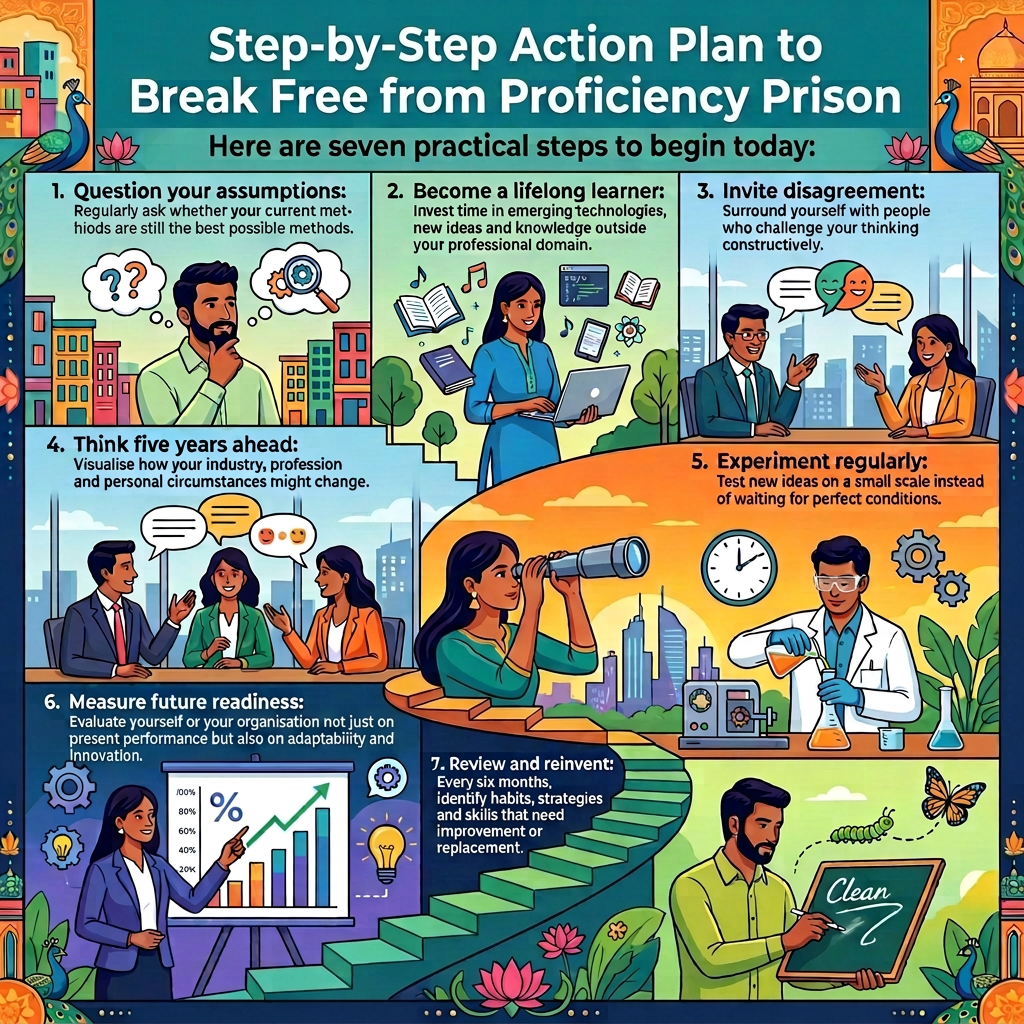
Here are seven practical steps to begin today:
- Question your assumptions: Regularly ask whether your current methods are still the best possible methods.
- Become a lifelong learner: Invest time in emerging technologies, new ideas and knowledge outside your professional domain.
- Invite disagreement: Surround yourself with people who challenge your thinking constructively.
- Think five years ahead: Visualise how your industry, profession and personal circumstances might change.
- Experiment regularly: Test new ideas on a small scale instead of waiting for perfect conditions.
- Measure future readiness: Evaluate yourself or your organisation not just on present performance but also on adaptability and innovation.
- Review and reinvent: Every six months, identify habits, strategies and skills that need improvement or replacement.
Most importantly, develop the habit of asking yourself one powerful question:
“Am I becoming better at what I already know, or preparing myself for what I need to know tomorrow?”
Conclusion: Don’t Let Yesterday’s Success Steal Tomorrow’s Opportunities
Proficiency is essential for achieving success, but remaining confined within it can prevent the next breakthrough.
Whether you are a student, professional, entrepreneur, doctor or business leader, your future depends on your willingness to question existing beliefs, embrace change and continuously reinvent yourself.
Remember, the world does not reward experience alone. It rewards the ability to apply experience intelligently while adapting to what lies ahead.
Your greatest achievement should not be becoming an expert in yesterday’s world, but preparing yourself to lead tomorrow’s world.
What is your experience with Proficiency Prison? Have you witnessed it in your personal life or professional journey?
Please share your thoughts in the comment section below. Your experience may inspire someone else to think differently.
If you found this article meaningful, please share it with at least one individual who needs to understand this concept.
And if you haven’t subscribed yet, please enter your email address in the Subscription Box at the bottom of this page to receive future articles and insights.
Let’s learn, evolve and grow beyond our Proficiency Prison!
Stay tuned!!
Image Disclaimer: Images used in this article are provided for illustrative, educational, and informational purposes only. Any company names, brand names, logos, trademarks, products, services, or other identifiable brand elements appearing in an image are the property of their respective owners. Their inclusion does not imply any endorsement, sponsorship, partnership, affiliation, or association with the author, publisher, or this website. The images are intended solely to help explain or visualize the concepts discussed in the article.


Leave a Reply