
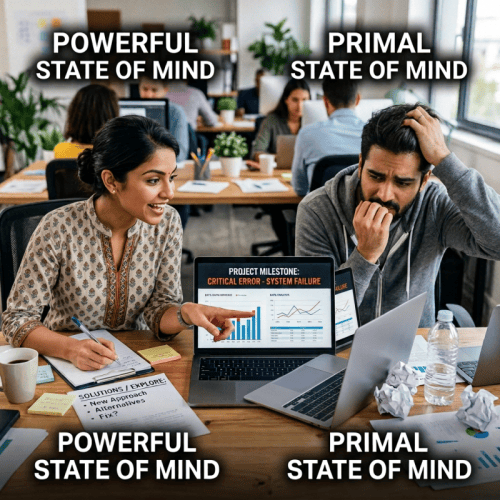
What if one simple understanding could change the way you live, lead people, build a business and make everyday decisions?
Imagine two people facing the same challenge. One becomes curious, explores possibilities and looks for solutions. The other becomes anxious, frustrated and starts imagining everything that could go wrong.
The situation is identical. The difference lies in their state of mind.
I call these two approaches the Powerful State of Mind and the Primal State of Mind. Understanding the difference early in life can become one of the most valuable lessons for personal growth and professional success.
1. What Is a Powerful State of Mind?
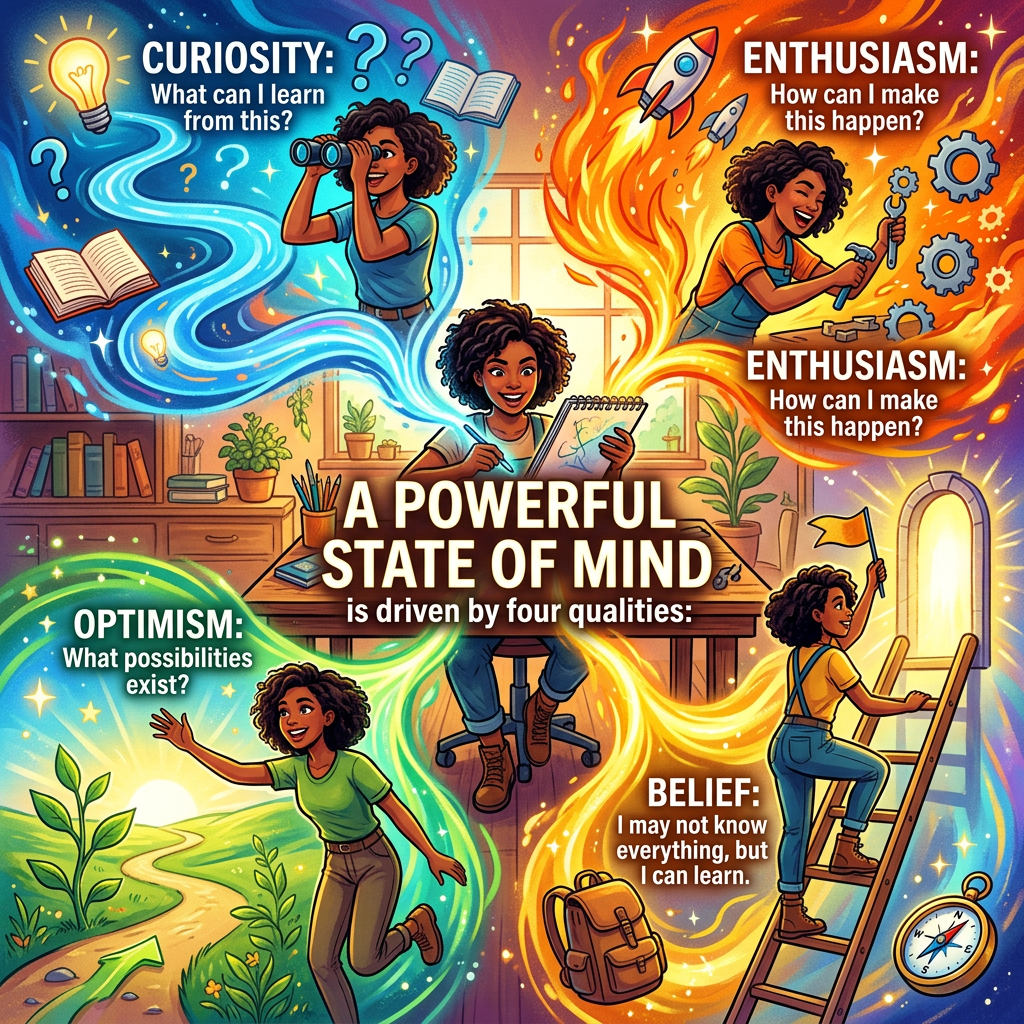
A Powerful State of Mind is driven by four qualities:
- Curiosity: What can I learn from this?
- Enthusiasm: How can I make this happen?
- Optimism: What possibilities exist?
- Belief: I may not know everything, but I can learn.
People operating from this state don’t necessarily have fewer problems. They simply approach problems differently. Instead of treating obstacles as permanent barriers, they see them as opportunities to learn, adapt and improve.
Curiosity opens doors that fear keeps closed. Enthusiasm creates momentum, while optimism provides the emotional strength to continue when results are delayed.
2. What Is a Primal State of Mind?

Our Primal State of Mind is associated with threat-driven responses such as:
- Anxiety: What if something goes wrong?
- Frustration: Why is this happening to me?
- Overthinking: What if I make the wrong decision?
- Limiting beliefs: I am not capable of doing this.
This response is not necessarily bad. Our brains use threat detection to protect us from danger. However, when anxiety and fear dominate everyday decisions, they can prevent us from recognising opportunities.
The real challenge is not eliminating fear. It is learning not to let fear become the decision-maker.
3. Powerful vs Primal: Understanding the Difference
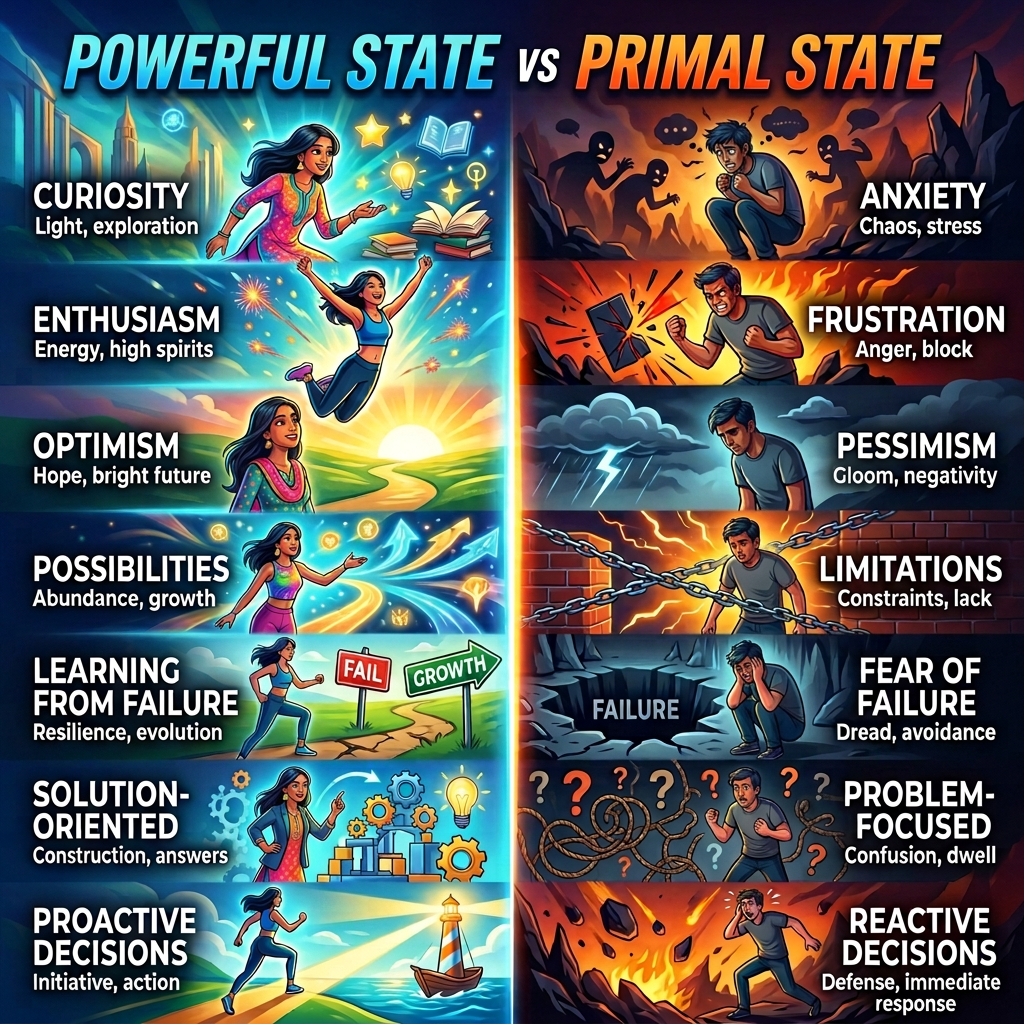
4. Impact on Personal Life
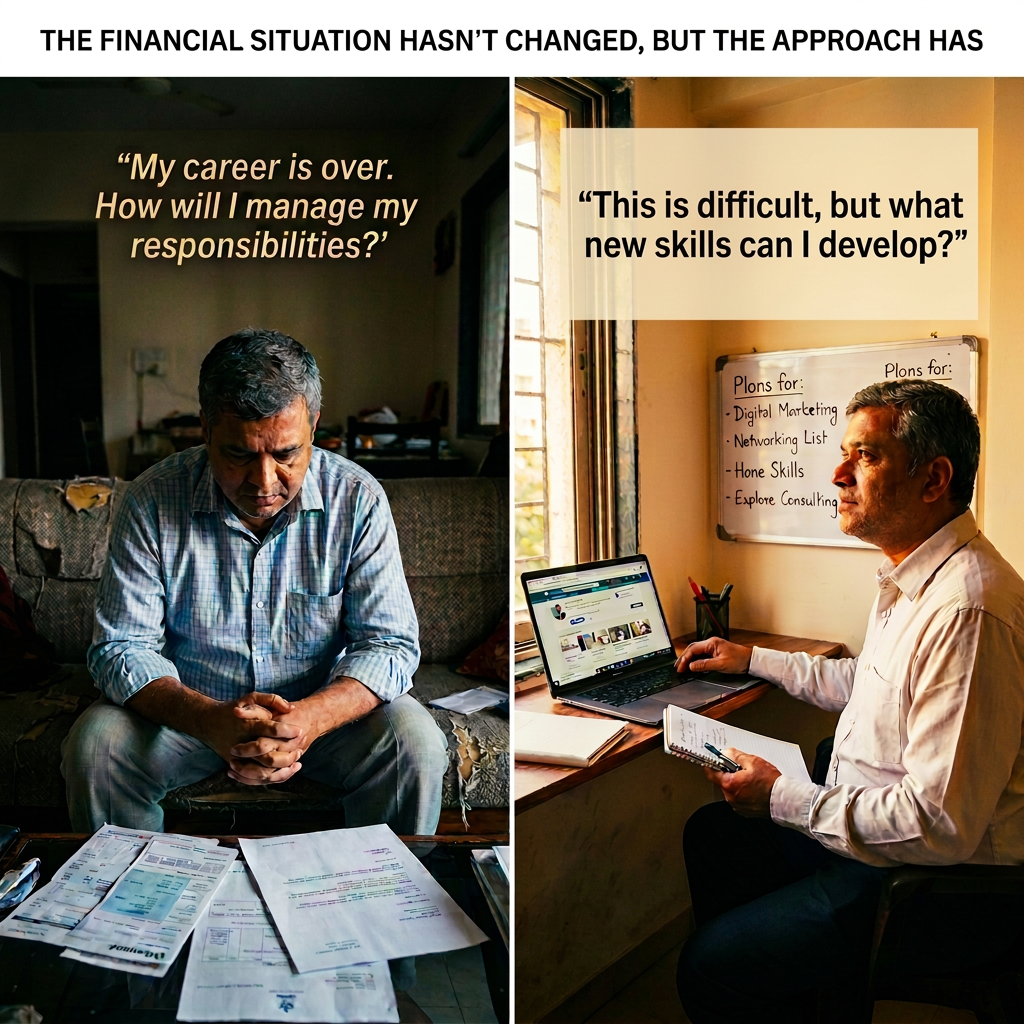
Consider someone who has lost their job.
A Primal State response might be: “My career is over. How will I manage my responsibilities?”
A Powerful State response might be: “This is difficult, but what new skills can I develop? What opportunities have I never explored?”
The financial situation hasn’t changed, but the individual’s approach has.
This difference also influences relationships, parenting, health decisions and personal development. A curious person listens before judging. An optimistic person encourages rather than criticises. Someone who manages frustration can respond thoughtfully instead of reacting emotionally.
Over time, these small daily choices compound into confidence, stronger relationships and better decision-making.
5. Impact on Business and Professional Life
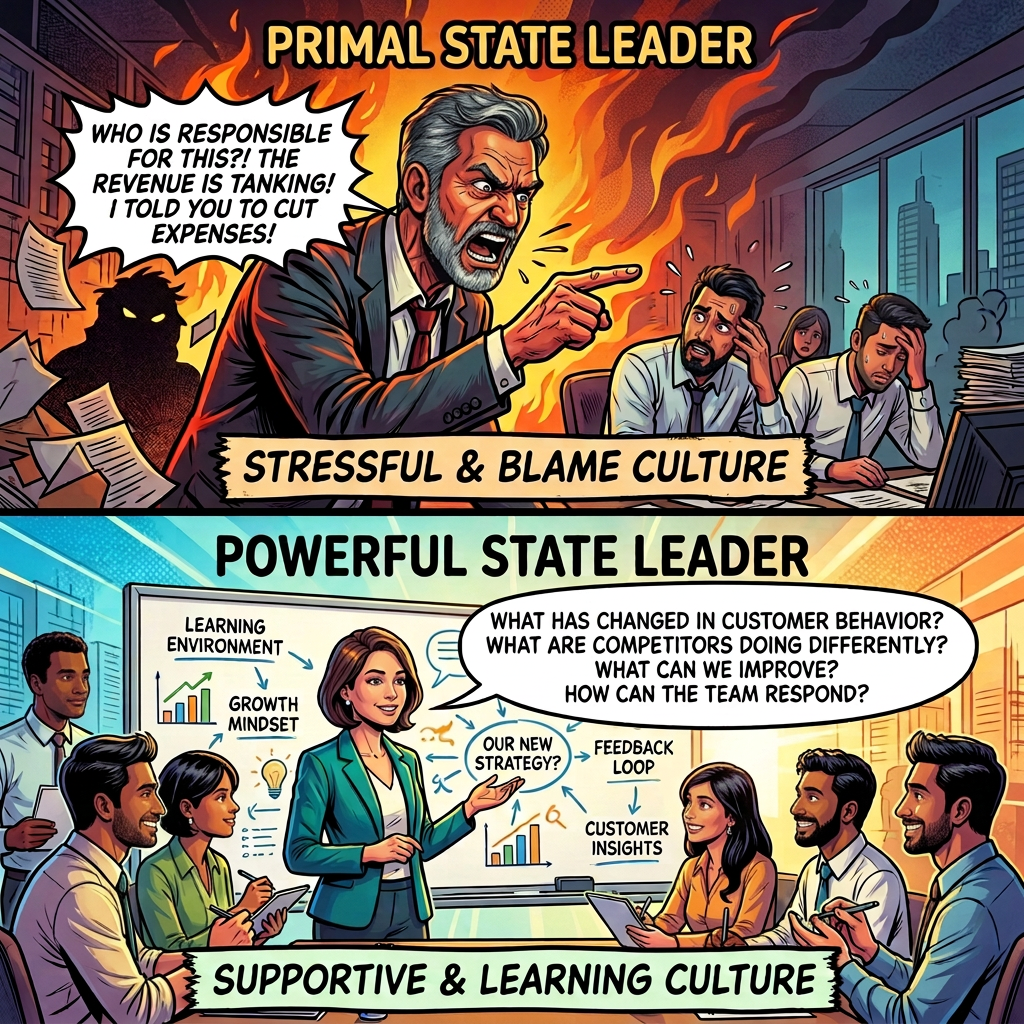
Imagine a business experiencing declining sales.
A Primal State leader may blame employees, panic about expenses and make hurried decisions.
A Powerful State leader asks different questions: What has changed in customer behaviour? What are competitors doing differently? What can we improve? How can the team respond?
The second approach creates a learning environment rather than a blame culture.
For entrepreneurs, this mindset encourages experimentation, innovation and calculated risk-taking. For employees and professionals, it builds adaptability, ownership and leadership qualities, regardless of their designation.
Leadership is not just about the position you hold; it is also about the state of mind you bring into every decision.
6. Impact on an Entrepreneur and a Doctor’s Clinical Practice
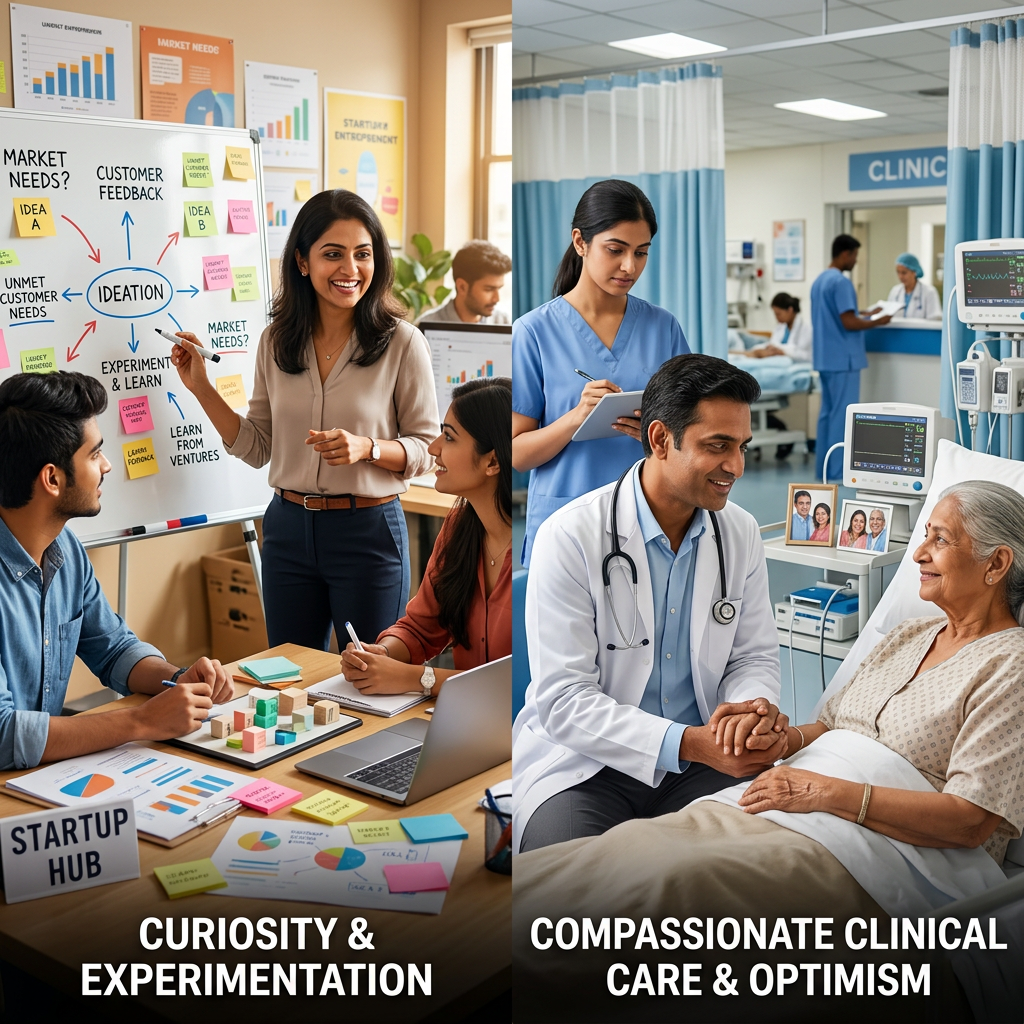
For an entrepreneur: A Powerful State of Mind helps identify unmet customer needs, experiment with new ideas and learn from unsuccessful ventures. Instead of saying, “The market is impossible,” the entrepreneur asks, “What does the market actually need?”
For a doctor: The same principle can transform clinical practice. Curiosity encourages continuous learning, careful history-taking and consideration of alternative diagnoses. Enthusiasm supports compassionate patient communication, while optimism can encourage patients without offering unrealistic assurances.
A doctor operating under constant frustration or anxiety may become rushed, defensive or less attentive. A thoughtful, composed mindset supports better clinical reasoning, provided it is accompanied by evidence-based medicine, appropriate investigations and patient safety.
The objective is not blind positivity. It is curiosity combined with competence, empathy and responsibility.
7. Leaders Who Demonstrated These Principles
Some inspiring examples illustrate these principles:

- Ratan Tata: His willingness to explore ambitious ideas and take calculated risks demonstrated the value of looking beyond conventional limitations.
- Satya Nadella: His emphasis on empathy and a growth mindset helped reshape Microsoft’s organisational culture towards learning and collaboration.
- Verghese Kurien: His vision and determination transformed India’s dairy sector through the cooperative movement, demonstrating how belief and purposeful action can create large-scale change.
- Nelson Mandela: His extraordinary resilience demonstrated the importance of maintaining purpose and perspective through adversity.
Their journeys were different, but each demonstrates how perspective, conviction and purposeful action can influence outcomes.
8. Why Understanding This Thesis Early in Life Changes Everything

Think of life as a long journey with thousands of small decisions. Every day, we choose whether to react through fear or respond through awareness.
Understanding this thesis early helps individuals recognise their emotional patterns before those patterns become lifelong habits.
As a professional, it helps you lead with empathy, remain curious and make thoughtful decisions. As an entrepreneur, it helps you build resilience and recognise opportunities. As a doctor, it supports continuous learning and patient-centred practice.
The earlier we understand the power of our mental state, the more years we have to compound its benefits.
9. A Practical Seven-Step Action Plan
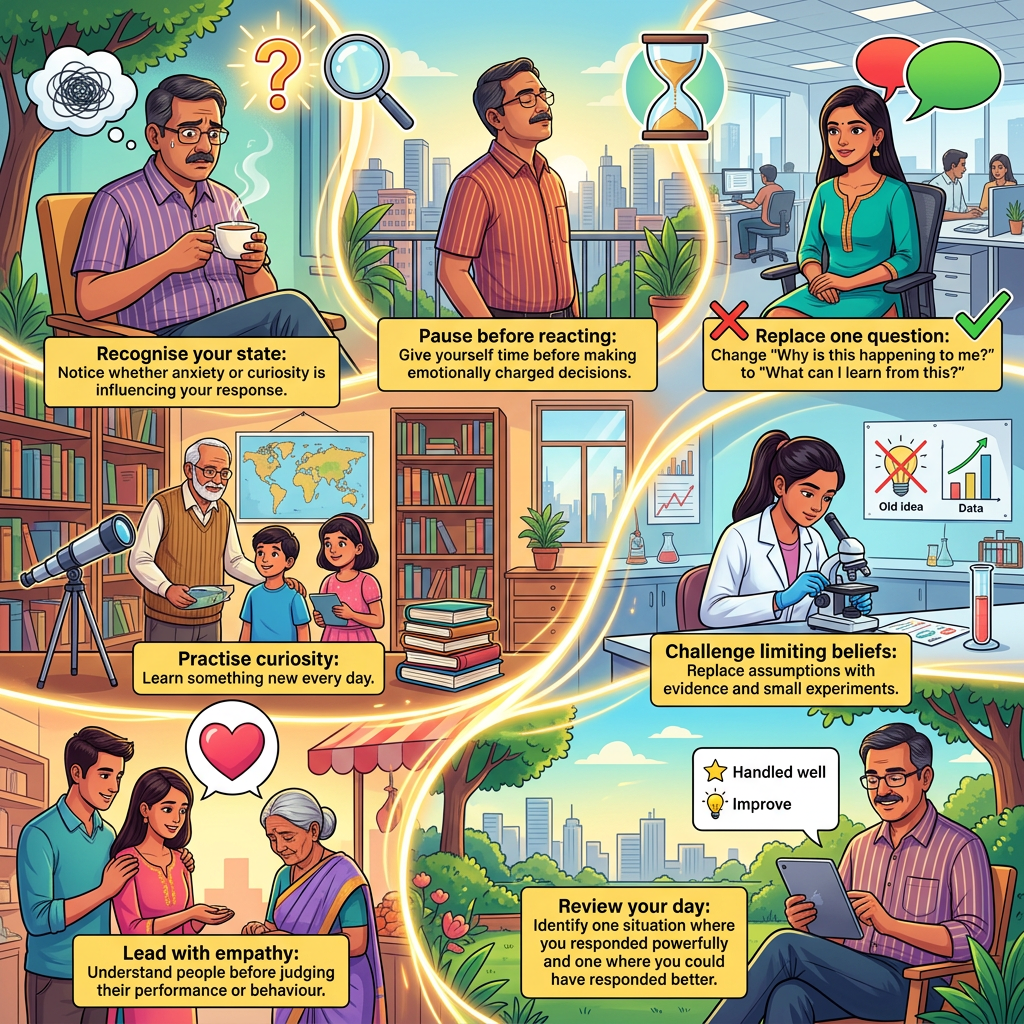
Start practising these seven steps:
- Recognise your state: Notice whether anxiety or curiosity is influencing your response.
- Pause before reacting: Give yourself time before making emotionally charged decisions.
- Replace one question: Change “Why is this happening to me?” to “What can I learn from this?”
- Practise curiosity: Learn something new every day.
- Challenge limiting beliefs: Replace assumptions with evidence and small experiments.
- Lead with empathy: Understand people before judging their performance or behaviour.
- Review your day: Identify one situation where you responded powerfully and one where you could have responded better.
Don’t expect transformation overnight. Mindset is like a muscle; consistent practice makes it stronger.
Conclusion: Choose Your State of Mind Before It Chooses Your Future
Life will always present uncertainty, setbacks, competition and unexpected challenges. We cannot control every situation, but we can gradually learn to control how we respond.
A Powerful State of Mind doesn’t mean being positive all the time. It means remaining curious when things are unclear, enthusiastic when opportunities arise, optimistic during difficulties and realistic when decisions matter.
Whether you are a student, parent, professional, entrepreneur, business leader or doctor, understanding this difference early can influence the quality of your everyday decisions and the direction of your journey.
Remember: Your circumstances may influence your starting point, but your state of mind influences how you respond to the journey.
I would love to hear your thoughts!
- Which state of mind influences your everyday decisions?
- Have you experienced a situation where changing your mindset changed the outcome?
Please share your thoughts in the comment section below.
If you know even one individual who needs to understand this powerful distinction, please share this article with them. A single idea, shared at the right time, can make a meaningful difference.
And if you haven’t subscribed yet, please subscribe through the Subscription Box at the bottom of this page to receive future articles and insights directly in your email.
Stay tuned!!
Image Disclaimer: Images used in this article are provided for illustrative, educational, and informational purposes only. Any company names, brand names, logos, trademarks, products, services, or other identifiable brand elements appearing in an image are the property of their respective owners. Their inclusion does not imply any endorsement, sponsorship, partnership, affiliation, or association with the author, publisher, or this website. The images are intended solely to help explain or visualize the concepts discussed in the article.







Leave a Reply