Design your inner-self, build your dream business!!
Fly High, But Stay Grounded: A Life and Business Lesson in Ambition, Humility and Leadership
There is a beautiful contradiction in the phrase “Fly high, but keep your feet anchored on the ground.” It reminds us that ambition and humility are not opposites. We need the courage to imagine a better future, while remaining connected to our values, experiences and reality.
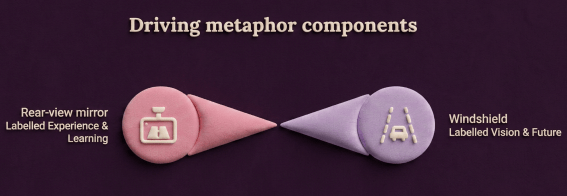
A doctor friend recently shared an important learning from his years of practice. It made me think of a simple analogy: life is like driving a car. We look primarily through the windshield, but we occasionally check the rear-view mirror.
The windshield shows where we are going. The rear-view mirror reminds us where we have come from.
We need both.
The Windshield and Rear-View Mirror of Life
We cannot drive forward by constantly staring at the rear-view mirror. Similarly, we cannot build a meaningful life by remaining trapped in yesterday’s successes or failures.
But ignoring the mirror altogether is equally dangerous.
Our past contains lessons about our decisions, relationships, mistakes and strengths. The mature approach is simple: look back, learn, and look forward again.
This philosophy becomes increasingly important as we become successful. A promotion, business achievement or professional reputation can sometimes make us forget the person we were before success arrived.
Being grounded does not mean thinking small.
It means understanding that achievement is something you have accomplished, not everything you are.
How Personality Impacts Personal Life
Our personality travels everywhere with us.
Confidence can inspire people, but excessive confidence can become arrogance. Compassion can strengthen relationships, but poor boundaries can create problems. Being decisive can help us lead, but refusing to listen can make us blind to reality.
The question is therefore not, “Do I have a strong personality?”
The better question is, “Does my personality make the people around me better?”
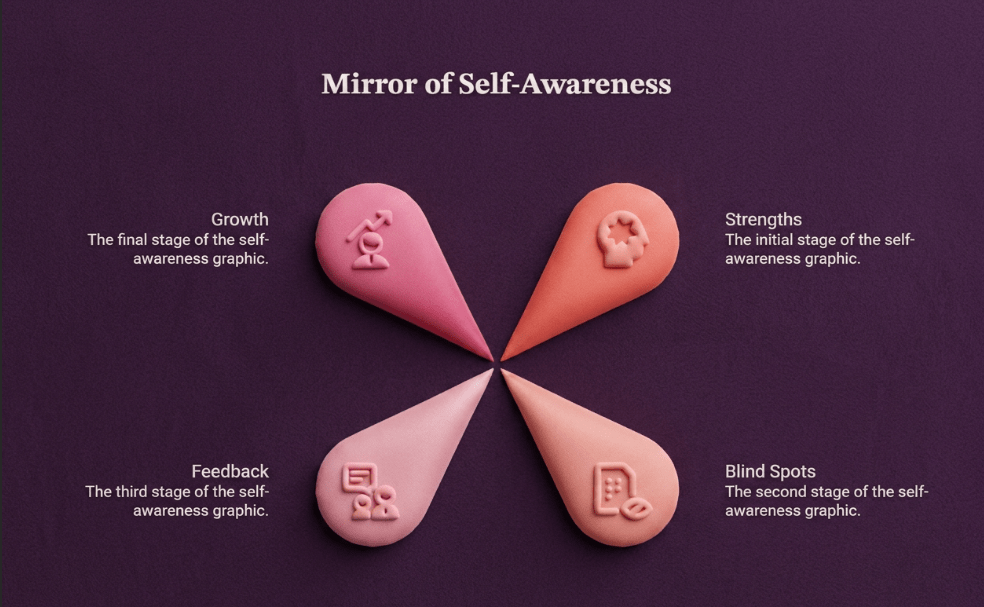
Our family and close friends often become our most honest rear-view mirrors. If several people tell us that we do not listen, react too quickly or take ourselves too seriously, perhaps it is worth examining that feedback.
Self-awareness is not weakness.
It is the foundation of personal growth.
How the Same Principle Impacts Business
Business needs ambition. Without ambitious thinking, entrepreneurs rarely create something significantly different.
But ambition without grounding can become dangerous.
A founder may fall in love with an idea that customers do not want. A leader may become so convinced of being right that employees stop challenging decisions. A company may celebrate growth while ignoring cash flow, culture or customer dissatisfaction.
The windshield asks:
“Where are we going?”
The rear-view mirror asks:
“What have we learned?”
Successful businesses continuously ask both questions.
A grounded entrepreneur can think about building a global company while still listening carefully to one unhappy customer.
Doctors perhaps understand this balance better than most.
A doctor may begin by treating one patient but eventually start asking much bigger questions: Can healthcare become more accessible? Can technology improve diagnosis? Can prevention reduce suffering? Can research change the lives of millions?
These are worthy ambitions.
But medicine also teaches humility. Every patient is different. Every decision carries responsibility. Sometimes the right answer is to consult another expert or acknowledge uncertainty.
A doctor can dream of transforming healthcare without turning every act of professional responsibility into a heroic story.
Honest service does not need unnecessary heroism.
The patient should remain at the centre—not the professional’s image.
Skyroot: An Indian Dream That Reached the Sky
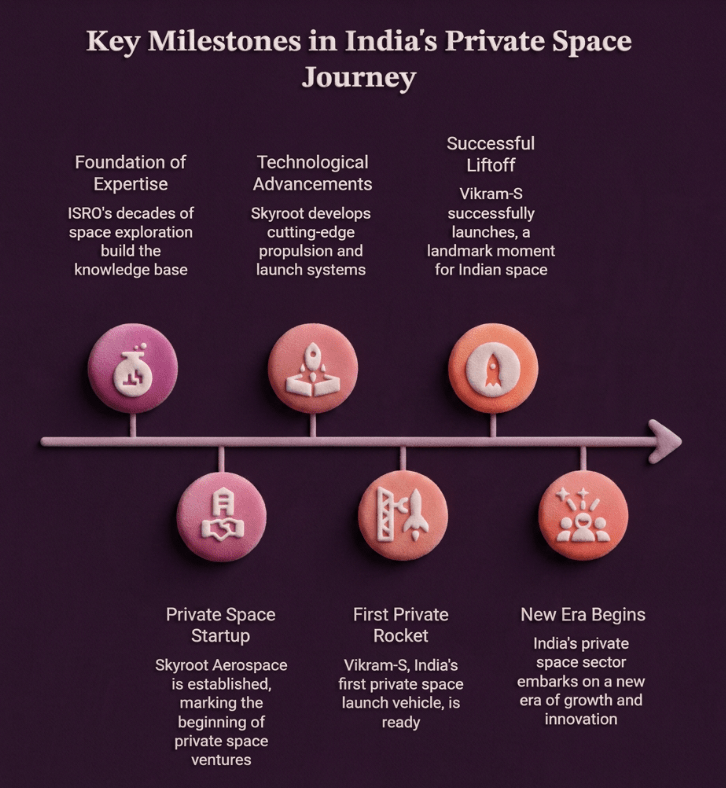
The story of Skyroot Aerospace is a wonderful example of Indian ambition backed by grounded execution.
Founded by former ISRO scientists Pawan Kumar Chandana and Naga Bharath Daka, Skyroot set out to build rockets as a private Indian space company—a dream that once seemed extraordinarily difficult.
On 18 November 2022, Skyroot’s Vikram-S successfully completed a suborbital mission, becoming the first rocket developed by an Indian private space company to launch into space.
The lesson is bigger than the rocket.
They dreamed beyond conventional boundaries, but engineering, science, testing and execution kept that dream grounded in reality.
Physics does not respond to hype.
A rocket either works or it does not.
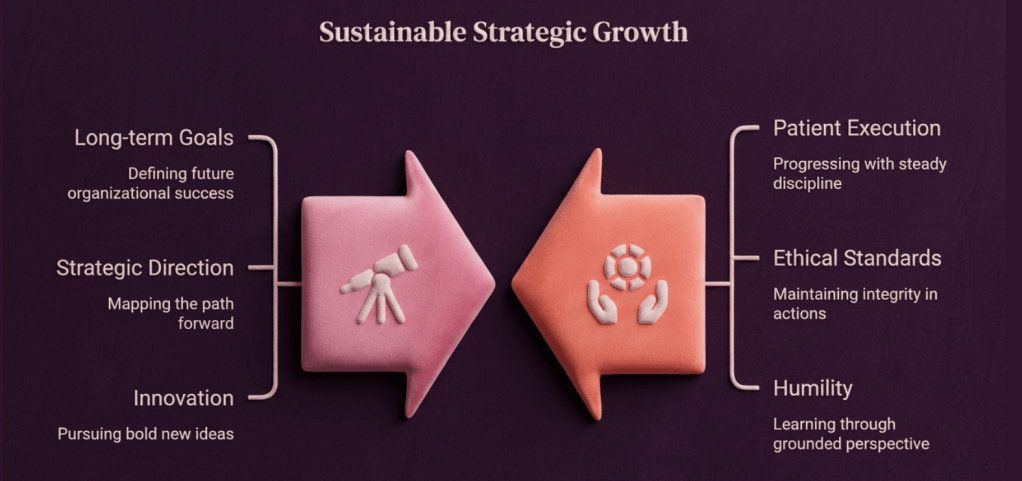
That is the essence of grounded ambition: dream like a visionary, execute like an engineer.
Why Learning This Early Compounds Over Time
Some lessons become more valuable the earlier we learn them.
If a young professional learns to accept feedback, that habit can improve hundreds of future relationships. If an entrepreneur learns to separate ego from business decisions, it can prevent costly mistakes. If a leader learns to give credit and accept responsibility, trust compounds around that person.
Small habits become patterns.
Patterns become reputation.
Reputation creates opportunities.
That is why grounded ambition is a long-term advantage.
Do not wait until success teaches you humility. Practice it while you are still climbing.
Lessons From Indian and Global Leaders
Ratan Tata demonstrated that enormous institutional influence can coexist with humility and dignity.
A. P. J. Abdul Kalam encouraged Indians to dream big while emphasizing knowledge, discipline and hard work.
Kiran Mazumdar-Shaw showed how scientific ambition and entrepreneurial courage can build globally relevant institutions.
Internationally, Satya Nadella has emphasized empathy and a growth mindset while leading Microsoft through major technological change.
Warren Buffett has repeatedly demonstrated the power of patience, rationality and knowing the limits of one’s knowledge.
Their careers are different, but the lesson is similar:
The higher you rise, the more important it becomes to remain grounded.
Confidence, Ego or Arrogance?
There is a fine line between the three.
Confidence says: “I can try.”
Ego says: “I must be seen as the person who succeeds.”
Arrogance says: “I cannot be wrong.”
Confidence allows us to dream.
Humility allows us to learn.
Together, they create sustainable success.
A Simple 7-Step Action Plan
Define your windshield: Write down your three- to five-year vision.
Check your rear-view mirror: Identify three mistakes and three lessons from your past.
Ask for honest feedback: Ask people you trust what you should continue and what you should change.
Separate ego from ambition: Ask whether you want the achievement or merely the recognition.
Create measurable milestones: Convert your big dream into weekly and monthly actions.
Stay connected to your values: Decide what you will never compromise for money, status or recognition.
Review and adjust: Look backward briefly, learn, and return your eyes to the road.
Conclusion: Fly High, Stay Grounded
Perhaps the greatest lesson is this:
Do not make your dreams smaller to remain humble. Make your character stronger to carry bigger dreams.
Look through the windshield and imagine what is possible. At the same time, use the rear-view mirror to remember your journey, learn from your mistakes and remain grateful for the people who helped you along the way.
Whether you are a doctor, entrepreneur, professional, student or leader, the principle remains the same.
Fly high. Dream boldly. Build something meaningful. But keep your feet firmly on the ground.
What does “fly high, but stay grounded” mean to you? Share your thoughts and experiences in the comment section below. Your story may give someone else the perspective they need.
If you know at least one person who needs to understand this balance between ambition and humility, please share this article with them.
And if you haven’t subscribed yet, please subscribe through the Subscription Box at the bottom of the page to receive future articles by email.
Frequently Asked Questions
1. What does “fly high but stay grounded” mean?
It means pursuing ambitious goals without losing humility, values, self-awareness or connection with reality.
2. How does the windshield and rear-view mirror analogy apply to life?
The windshield represents the future and our vision. The rear-view mirror represents our experiences and lessons. We need to learn from the past without allowing it to stop our forward movement.
3. Why is humility important in business?
Humility helps entrepreneurs listen to customers, accept criticism, recognize mistakes and change direction when necessary.
4. What can doctors learn from this philosophy?
Doctors can think beyond individual patients and contribute to larger healthcare improvements while remaining grounded in ethics, evidence, humility and patient welfare.
5. What is the biggest lesson from Skyroot?
Dream beyond limitations, but let disciplined execution turn the dream into reality.
Thanks Doel.🙏 But it was a big learning of a great doctor and a close friend of mine. When he shared with me that ignited my inner self to elaborate on the thesis. 😊
I highlighted and tried to pay my respect to the entire doctor fraternity who have to go through in the daily practice. You as a Dr can relate. My salute to the entire doctor fraternity.🙏
Blissipline, a philosophy merging inner joy with disciplined action, emphasizes that success stems not only from achievements but also from the journey toward them. Rooted in Sufi wisdom, it promotes enjoying the process, better decision-making, and sustainable fulfillment across various life roles. Research supports that meaningful engagement elevates well-being and performance.
Silent Transformation refers to the gradual, unnoticed process of personal and professional improvement achieved through consistent, small actions over time. Unlike flashy successes, true growth derives from discipline and quiet decision-making. Emphasizing long-term habits leads to significant life changes and sustainable business success, highlighting that lasting achievements aren’t always visible immediately.
Have you ever looked back at a decision and wondered, “What would have happened if I had simply believed I could do it?” Most people assume success is primarily driven by intelligence, education, experience, or resources. While those factors matter, there is something even more fundamental operating beneath them all: beliefs. The beliefs you hold…
The content emphasizes that beliefs are tools for interpreting reality, not the truth itself. It encourages individuals to question and test their beliefs, as unexamined assumptions can limit personal and professional growth. By challenging these beliefs, one can uncover opportunities and enhance decision-making, ultimately leading to significant transformations in life and career.
The content discusses the pervasive issue of imposter syndrome, where individuals doubt their accomplishments despite evidence of their competence. It contrasts this with intellectual humility, the recognition of one’s knowledge limits and the willingness to learn. Embracing intellectual humility fosters personal growth, trust, and effective leadership, promoting continuous learning and adaptation.










Leave a Reply