

Have you ever ended a busy day wondering, “I was occupied from morning to night… so why did I accomplish so little?”
If your answer is “yes,” you’re not alone. Most people don’t struggle because they lack talent, intelligence, or opportunities. They struggle because they confuse traction with distraction.
Every day, these two invisible forces compete for your attention. One quietly pulls you toward your purpose, helping you make better decisions and build a meaningful life and business. The other slowly steals your focus, time, and energy—often without you even realizing it.
The sooner you understand the difference between Traction and Distraction, the sooner you’ll begin making choices that compound into extraordinary results. After all, success isn’t built by a few big decisions; it’s built by thousands of small ones made every single day.
What is Traction? – The Force That Moves You Forward
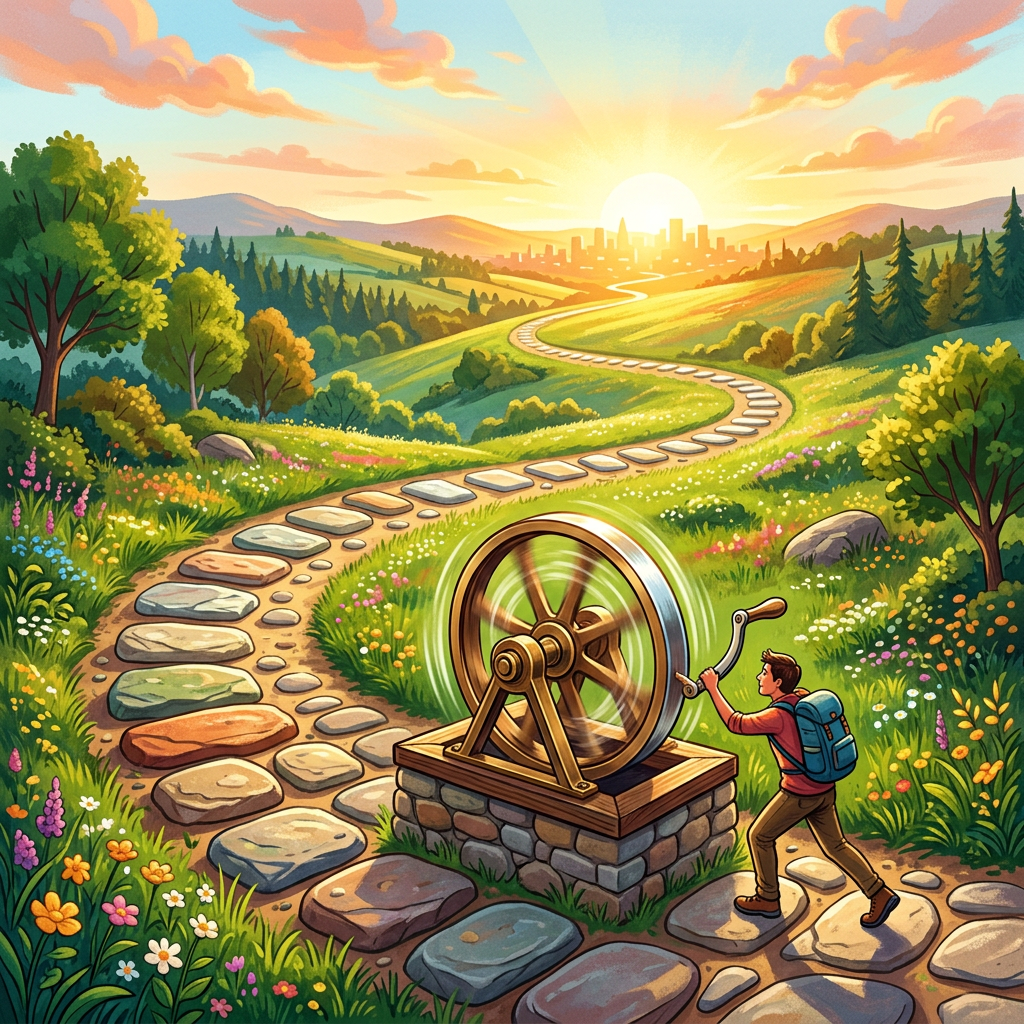
Traction is anything that naturally draws you closer to your purpose, values, goals, and the person you aspire to become.
Unlike motivation, which comes and goes, traction creates a genuine desire to move forward. It doesn’t always feel easy, but it always feels meaningful.
Think of traction as the North Star guiding a traveler. Storms may come, and the journey may be long, but the direction remains clear.
Everyday examples of Traction
- Reading a book that improves your knowledge.
- Learning a new skill that enhances your career.
- Spending quality time with your family.
- Exercising because you value long-term health.
- Building your business instead of chasing shortcuts.
- Investing money instead of spending impulsively.
- Having conversations with mentors who challenge your thinking.
In business, traction means focusing on creating value rather than chasing vanity metrics. Entrepreneurs attracted to solving customer problems naturally build stronger brands than those attracted only to quick profits.
The beautiful thing about traction is that it creates momentum. One good habit leads to another, one wise decision strengthens the next, and before long, progress becomes part of your identity.
What is Distraction? – The Silent Success Killer
Distraction is anything that pulls your attention away from what truly matters.
Here’s the tricky part: distractions rarely look dangerous. In fact, they often appear exciting, urgent, or even productive.
That’s why they are so powerful.
Everyday examples of Distraction
- Checking Instagram every few minutes.
- Watching “just one more” YouTube video.
- Constantly switching between unfinished tasks.
- Responding instantly to every notification.
- Comparing your life with people on social media.
- Attending meetings that add little value.
- Procrastinating by doing less important work.
Distraction rarely destroys success overnight.
Instead, it quietly steals ten minutes here, twenty minutes there, one opportunity after another.
Eventually, people don’t lose because they lacked ability.
They lose because they repeatedly lost their attention.
As author James Clear wisely says,
“Every action you take is a vote for the type of person you wish to become.”
Your attention determines where those votes go.
The biggest difference isn’t the activity itself.

It’s the intention behind it.
How Traction Improves Decisions in Life and Business
Every decision begins with attention.
Whatever attracts your attention eventually influences your thinking, your actions, and ultimately your results.
A student attracted to learning doesn’t study merely to pass exams. They study because they enjoy growing. Better grades naturally follow.
An entrepreneur attracted to solving customer problems creates products people genuinely love.
A manager attracted to developing people builds stronger teams instead of merely supervising them.
A leader attracted to learning adapts faster than competitors.
Over time, Traction creates something priceless: clarity.
When your purpose becomes stronger than temporary temptations, decision-making becomes much easier.
You stop asking,
“What feels good today?”
Instead, you begin asking,
“What serves my future?”
That one question changes everything.
How Distraction Damages Life and Business
Most failures aren’t dramatic.
They are gradual.
Businesses don’t collapse overnight because of one distraction. They decline because leaders slowly stop focusing on customers, innovation, people, or quality.
Similarly, relationships don’t weaken in a single day. They weaken through repeated moments of divided attention.
Distraction also affects mental health.
Constant notifications keep the brain in reaction mode.
Multitasking reduces deep thinking.
Comparison creates unnecessary anxiety.
Procrastination creates guilt.
Ironically, many people become exhausted not because they worked too much, but because they constantly switched between tasks without completing any.
Distraction doesn’t simply waste time.
It fragments your mind.
Social Media, Netflix, and Relaxation: Should You Feel Guilty?
This is where many professionals misunderstand the idea of distraction.
Let’s clear the confusion once and for all.
Relaxation is not distraction.
Escapism is distraction.
There is a huge difference.
Imagine you’ve completed your important work for the day.
You spend two hours watching a movie with your family.
You laugh together.
You recharge mentally.
You sleep peacefully.
That isn’t distraction.
That’s intentional recovery.
Now imagine opening Instagram during work “for just five minutes.”
Forty-five minutes disappear.
You feel guilty.
Your work remains unfinished.
Your stress increases.
That is distraction.
The activity isn’t the problem.
The intention is.
A simple rule can help:
If relaxation is planned, it refreshes you. If it replaces responsibility, it distracts you.
Never feel guilty for planned rest.
Even elite athletes schedule recovery.
Great leaders do the same.
Rest is productive when it prepares you for meaningful work.
Why Understanding Traction Early in Life Creates Extraordinary Results
One of the greatest advantages anyone can have is understanding this principle early.
Life is a game of compounding.
Reading ten pages daily becomes dozens of books over the years.
Saving a little every month becomes financial security.
Improving one leadership skill each year transforms careers.
Likewise, thirty minutes of daily distraction quietly becomes more than 180 hours every year—the equivalent of over four full workweeks.
The earlier you choose Traction over distraction, the greater the compound effect becomes.
This is why successful leaders appear calm.
They’ve simply practiced choosing what matters for years.
Lessons from Successful Leaders
Ratan Tata
Ratan Tata consistently focused on long-term trust over short-term gains.
His leadership reminds us that reputation grows when purpose remains stronger than temporary distractions.
One of his inspiring thoughts is:
“Take the stones people throw at you and use them to build a monument.”
Instead of reacting emotionally, he focused on creating lasting value.
N. R. Narayana Murthy
The Infosys founder built one of India’s most respected companies through ethics, discipline, and consistency.
While many chased rapid expansion, Murthy remained attracted to strong governance and customer trust.
That focus became Infosys’ competitive advantage.
Steve Jobs
Steve Jobs once said,
“People think focus means saying yes to the thing you’ve got to focus on. But it means saying no to the hundred other good ideas.”
This perfectly defines choosing Traction over distraction.
Apple succeeded not by doing everything but by doing a few things exceptionally well.
Satya Nadella
After becoming CEO of Microsoft, Satya Nadella transformed the company by creating a culture of learning and empathy.
His advice,
“Don’t be a know-it-all; be a learn-it-all.”
shows that Traction toward continuous learning is far more powerful than the distraction of ego.
A Simple 7-Step Action Plan to Choose Traction Every Day
Step 1: Define Your North Star
Write down your three biggest priorities in life and business.
If something doesn’t support them, question whether it deserves your attention.
Step 2: Audit Your Attention
For one week, observe where your attention goes.
Not just your time—your attention.
Attention is your most valuable currency.
Step 3: Identify Your Biggest Distractions
Write down the three habits that repeatedly steal your focus.
Awareness is the beginning of change.
Step 4: Schedule Relaxation Without Guilt
Plan time for family, movies, hobbies, exercise, or travel.
Relaxation becomes healthy when it’s intentional.
Step 5: Protect Deep Work
Silence unnecessary notifications.
Finish important work before checking social media.
Small boundaries create remarkable productivity.
Step 6: Reflect Every Evening
Ask yourself:
“Did today’s actions move me closer to my purpose or further away?”
This simple question builds self-awareness.
Step 7: Repeat Consistently
Remember, success isn’t built in one extraordinary day.
It’s built through ordinary days lived with extraordinary focus.
Final Thoughts: Your Attention Creates Your Future
Every morning, life quietly asks you one question:
“What deserves your attention today?”
How you answer determines far more than your schedule. It shapes your habits, your relationships, your leadership, your business, and ultimately your legacy.
You don’t need to eliminate every distraction. That’s unrealistic. What matters is becoming conscious of the difference between Traction and Distraction. When you intentionally choose what aligns with your purpose—and intentionally rest without guilt—you stop living on autopilot and start leading your life with clarity.
Remember this simple truth:
Your calendar shows where your time goes. Your attention reveals where your future is heading.
Choose wisely.
📌 Join the Conversation
Now it’s your turn.
💬 What is one Traction that helps you grow, and what is one distraction you want to reduce this week? Share your thoughts in the comments section below. Your experience could inspire someone else to take their first step.
📤 If this article resonated with you, please share it with at least one friend, colleague, student, or entrepreneur who could benefit from understanding this powerful principle.
📩 If you haven’t subscribed yet, don’t forget to enter your email in the Subscription Box at the bottom of this page. You’ll receive practical insights on leadership, personal growth, productivity, and entrepreneurship delivered straight to your inbox.
Your future is shaped not by what demands your attention—but by what you intentionally choose to give it.
Stay tuned!!





Leave a Reply