
Have you ever looked back at a decision and wondered, “What would have happened if I had simply believed I could do it?”
Most people assume success is primarily driven by intelligence, education, experience, or resources. While those factors matter, there is something even more fundamental operating beneath them all: beliefs.
The beliefs you hold about yourself, your abilities, your future, and the world around you quietly shape your actions every day. Some beliefs expand possibilities. Others shrink them.
This article explores the difference between limiting beliefs and liberal beliefs, how they influence life and business, and what practical steps you can take to develop a mindset that supports growth, leadership, and long-term success.
What Is a Limiting Belief?
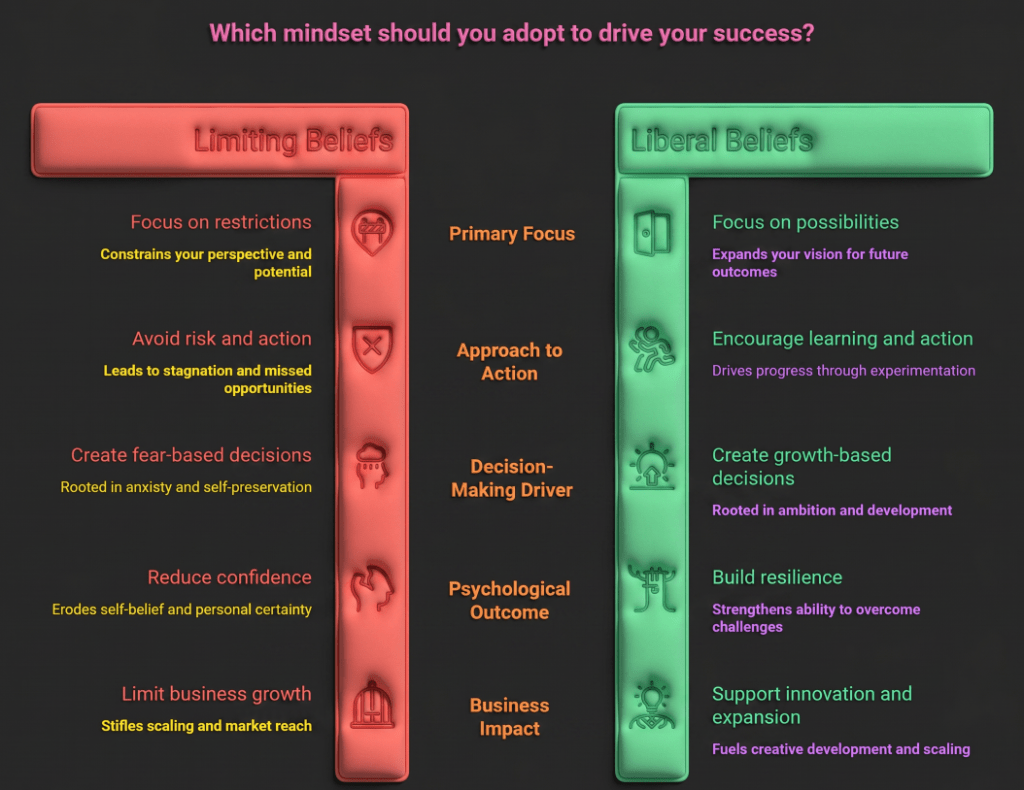
A limiting belief is a thought, assumption, or conviction that restricts what you believe is possible for yourself.
Common examples include:
- “I’m not good enough.”
- “I don’t have the right connections.”
- “Business success is only for wealthy people.”
- “I’m too young.”
- “I’m too old.”
The problem is that these beliefs often feel like facts even when they are merely interpretations.
A Personal Story Many Can Relate To
Imagine a young professional named Rahul. During school, a teacher once told him that he wasn’t particularly good at mathematics. Years later, despite performing well in other subjects, Rahul still avoided finance-related roles because he carried that label with him.
The original comment lasted only a few seconds. The belief lasted for years.
How many opportunities did he miss because of a story he accepted as truth?
Now ask yourself:
What label from your past might still be influencing your present decisions?
What Is a Liberal Belief?
A liberal belief is an open, flexible, growth-oriented belief that allows room for learning, adaptation, and possibility.
It doesn’t mean ignoring reality. It means recognizing that current circumstances do not permanently define future outcomes.
Examples include:
- “I can learn what I don’t know.”
- “Every skill can improve with practice.”
- “Failure teaches valuable lessons.”
- “Challenges help me grow.”
The Difference in One Simple Sentence
A limiting belief says:
“I can’t.”
A liberal belief says:
“I can’t yet.”
That one word—yet—can completely change a person’s future.
How Limiting Beliefs Affect Life
They Stop Action Before It Begins
Many dreams never fail because of external obstacles.
They fail because someone convinced themselves not to try.
Consider someone who wants to start a fitness journey.
A limiting belief says:
“I’ve always been unhealthy. Exercise won’t work for me.”
As a result, they never begin.
The belief becomes self-fulfilling.
Reflection Question
What goal have you postponed because you’ve already decided the outcome in advance?
They Influence Everyday Decisions
Beliefs influence hundreds of small decisions every day.
When someone believes they aren’t leadership material, they may:
- Avoid speaking up in meetings
- Decline promotions
- Stay in comfort zones
- Avoid networking opportunities
Over time, those small decisions compound into dramatically different outcomes.
The future is often shaped less by major events and more by repeated daily choices.
They Reduce Confidence and Resilience
People with strong limiting beliefs often interpret setbacks as proof they were right all along.
For example:
- Rejection becomes proof they’re not capable.
- Failure becomes proof they’re not talented.
- Criticism becomes proof they should quit.
Instead of viewing obstacles as temporary, they see them as permanent.
How Liberal Beliefs Transform Life
They Encourage Continuous Learning
People with liberal beliefs understand that skills can be developed.
Instead of asking:
“Am I good enough?”
They ask:
“What do I need to learn?”
That shift creates enormous growth over time.
Case Study: Learning a New Skill
A working mother wanted to move into digital marketing but had no formal background.
Rather than saying, “I’m not qualified,” she spent one hour every evening learning online.
Within eighteen months, she secured a new role with significantly higher income.
The difference wasn’t talent.
The difference was belief.
They Create Greater Resilience
People with growth-oriented beliefs respond differently to setbacks.
When something goes wrong, they ask:
- What can I learn?
- What should I improve?
- How can I adapt?
They don’t deny challenges.
They simply refuse to let challenges define them.
How Limiting Beliefs Affect Business
The Hidden Cost of Playing Small
Many businesses struggle not because of market conditions but because of leadership beliefs.
Consider a small business owner who believes:
“Large companies always win.”
As a result:
- Marketing efforts become weak.
- Innovation slows.
- Expansion plans are delayed.
- Opportunities are ignored.
The business stays small because the owner’s thinking stays small.
Reflection Question
Are there opportunities in your business that you’ve dismissed without fully exploring?
Fear-Based Decision Making
Limiting beliefs often create fear-driven decisions.
Examples include:
- Delaying product launches
- Avoiding investments
- Refusing partnerships
- Ignoring new technologies
While caution has value, excessive caution can become costly.
Business growth usually requires calculated risks.
How Liberal Beliefs Drive Business Growth
Innovation Starts with Possibility
Every successful innovation begins with a belief that improvement is possible.
Before a new product exists, someone must believe:
“There has to be a better way.”
That mindset fuels creativity and progress.
Better Leadership and Team Culture
Leaders shape organizational beliefs.
When leaders embrace growth-oriented thinking, teams become more willing to:
- Experiment
- Learn
- Collaborate
- Solve problems
Employees perform best when they feel safe learning from mistakes rather than being punished for them.
Real-World Leadership Examples
Narayana Murthy – Infosys
At a time when many doubted India’s ability to become a global technology powerhouse, Narayana Murthy believed Indian talent could compete internationally.
That belief helped create one of the most respected technology companies in the world.
Ratan Tata – Thinking Beyond Boundaries
Ratan Tata consistently challenged assumptions about what Indian companies could achieve globally.
His willingness to think beyond traditional limits enabled the Tata Group to expand its international footprint and build global credibility.
Satya Nadella – The Power of a Growth Mindset
When Satya Nadella became CEO of Microsoft, he promoted a culture of learning rather than perfection.
His message was simple:
Don’t focus on proving you’re the smartest person in the room.
Focus on becoming the person who learns the fastest.
That philosophy helped transform Microsoft’s culture and performance.
Why Learning This Lesson Early Changes Everything
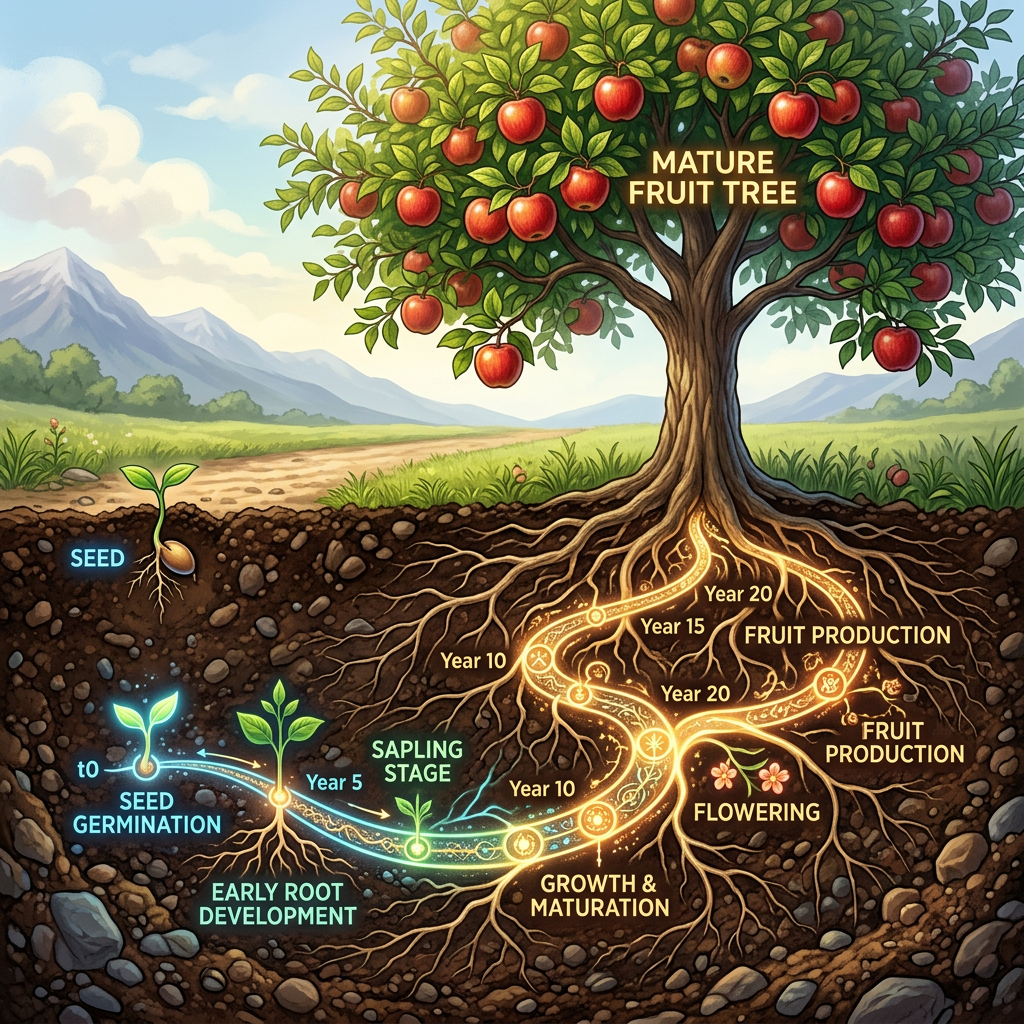
Beliefs compound much like investments.
A person who adopts empowering beliefs at age twenty gains decades of additional growth opportunities.
Imagine two individuals:
Person A
Believes:
“I probably can’t.”
Person B
Believes:
“I’ll figure it out.”
Ten years later, their experiences, skills, relationships, and opportunities may be dramatically different.
The gap often begins with belief.
Reflection Exercise
Write down:
- One limiting belief you currently hold.
- One opportunity it may be preventing.
- A more empowering belief you could adopt.
This simple exercise can create surprising clarity.
A Step-by-Step Action Plan to Replace Limiting Beliefs
Step 1: Identify the Belief
Write down recurring negative thoughts.
Awareness is the first step toward change.
Step 2: Challenge It
Ask:
- Is this absolutely true?
- What evidence supports it?
- What evidence challenges it?
Step 3: Reframe It
Replace:
“I’m not capable.”
With:
“I’m still developing this skill.”
Step 4: Take One Small Action
Action creates evidence.
Evidence builds confidence.
Confidence strengthens belief.
Step 5: Surround Yourself with Growth-Oriented People
Your environment influences your thinking more than you realize.
Spend time with people who encourage growth and possibility.
Step 6: Build a Learning Habit
Read books.
Listen to podcasts.
Seek mentors.
Invest in your personal development.
Step 7: Review Progress Monthly
Track wins, lessons, and improvements.
Growth becomes easier when you can see evidence of progress.
Remember:
- Beliefs influence actions.
- Actions influence results.
- Results influence future beliefs.
Changing beliefs can change the entire cycle.
Conclusion
The difference between a limiting belief and a liberal belief may appear small on the surface, but its impact can be life-changing.
Every promotion pursued, every business launched, every skill learned, and every opportunity seized often begins with a simple belief: “This is possible.”
The most successful leaders, entrepreneurs, and professionals are not necessarily those with the fewest obstacles. They are often the people who refuse to let limiting beliefs determine their future.
Today, take a moment to identify one belief that may be holding you back.
Then ask yourself:
What would I do differently if I truly believed I could succeed?
The answer may reveal your next breakthrough.
Your Next Step
Take out a notebook right now and write down:
- One limiting belief you want to eliminate.
- One liberal belief you want to adopt.
- One action you will take within the next 24 hours.
Commit to that action before the day ends.
Small actions create momentum. Momentum creates confidence. Confidence creates transformation.
Join the Conversation
What is one limiting belief you have overcome—or are currently working to overcome?
Share your thoughts in the comments section below. Your story could inspire someone else who is facing the same challenge.
If this article helped you, please share it with at least one person who would benefit from understanding the power of beliefs.
And if you haven’t subscribed yet, enter your email in the Subscription Box below to receive future articles on mindset, leadership, personal growth, and business success directly in your inbox.
Stay tuned!!






Leave a Reply