

What if treating everyone the same is actually unfair?
It sounds uncomfortable at first, doesn’t it?
Most of us were taught from childhood that fairness means equality — same rules, same treatment, same opportunities for everyone. Schools reward it. Workplaces promote it. Society praises it. But life has a strange way of revealing a deeper truth: people are not the same, circumstances are not the same, and leadership cannot succeed with a “one-size-fits-all” mindset.
Think about a doctor treating patients. Imagine if every patient received the exact same medicine regardless of age, health condition, or symptoms. That would not be fairness. That would be negligence.
The same principle applies in life, leadership, parenting, friendship, and business.
Real fairness means understanding people individually and responding wisely to their needs, strengths, challenges, and potential. Sometimes that means offering support to one person and accountability to another. Sometimes it means giving flexibility to one employee while giving guidance to someone else.
That is the paradox:
Fairness is treating people differently.
And once you truly understand this idea, it changes the way you lead, communicate, build relationships, and make decisions for the rest of your life.
Understanding the paradox: Fairness is not sameness
One of the biggest leadership mistakes people make is confusing equality with fairness.
Equality means giving everyone the exact same thing. Fairness means giving people what they need to succeed.
There is a powerful difference between the two.
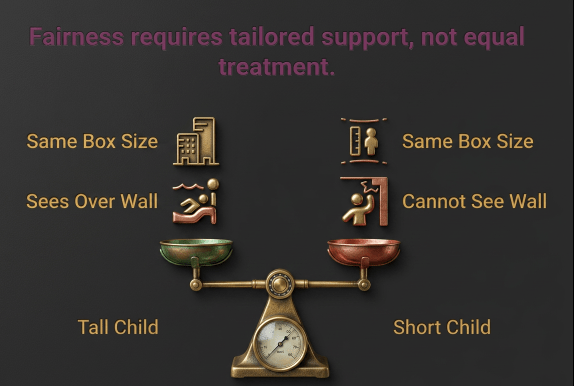
Now think about this in a workplace.
A new employee may need mentorship and detailed guidance. A senior employee may need autonomy and trust. Treating both identically may actually hurt their growth instead of helping it.
Great leaders understand this instinctively. They recognize that human beings are emotional, complex, and shaped by different experiences. Some people respond well to pressure. Others thrive with encouragement. Some need public recognition, while others value private appreciation.
A manager once shared an interesting story during a leadership seminar. He had two team members who constantly missed deadlines. Initially, he treated them both the same way — stricter monitoring and weekly reviews. One employee improved immediately. The other became more withdrawn and less productive.
Later, he discovered the second employee was silently struggling with caregiving responsibilities at home. Instead of more pressure, what they needed was temporary flexibility.
That small shift transformed performance completely.
Same problem. Different human realities. Different solutions.
That is the heart of fair leadership.
Why fairness creates stronger human connection
Every human being wants one thing deeply:
to feel seen and understood.
This is why fairness is closely connected to emotional connection in both life and business.
People naturally move closer to those who understand them instead of judging them through rigid rules. Think about your closest relationships. Chances are, those people do not treat you “like everyone else.” They understand your personality, struggles, communication style, fears, and strengths.
That emotional understanding builds trust.
In workplaces, employees rarely leave companies only because of salary. Many leave because they feel invisible. They feel unheard. They feel reduced to numbers instead of being treated as humans.
A personalized leadership approach changes that entirely.
Take customer service as another example. The businesses people remember are usually the ones that made them feel personally valued. A restaurant remembering your preferences. A mentor adjusting their teaching style to help you grow. A leader recognizing when you are struggling without making you feel weak.
These moments create loyalty because fairness, when practiced correctly, becomes deeply human.
This principle matters even more today because workplaces are more diverse than ever before. Different generations, personalities, and life experiences work together daily. A rigid leadership style often creates emotional distance.
Adaptive fairness creates connection because it communicates:
“I understand that your journey is different.”
And people work harder for leaders who genuinely understand them.
How understanding this early changes the direction of life
Some lessons improve your life temporarily. Others quietly compound for decades.
This is one of those rare lessons.
People who understand fairness deeply at an early age often become emotionally intelligent adults. They develop stronger relationships, better communication skills, and healthier professional networks because they stop expecting everyone to think and behave exactly like them.
Imagine two young professionals entering the workforce.
One believes fairness means treating everyone identically. The other understands that different people require different approaches.
The second person usually becomes a better communicator much faster. They learn how to navigate personalities, solve conflicts calmly, and build trust across teams.
That skill compounds enormously over time.
In personal life, this understanding reduces frustration too. You stop comparing people unfairly. You stop expecting your partner, friend, sibling, or colleague to react exactly as you would.
As a parent, this lesson becomes even more powerful. One child may need reassurance. Another may need independence. Treating both exactly the same may unintentionally damage one of them emotionally.
The same applies to entrepreneurship.
Successful entrepreneurs understand that teams are built with humans, not robots. One employee may be driven by purpose. Another by financial security. Another by growth opportunities.
Leaders who understand these emotional drivers build stronger cultures, lower employee turnover, and higher trust.
And trust compounds faster than strategy.
How successful Indian leaders practiced this principle
Ratan Tata: Compassion with accountability
Ratan Tata is admired not just because he built successful businesses, but because he consistently led with humanity.
After the 26/11 Mumbai attacks, Tata Group supported affected employees and families in deeply personal ways. The organization did not apply a cold corporate response. Instead, support was customized according to individual needs.
That is fair leadership in action.
People trusted him because they felt valued beyond productivity.
Indra Nooyi: Understanding people beyond job titles
Former PepsiCo CEO Indra Nooyi became famous for her emotional intelligence as a leader. One of her most memorable habits was writing letters to the parents of senior executives, thanking them for their contribution in raising exceptional individuals.
It was personal. Human. Thoughtful.
She understood that leadership is not only about performance metrics. It is about understanding the emotional ecosystem surrounding people.
That kind of leadership creates extraordinary loyalty.
Narayana Murthy: Building people differently
Infosys founder Narayana Murthy believed strongly in merit and discipline, but he also invested heavily in nurturing talent differently based on potential and growth stage.
Young employees were mentored carefully instead of being treated exactly like experienced professionals. That adaptive leadership style helped Infosys become one of India’s most respected companies.
A practical action plan to practice fair leadership daily
Understanding fairness intellectually is one thing. Practicing it daily is where transformation happens.
1. Observe before reacting
The next time someone disappoints you, pause before judging.
Ask yourself:
“What might this person be going through right now?”
This single habit improves emotional intelligence dramatically.
Daily practice: Before responding emotionally, wait two minutes and consider context.
2. Learn individual motivations
Not everyone is motivated by money, praise, or promotions.
Some value flexibility. Others value recognition. Others simply want growth.
Action step: During conversations, ask questions like:
- “What helps you do your best work?”
- “What kind of support helps you most?”
The answers often surprise people.
3. Personalize communication
Some people appreciate direct honesty. Others need gentler delivery.
Good leaders adjust communication without compromising truth.
Example: If someone feels discouraged easily, begin feedback with encouragement before discussing improvement areas.
4. Create equal respect, not identical treatment
This distinction matters deeply.
Every person deserves equal dignity and respect. But support systems, expectations, and communication styles may differ.
Fairness should never become favoritism.
5. Reflect weekly on your leadership
At the end of each week, ask:
- Did I truly listen to people?
- Did I assume everyone needed the same thing?
- Did someone feel unseen because I applied rigid thinking?
Self-awareness strengthens leadership over time.
The emotional truth about fairness and leadership
The people who changed our lives rarely treated us like everyone else.
They understood us.
Maybe it was a teacher who saw potential in you before anyone else did. A manager who gave you confidence during a difficult season. A parent who adjusted their approach because they understood your personality deeply.
That is the emotional power of fair leadership.
It makes people feel valued instead of managed.
And in a world where many people feel overlooked, misunderstood, or emotionally exhausted, that kind of leadership becomes unforgettable.
Fairness is not about making everyone identical.
It is about helping each person become their best version.
That is leadership.
That is connection.
That is humanity.
Share your story and join the conversation
Have you ever experienced a situation where being treated differently actually felt more fair and supportive?
Or have you struggled with balancing fairness and leadership in your workplace, business, or personal life?
Share your personal story, challenge, or leadership dilemma in the comments section below. Your experience might help someone else see fairness from a completely new perspective.
If this article resonated with you, share it with at least one person who may need a healthier understanding of leadership, empathy, and fairness.
And if you haven’t subscribed yet, enter your email in the Subscription Box below to receive more practical insights on leadership, mindset, business growth, and human connection directly in your inbox.
Stay tuned!!






 Wining Life & Business
Leave a comment