

Have you ever paused and asked yourself—am I giving too much, or am I truly valued in return? That simple question sits at the heart of understanding the difference between being in love and being loved. It’s not just a relationship concept; it quietly influences your confidence, your decisions, and even how far you go in your career or business.
Let’s explore this in a way that feels real, not theoretical.
The Real Meaning of Being in Love
Being in love is deeply personal. It’s the energy you pour into someone, something, or even a dream. I remember a phase early in my career when I was completely in love with an idea—working late nights, skipping breaks, obsessing over perfection. It felt meaningful, even exciting. But I wasn’t asking the important question: Was this effort giving back to me in any way?
That’s what being in love often looks like—it’s driven by emotion, passion, and hope. You give without counting. You show up even when it’s inconvenient. It’s beautiful, but it can also be blinding.
In life, this could mean staying in relationships where you’re the only one trying. In business, it shows up when you’re emotionally attached to an idea that the market doesn’t actually need.
Question for you:
Where in your life are you giving your energy without checking if it’s being valued?
The Real Meaning of Being Loved
Being loved feels different. It’s quieter, but stronger. It’s when someone—or something—meets you halfway. It’s when your effort is acknowledged, your presence matters, and your contribution is respected.
Think about a time when you felt genuinely appreciated—maybe a manager recognized your work, or a friend showed up for you when it mattered most. That feeling of security? That’s being loved.
In business, being loved shows up as:
- Loyal customers who return
- Teams that trust leadership
- People recommending your work without being asked
A 2024 Edelman Trust Barometer report showed that 81% of consumers say trust is a deciding factor in their buying decisions. That’s not about being flashy—it’s about being trusted, which is another form of being loved.
Ask yourself:
Do the people or systems around me make me feel valued—or just used?
The Key Difference Between Being in Love and Being Loved
Let’s simplify it:
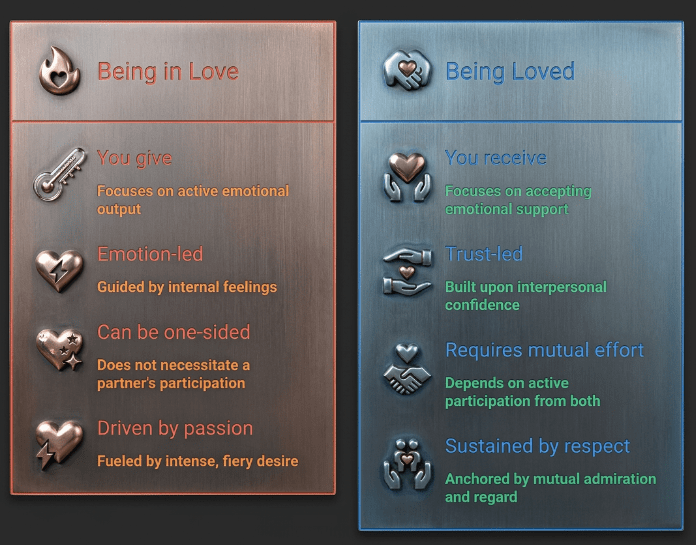
The real growth happens when you stop choosing one over the other and start seeking balance.
How This Shapes Connection in Life and Business
Here’s where things get interesting.
In personal life, many people stay stuck because they confuse intensity with connection. Just because you feel deeply doesn’t mean the relationship is healthy.
In business, founders often fall in love with their product—but forget to build something customers actually care about.
Let’s make it practical:
- A relationship thrives when both people feel seen
- A business grows when both the company and customer benefit
Simple reflection:
Are you building connections—or just chasing emotional highs?
How Understanding This Difference Changes Your Path
Once you see this clearly, your decisions start to shift.
You stop:
- Over-explaining your worth
- Staying where you’re tolerated
- Forcing outcomes that don’t align
And you start:
- Choosing people and opportunities that respect you
- Building systems that create mutual value
- Protecting your time and energy
This creates a compounding effect. Small better choices lead to stronger relationships, better business outcomes, and more clarity over time.
It’s like adjusting your direction by just a few degrees—you don’t notice it immediately, but over months or years, you end up in a completely different place.
Lessons from Successful Indian Leaders
Ratan Tata: Building Trust Over Hype
Ratan Tata didn’t just build companies—he built trust. Whether it was launching the Tata Nano or acquiring Jaguar Land Rover, his decisions were grounded in long-term value rather than short-term applause. People trust Tata, and that’s why the brand is deeply respected.
Lesson: Being loved at scale comes from consistency and ethics, not just ambition.
Narayana Murthy: Valuing People as Assets
Murthy built Infosys with a strong belief: employees are not resources, they are partners. He ensured transparency, fair policies, and respect.
Quote:
“Performance leads to recognition. Recognition brings respect. Respect enhances power.”
That mindset created a culture where people didn’t just work—they believed.
Lesson: When people feel valued, they give their best naturally.
Falguni Nayar: Listening Before Leading
Falguni Nayar didn’t just fall in love with beauty products—she understood what Indian consumers were missing. Nykaa succeeded because it listened before it sold.
Lesson: Businesses grow when customers feel understood, not targeted.
A Step-by-Step Action Plan You Can Start Today
Let’s make this actionable immediately:
1. Audit Your Energy
Write down:
- Where you’re over-investing
- Where you feel appreciated
Patterns will start to appear.
2. Define What “Being Loved” Means to You
Is it respect? Time? Recognition? Clarity here changes everything.
3. Start Small Boundary Shifts
Say no where needed. Speak up when something feels off. You don’t need dramatic changes—just consistent ones.
4. Ask for Feedback
In work or relationships, ask:
“What value do you feel you receive from me?”
The answer might surprise you.
5. Build Mutual Value Systems
- In life: communicate openly
- In business: focus on solving real problems
6. Weekly Reflection Question
Every week, ask yourself:
“Did I feel both passionate and valued this week?”
If the answer is no repeatedly, something needs to change.
Conclusion: Where Real Growth Begins
Understanding the difference between being in love and being loved isn’t just emotional intelligence—it’s life strategy.
When you balance both, you stop chasing and start aligning. You stop proving and start attracting. You stop burning out and start building sustainably.
Now here’s something for you:
👉 What’s one area in your life where you’ve been giving more than receiving?
👉 What’s one change you can make this week to create balance?
Drop your thoughts in the comments—I’d genuinely like to hear your perspective.
If this helped you, share it with at least one person who might need this clarity right now.
And if you haven’t already, subscribe through the email box below. These conversations are just getting started, and you won’t want to miss what’s next.
Stay tuned!!









Leave a comment