

In today’s fast-moving world, most interactions are quick, efficient, and goal-driven. But here’s a question worth asking: Are you building genuine relationships, or are you just completing transactions?
This distinction may seem subtle, but it has a powerful impact on your career growth, leadership style, and personal happiness.
What is Transactional Behaviour?
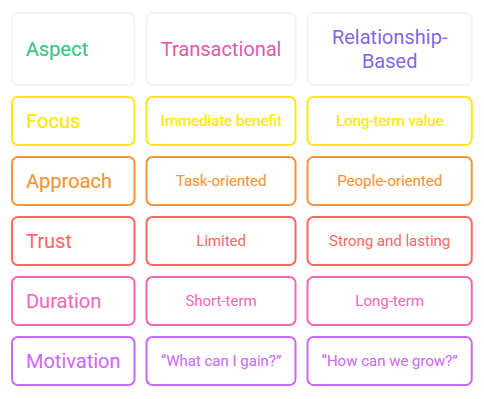
Transactional behaviour is simple: I give something, I get something in return. It’s practical, outcome-focused, and often short-term.
Examples:
- Reaching out to someone only when you need a favor
- Networking just to gain business leads
- Helping a colleague expecting immediate recognition
Transactional interactions are not inherently wrong. In fact, business often requires them. But when overused, they create shallow connections and limited trust.
What is Relationship-Based Behaviour?
Relationship-based behaviour goes beyond immediate gain. It focuses on trust, empathy, and long-term connection.
Examples:
- Checking in on someone without needing anything
- Supporting colleagues even when there’s no direct benefit
- Maintaining connections beyond business deals
These relationships build emotional capital, which often leads to deeper opportunities over time.
Key Differences Between Transactional and Relationship Behaviour
Why Relationships Matter More in the Long Run
While transactions may deliver quick wins, relationships build sustainable success.
- Trust opens doors that skills alone cannot
- People prefer working with those they trust
- Strong networks create long-term opportunities
In both life and business, people remember how you made them feel—not just what you did.
Lessons from Successful Indian Leaders
Ratan Tata
Known for his humility and people-first mindset, Ratan Tata built trust across employees, customers, and communities. His leadership shows that respect and empathy can scale globally.
Narayana Murthy
The Infosys founder focused on transparency and fairness, creating a culture where relationships mattered as much as results.
Dr. A.P.J. Abdul Kalam
He connected deeply with people, especially students, showing that genuine interest in others builds lasting impact.
Real-Life Scenarios: Spot the Difference
In Business
- Transactional: Closing a deal and moving on
- Relationship-based: Staying connected and adding value even after the deal
In Friendships
- Transactional: Only calling when you need help
- Relationship-based: Being present in both good and bad times
How to Shift from Transactional to Relationship Thinking
Here’s a practical step-by-step approach:
1. Show Genuine Interest
Ask meaningful questions. Listen actively.
2. Give Without Expectation
Offer help, insights, or support without tracking returns.
3. Stay Consistent
Keep in touch beyond immediate needs.
4. Value People, Not Just Outcomes
Focus on the person, not just the result.
5. Build Trust Over Time
Trust grows through small, consistent actions.
Powerful Quotes to Reflect On
“People don’t care how much you know until they know how much you care.” – Theodore Roosevelt
“The currency of real networking is generosity.” – Keith Ferrazzi
Conclusion
At its core, the difference between transactional and relationship behaviour comes down to intent.
Transactions may help you move fast, but relationships help you go far. Whether in business partnerships, friendships, or leadership roles, investing in people creates value that no short-term gain can match.
So the next time you interact with someone, ask yourself:
Am I here for a transaction—or a connection?
Join the Conversation 💬
Have you experienced the difference between transactional and relationship-based interactions?
Drop your thoughts in the comments, share this with your network, and if you found this valuable—don’t forget to subscribe using the subscription box at the bottom of the page.
Stay tuned!!





 Wining Life & Business
Leave a comment