

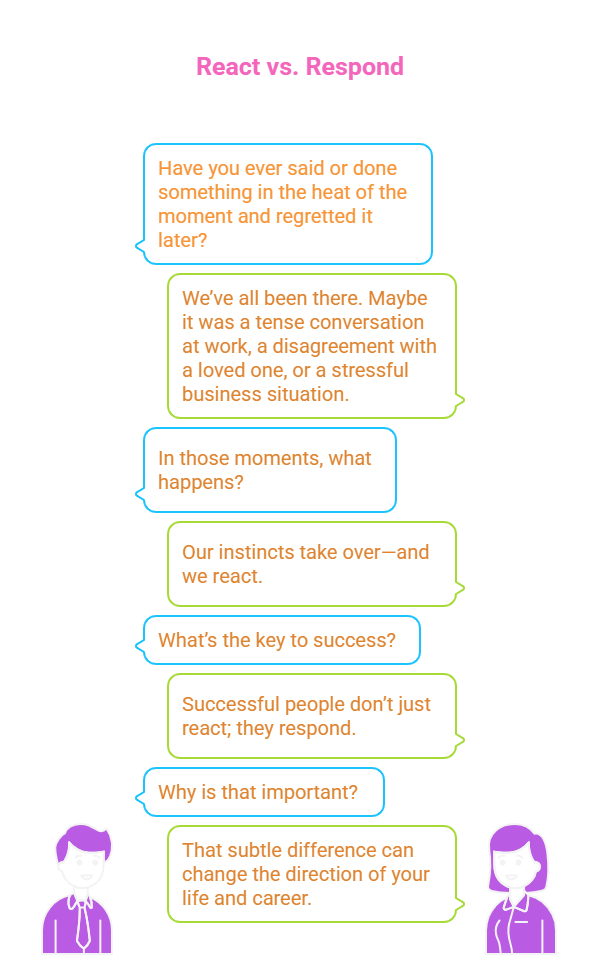
Reacting vs. Responding: What’s the Real Difference?
A reaction is quick, emotional, and often impulsive.
A response is thoughtful, measured, and based on understanding.
Imagine your coworker criticizes your idea in a meeting:
- If you react, you might snap back defensively.
- If you respond, you might take a breath, listen, and say, “That’s an interesting perspective—let’s explore it.”
The situation stays constructive, not confrontational.
Here’s the core difference:
- Reacting gives power to emotions.
- Responding gives power to wisdom.
In life and business, this distinction can determine your success.
Why Learning to Respond Matters More Than Ever
The pace of modern life makes it easy to react instantly—to texts, emails, news, or feedback. But successful individuals and leaders know how to pause before making a move.
When you respond, you:
- Think clearly and make better decisions.
- Build trust and respect in relationships.
- Prevent misunderstandings from escalating.
- Maintain your inner calm in chaos.
A single mindful pause can save you from hours—or even years—of regret.
Lessons from Great Indian Leaders
India has produced countless examples of thoughtful leadership—people who mastered the art of responding, not reacting.
- Indra Nooyi: The former CEO of PepsiCo is celebrated for her balanced leadership style. During times of global criticism about sugary drinks, she didn’t react defensively. Instead, she responded strategically by introducing healthier product lines—turning a challenge into an innovation opportunity.
- Ratan Tata: Known for his calm, reflective nature, Tata often takes his time before making major decisions. That patience has kept the Tata brand trusted for decades.
- A.P.J. Abdul Kalam: Even when challenged, he responded with grace and wisdom. His calm, visionary thinking inspired millions across generations.
Each of these leaders demonstrates that measured responses build lasting influence—while impulsive reactions often destroy it.
How to Train Yourself to Respond, Not React
You can develop this skill—it just takes awareness and practice.
Here are a few ways to start:
- Pause before replying.
Take a breath or count to five. That short pause helps emotions settle. - Ask yourself: “What outcome do I want?”
This shifts your focus from reaction to intention. - Listen actively.
Instead of formulating a comeback, try to understand the other person’s view. - Reflect afterward.
Analyze how you handled a situation—what went well, and what could improve.
These small steps compound over time, shaping you into a more mindful and composed individual.
Key Takeaways: The Power of the Pause
To make it simple, remember these golden rules:
- Responding builds relationships; reacting breaks them.
- Responding shows strength; reacting reveals stress.
- Responding creates solutions; reacting fuels problems.
- Responding comes from awareness; reacting comes from impulse.
Whenever you’re in doubt—pause, breathe, then choose your words and actions with intention.
That pause is your power.
Bringing It into Your Business Life
In business, emotional reactions can cost opportunities and reputation. Thoughtful responses, however, can open doors.
When a client complains, don’t jump to defend your team. Instead, listen, empathize, and respond with understanding.
When your team makes a mistake, avoid yelling—guide them with perspective.
Every calm response strengthens your leadership presence and earns loyalty.
Remember, a composed leader builds confident followers.
A Real-World Example
When Infosys co-founder Narayana Murthy faced early business challenges, he didn’t react with frustration. Instead, he responded with resilience—focusing on ethics, quality, and long-term vision. Today, Infosys stands as a global symbol of trust.
His success story reinforces one truth: responders create legacies; reactors create regrets.
Conclusion: Choose Calm, Choose Clarity
Life will always bring challenges, surprises, and tests of patience. You can’t control every situation—but you can always control your response.
The moment you stop reacting and start responding, you shift from chaos to clarity, from emotion to evolution.
So, the next time life tests you, remember:
👉 Pause. Breathe. Then choose your response wisely.
Join the Conversation
Have you experienced a moment where responding made all the difference?
💬 Share your story in the comments below—your experience might inspire someone else!
📢 Challenge yourself: For the next 7 days, practice responding instead of reacting—and share your journey in the comment section.
📩 If you found this article valuable, share it with someone who could use a reminder to pause before reacting.
And don’t forget to subscribe through email in the Subscription Box below to receive more real-life lessons, growth tips, and mindful living stories every week.
Stay tuned!







Leave a Reply