

Have you ever noticed how some people seem to light up a room the moment they enter, while others bring an invisible cloud with them? That’s attitude in action. It’s not about the clothes you wear, your job title, or how much money you make. It’s about how you carry yourself, how you respond to challenges, and how you treat others. Attitude is the invisible script that guides your thoughts, words, and actions.
Whether you’re trying to build a meaningful life or lead a billion-dollar business, one truth remains the same: attitude shapes everything. It’s the heartbeat of your character and the backbone of your decisions. The world’s most successful leaders—from Oprah Winfrey to Steve Jobs—didn’t just succeed because they were smart or lucky. They succeeded because they understood the profound impact of attitude.
Let’s dive into how attitude plays a role in both life and business, and how anyone, no matter their starting point, can cultivate a positive attitude that creates a ripple effect of growth, connection, and success.
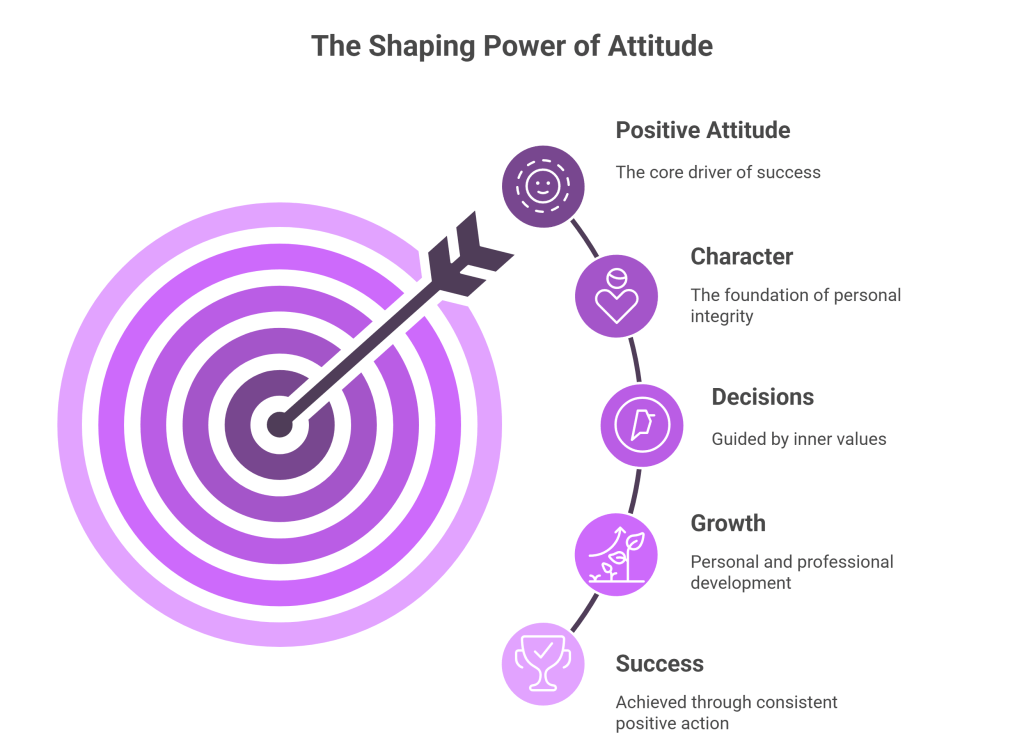
Understanding the Power of Attitude
What Is Attitude, Really?
Attitude is more than just how you feel—it’s how you think, behave, and react to the world around you. It’s your mental filter, your emotional GPS. It defines how you handle stress, how you treat others, and how you tackle opportunities or setbacks. Think of it like the weather of your mind—it can be sunny, stormy, or somewhere in between. But here’s the good news: you control the forecast.
Many people confuse attitude with mood. But mood is temporary—attitude is long-term. It’s a pattern of thinking that influences every decision you make. It’s built from your beliefs, your past experiences, your values, and your self-talk.
What makes attitude so powerful is its ability to shape not just your personal life, but your career, relationships, and even your legacy. A bad attitude can burn bridges. A good one can build empires.
The Invisible Force Behind Every Action
Have you ever tried to solve a problem while feeling defeated or bitter? Compare that to solving the same problem with an open, hopeful mindset. The outcomes can be drastically different. Your attitude either builds you up or tears you down.
In business, attitude becomes a currency. It shows up in how you lead a team, pitch an idea, or serve a client. In life, it’s your invisible reputation. People may forget what you said or did, but they’ll always remember how you made them feel—and your attitude is the number one contributor to that feeling.
The Role of Attitude in Personal Life
Attitude Shapes Our Perception
The way we interpret life events has everything to do with our attitude. Two people can experience the exact same situation and walk away with completely different takeaways—one feeling empowered, the other feeling defeated. Why? Because of attitude.
Imagine being stuck in traffic. A negative attitude will make you curse the world and start your day in a terrible mood. A positive attitude? It’ll turn up a podcast, give you quiet reflection time, or maybe even a chance to call someone you haven’t spoken to in a while.
This shift in perspective has a cascading effect. A positive morning affects your productivity. That productivity fuels a sense of accomplishment. That sense of accomplishment builds confidence. All from how you chose to view a single moment.
Emotional Resilience and Positive Thinking
Life doesn’t always go according to plan. There are ups and downs, surprises, heartbreaks, and delays. The only thing we can control is how we react. And that’s where attitude becomes your emotional armor.
Positive attitude builds emotional resilience—the ability to bounce back from hardship, learn from it, and keep moving forward. It’s not about ignoring pain. It’s about believing that the pain has a purpose.
This kind of thinking isn’t naive—it’s empowering. It teaches us that setbacks are setups for comebacks. That even in the middle of chaos, we still have a choice: to be bitter or to be better.
Case Study: How a Shift in Attitude Changed One Life
Meet Samira, a mid-level manager at a retail company. For years, she felt stuck—overlooked for promotions, undervalued, and uninspired. Her default attitude was defensive and disengaged. Then, a mentor told her: “If you want a better seat at the table, bring a better attitude to the room.”
That was a wake-up call.
Samira began working on her attitude. She started arriving with a smile, volunteering for projects, and uplifting her coworkers. Within six months, she got a promotion. Within a year, she was leading her own team. Nothing changed in her skills—but everything changed in her approach.
Attitude, not talent, made all the difference.
How Attitude Influences Business and Leadership
Attitude Sets the Cultural Tone in Organizations
A company’s culture isn’t just crafted through mission statements or HR policies—it flows from the collective attitude of its leaders and employees. If the leadership carries a positive, empowering attitude, it becomes contagious. People feel safe, motivated, and valued.
On the flip side, if the top-level management is arrogant, pessimistic, or fear-driven, that attitude trickles down. Productivity suffers. Turnover rises. Innovation dies.
Culture starts with attitude. And great leaders know that managing mindset is just as important as managing metrics.
Leadership and the Attitude Ripple Effect
Leaders are mirrors. Their teams reflect their energy, their language, and their belief systems. A leader who shows empathy and resilience in tough times teaches their team to do the same. That’s the power of the attitude ripple effect.
Leaders don’t just set goals—they set tones. A leader with a can-do attitude creates a can-do culture. A leader with a victim mentality creates a blame-driven workplace.
This is why leadership training often includes emotional intelligence and mindset coaching. Because technical skills might get you in the door, but attitude decides whether you stay in the room.
Real-World Example: Richard Branson and the Power of Positivity
Richard Branson, founder of the Virgin Group, built his empire on the foundation of a fearless, optimistic attitude. He once said, “Business opportunities are like buses—there’s always another one coming.”
Branson is known not just for his business ventures, but for his infectious energy and people-first approach. He doesn’t take himself too seriously. He laughs, experiments, and celebrates failure as part of the journey.
His attitude made Virgin a brand people connect with emotionally—not just economically. And that’s no accident.
Famous Quotes That Reflect the Power of Attitude
Words That Have Stood the Test of Time
Throughout history, great thinkers, leaders, and creators have spoken about the power of attitude. These quotes aren’t just catchy sayings—they’re mindsets wrapped in words. They serve as tiny compasses we can carry with us every day.
“Your attitude, not your aptitude, will determine your altitude.” – Zig Ziglar
This classic line by motivational speaker Zig Ziglar reminds us that it’s not just about what we know—it’s about how we show up. Many successful people didn’t start with all the tools or knowledge. They started with the right attitude and figured things out along the way.
“We cannot direct the wind, but we can adjust the sails.” – Dolly Parton
Dolly’s words are simple but powerful. Life won’t always go your way, but your attitude determines whether you drift or steer. It’s not about having control over everything—it’s about how you respond to the uncontrollable.
“Attitude is a little thing that makes a big difference.” – Winston Churchill
The British Prime Minister led a nation through its darkest times, not with fear, but with courage and optimism. Churchill knew that the right mindset could mobilize millions—and it did.
Interpretations of These Quotes in Modern Context
Take Ziglar’s quote, for example. In the age of AI and automation, technical skills are everywhere. But a resilient, coachable, and optimistic attitude? That’s still rare—and extremely valuable.
Dolly Parton’s idea of adjusting the sails speaks volumes in today’s unpredictable world. Whether it’s dealing with layoffs, market crashes, or personal setbacks, those who adapt with grace often rise stronger.
Churchill’s wisdom feels more relevant than ever in leadership. Today’s leaders are expected not only to deliver results but also to inspire teams across borders and time zones. A positive attitude acts as emotional fuel.
Let these quotes sit with you. What do they mean to you, right now, in your life?
How Successful Leaders Harness Attitude
The Psychology Behind Winning Leadership Attitudes
What separates a manager from a true leader? It’s not just strategy or smarts—it’s attitude. The best leaders don’t just react to challenges—they respond with intention, clarity, and optimism.
In psychology, this concept is tied to emotional contagion—the idea that your feelings and behaviors influence those around you. Leaders with a positive, grounded attitude often spark the same in their teams.
Take, for example, a high-stress boardroom situation. One leader panics. Another remains calm, offers solutions, and focuses on learning. Guess which one builds trust and long-term loyalty?
According to a study by the University of Pennsylvania, optimistic leaders are 30% more likely to retain their teams, even during crises. Their attitude doesn’t just make people feel better—it makes them stay.
Case Studies: Oprah Winfrey, Elon Musk, and More
Oprah Winfrey grew up in poverty, faced trauma, and was repeatedly told she wouldn’t succeed. Yet, her attitude never broke. She once said, “The greatest discovery of all time is that a person can change their future by merely changing their attitude.” Her story isn’t just inspirational—it’s evidence.
Elon Musk, love him or not, embodies a relentless, sometimes outrageous, attitude toward innovation. His ability to push forward despite criticism or failure stems from a mindset that sees problems as puzzles, not barriers.
Howard Schultz, former CEO of Starbucks, grew up in housing projects in Brooklyn. He built Starbucks into a global brand by treating baristas with dignity and customers with warmth. His attitude toward people, not just profit, changed how the world drinks coffee.
Ask yourself: which leader do I want to be like? And more importantly, which attitude do I want to lead with?
Building a Positive Attitude – A Step-by-Step Guide
Step 1: Start with Self-Awareness
You can’t change what you don’t recognize. The first step in cultivating a powerful attitude is understanding your current one. What thoughts dominate your mind? Are they hopeful or harmful? Reflect on how you talk to yourself during challenges.
A helpful exercise is journaling. Write down your reactions to daily situations and notice patterns. Over time, you’ll uncover what triggers negative thinking—and what boosts your positivity.
Question for You: What’s one belief you carry that might be limiting your potential?
Step 2: Filter the Negativity
Just like you wouldn’t drink dirty water, don’t let toxic input cloud your mind. This means limiting exposure to negative news, draining people, and self-doubt spirals. Start by unfollowing accounts that make you feel “less than” and replacing them with uplifting, growth-oriented content.
Remember, your attitude is a reflection of your environment. Clean it up, and you clean up your mind.
Stat Insight: According to a Harvard Business Review study, employees exposed to daily negativity are 25% less productive and 40% more likely to quit.
Step 3: Practice Gratitude and Reflection
Gratitude rewires the brain. Literally. Neuroscience shows that practicing daily gratitude boosts dopamine and serotonin—the feel-good chemicals.
Start small. Write down three things you’re thankful for every morning. Over time, this trains your brain to focus on what’s right, not just what’s wrong.
And at the end of each week, reflect: What did I handle well? Where can I grow? This simple habit nurtures a mindset of appreciation and progress.
Step 4: Surround Yourself With Positivity
“You’re the average of the five people you spend the most time with.” Heard that one? It’s true. If you’re constantly around people who complain, blame, and dwell—you’ll likely do the same. But when you surround yourself with encouragers, thinkers, and doers, your own energy rises.
This doesn’t mean cutting everyone off—it means being intentional about your emotional circle.
Question for You: Who in your life lifts you up? Who drains you?
Step 5: Keep a Growth Mindset Alive
Coined by psychologist Carol Dweck, a growth mindset is the belief that skills and intelligence can be developed through effort and learning. This attitude helps you see failures as lessons, not judgments.
Instead of “I can’t,” say “I can’t yet.” That one word shifts your entire approach to life.
Want to boost this mindset? Celebrate small wins. Try new things. Embrace feedback. Over time, your confidence grows—and so does your attitude.
I truly hope you found this read enjoyable and valuable. Your thoughts and feedback mean a lot to us, so please don’t hesitate to share them in the Comment section below. If you believe this article would resonate with others, we would be grateful if you shared it within your community. If you haven’t subscribed yet, consider doing so through the email Subscription box at the bottom of the page; we’d love for you to stay connected and not miss out on any future articles.
Stay Connected!





Leave a Reply