Design your inner-self, build your dream business!!
HARD WORK Increases the Surface Area of LUCK in Life and Business!
What is Luck, Really?
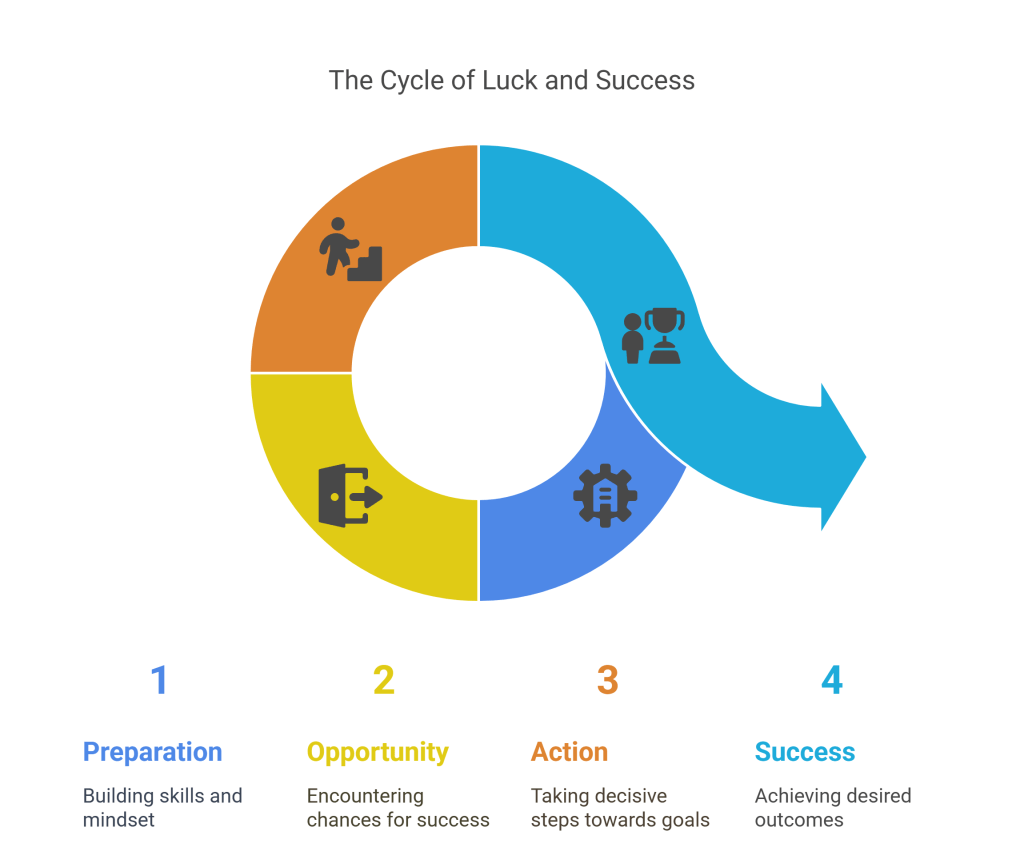
Luck. It’s a small word, but one that carries a lot of weight. For some, it’s a mystical force. For others, it’s nothing more than chance. Many who’ve walked the tough road to success will tell you this. Luck happens when you are prepared. It happens when the opportunity arises. Luck happens when you are prepared for the opportunity. It’s not always about being in the right place at the right time. It’s about being ready when the moment comes.
Think about this: Two people walk into the same opportunity. One succeeds; the other doesn’t. Why? The one who made it worked hard behind the scenes. They sharpened their skills. They grew their mindset. They built discipline. They weren’t waiting for luck—they were preparing for it.
The Cycle of Luck and Success, illustrating the connection between preparation, opportunity, action, and achieving desired outcomes.
How Hard Work and Luck Connect in Real Life
Hard work is like sowing seeds. You water them, nurture them, and wait. Eventually, the flowers bloom. That bloom? That’s luck. But it wouldn’t exist without the planting. The more seeds you plant—the more action you take—the greater your chances that something incredible will grow.
In business and life, hard work creates momentum. And with momentum comes visibility. And visibility brings opportunities—sometimes in the form of lucky breaks. Think of it this way: the more you do, the more chances the universe has to help you. So, the surface area of your luck expands with your effort.
The Philosophy Behind the Phrase
Why Does Hard Work Attract Luck?
Luck isn’t just a roll of the dice—it’s often a reward. When you work hard, you position yourself to take advantage of chance. You stand out. People notice. Opportunities flow your way because they see your consistency, your grind, your results.
Imagine you’re climbing a hill. It’s tough. Your legs ache. But suddenly, you reach a spot with a breathtaking view. That view? It’s not an accident. It came because you climbed. You worked for it. That’s how luck behaves—it shows up for the climbers, not the sitters.
The Science and Psychology Behind the Concept
Psychologists say our brains are wired to notice patterns and opportunities more when we’re engaged, focused, and active. When you’re working hard toward a goal, your mind becomes tuned to spot helpful information. It also identifies people or situations that others miss.
This means that your perception of “luck” actually grows when you’re already moving. It’s like driving through fog—you won’t see anything ahead if you’re standing still. But when you move forward, even slowly, the road reveals itself.
Studies also show that people who believe in creating their own luck—through effort—are more resilient. They are open to learning and optimistic. These qualities naturally attract better outcomes.
The Cycle of Creating Luck: Engage, Identify Opportunities, Perceive Luck, Build Resilience, and Attract Positive Outcomes.
Hard Work With Direction vs. Without Direction
What is Directional Hard Work?
Hard work with direction is like building a house with a blueprint. You know what you’re creating, where each brick goes, and why. This work has focus. It’s strategic. You’re not just doing random tasks—you’re aligning every effort with a clear goal.
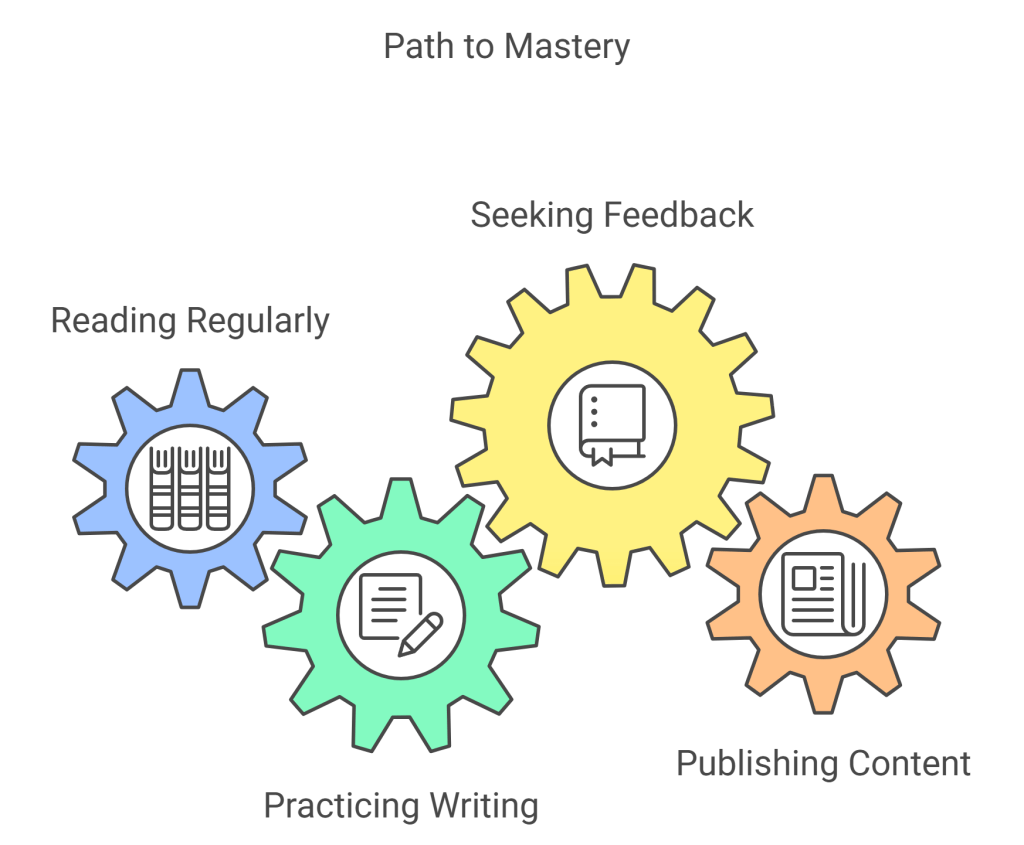
For example, if someone wants to become a great writer, directional hard work means reading regularly. It involves practicing writing and seeking feedback. Publishing content is also important. It’s a structured path.
Visual representation of the key components for mastering writing: reading regularly, practicing writing, seeking feedback, and publishing content.
This hard work brings results faster. It also builds confidence because every step you take brings visible progress.
The Pitfall of Aimless Effort
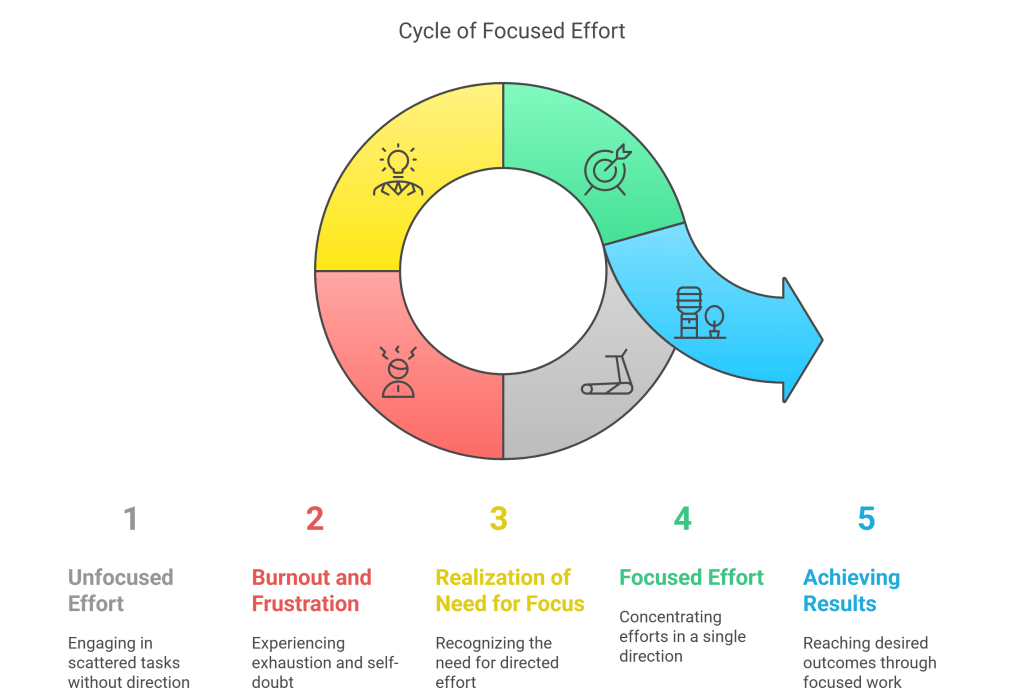
Now imagine working day and night, but without knowing why or what for. You’re busy, but not productive. That’s hard work without direction. It feels like running on a treadmill—you’re sweating, but you’re not moving forward.
This can lead to burnout, frustration, and self-doubt. You start questioning your worth because the outcome doesn’t match the effort. But the problem isn’t your capability—it’s the absence of direction.
Think of it like digging for water. If you dig one foot in 10 different spots, you’ll find nothing. But if you dig 10 feet in one spot, chances are you’ll strike something. That’s the power of focused effort.
Illustration of the Cycle of Focused Effort, depicting the stages from unfocused effort to achieving results.
Real-Life Examples to Compare the Two
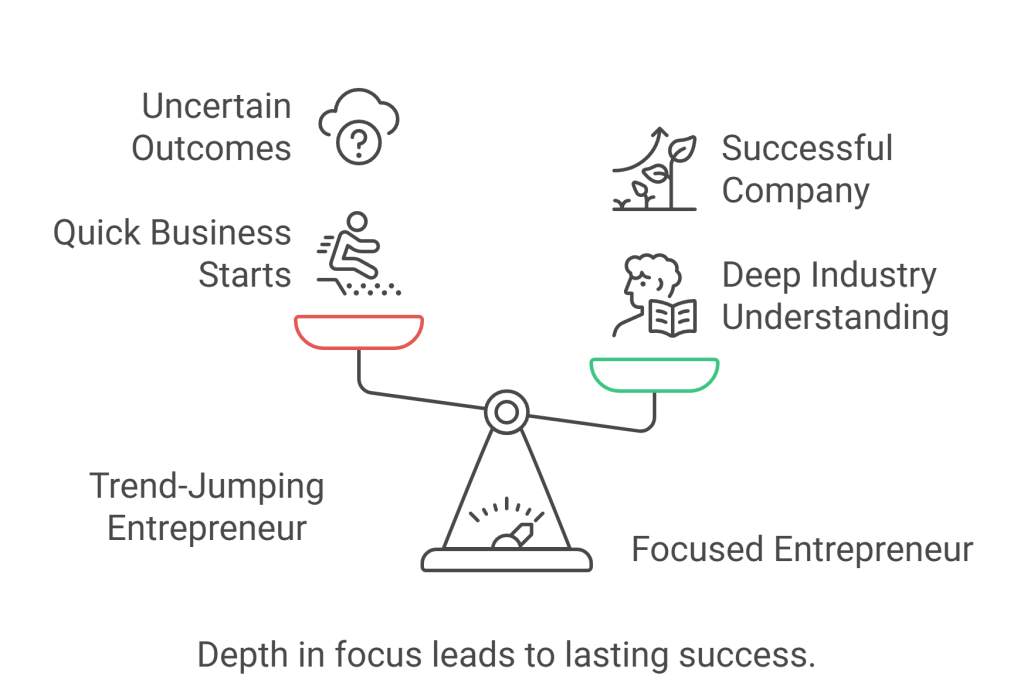
Consider two young entrepreneurs. One starts ten businesses in a year, jumping from one trend to another. The other focuses on one problem, learns the industry, builds a product, tests it, and improves it. Three years later, the second entrepreneur has built a successful company. The first? Still searching.
Direction brings depth. And depth builds value.
Visual representation comparing trend-jumping entrepreneurs to those with deep industry understanding, illustrating how focus leads to lasting success.
We’ve covered the foundation. Now, we’ll move to examples of leaders who’ve embodied this philosophy. They worked hard and luck worked in their favour.
Indian Leaders Who Mastered the Balance
Dr. A.P.J. Abdul Kalam – Dreams, Dedication, and Destiny
Dr. A.P.J. Abdul Kalam’s life is the very definition of how hard work shapes destiny. Born in a humble home in Rameswaram, Tamil Nadu, he sold newspapers as a child to support his family. But he didn’t stop dreaming. He dreamt of flying aircraft, exploring science, and contributing to India.
With unwavering dedication, Kalam pursued aerospace engineering, later joining ISRO and leading India’s missile and space programs. Despite early failures, he kept pushing. When asked about his success, he famously said, “A dream is not what you experience during sleep. It is something that keeps you awake.”
His life wasn’t a stroke of luck. It was relentless work in one clear direction: nation-building. Eventually, luck found him. It happened not once, but many times. Doors opened to awards, recognition, and even the Presidency of India.
Summary Takeaway: Kalam’s success was the result of deep focus and consistent hard work, not random fortune. He created his own “luck surface” by staying true to a powerful mission.
Ratan Tata – Building Empires with Purposeful Persistence
Ratan Tata inherited a name, yes, but not the empire we know today. When he took over the Tata Group, it was not the tech-savvy, globally admired company it is now. His leadership journey was full of skepticism, failures, and even betrayal from within the organization.
But here’s the difference—Tata worked with vision. He focused on creating products that impact lives. One such dream was the Tata Nano—a car every Indian could afford. The project was ridiculed globally. Factories were shut down. Yet, Ratan Tata didn’t back off. He moved operations, fought court cases, and finally launched the Nano.
He once said, “I don’t believe in taking right decisions. I take decisions and then make them right.”
Personal Insight: It wasn’t a single lucky break—it was perseverance through adversity, aligned with purpose.
Summary Takeaway: Directional hard work, backed by ethical values, turned Ratan Tata’s efforts into legendary business success.
Dhirubhai Ambani – From Petrol Pumps to Fortune 500
Imagine starting your journey at a gas station in Yemen, earning a few rupees a day. That was Dhirubhai Ambani’s beginning. No fancy education, no network, no wealth. Just vision and sheer hustle.
When he returned to India, he began importing polyester and spices. His business grew because he worked around the clock, met people, learned from failures, and kept moving forward. There was no roadmap. But he created one with relentless work.
Reliance Industries didn’t become a Fortune 500 company overnight. It was years of grinding, strategic thinking, and taking massive risks.
“Think big, think fast, think ahead. Ideas are no one’s monopoly,” he once declared.
Engaging Prompt: Can you think of something you believe in deeply but haven’t pursued yet because it feels too big?
Summary Takeaway: Dhirubhai proved that even without resources, the right mindset and effort can invite success. This is what we call “luck.”
Western Leaders Who Believed in Strategic Effort
Elon Musk – Vision, Grit, and Unshakable Belief
Elon Musk isn’t lucky. He’s daring. After selling PayPal, he invested most of his money into SpaceX and Tesla. Both ventures were near failure at one point. Rockets exploded. Cars failed quality tests. He was ridiculed by experts.
But Musk kept going. Not blindly—strategically. He immersed himself in rocket science, engineering, software, and more. He studied, built teams, and iterated fast.
One day, the fourth SpaceX rocket finally launched successfully. That one success brought in NASA contracts and transformed the company. That’s when the world called him “lucky.”
But Musk says, “When something is important enough, you do it even if the odds are not in your favor.”
Summary Takeaway: Vision-driven effort multiplies your exposure to breakthroughs—what we often misinterpret as luck.
Oprah Winfrey – From Struggles to Global Success
Born in poverty, abused as a child, Oprah had every reason to give up. But she didn’t. She worked at local radio stations, honed her communication skills, and kept pushing toward her dream.
When she got her own show, she didn’t just run it—she reinvented talk shows altogether. Oprah created a platform that merged business, emotion, and empowerment. Her hard work transformed her into one of the most influential women in the world.
She once said, “I feel that luck is preparation meeting opportunity.”
Personal Story Touchpoint: Oprah’s journey proves that even the darkest beginnings can transform into the brightest outcomes. You just need to keep showing up.
Summary Takeaway: Her consistency, preparation, and faith opened doors that many call “lucky breaks.”
Famous Quotes That Reinforce This Idea
Words That Moved Mountains: Quotes on Hard Work and Luck
Throughout history, thinkers, innovators, and dreamers have all shared a common belief. Luck favors the brave, but it favors the consistent even more. Here are a few quotes that say it best:
“I’m a great believer in luck, and I find the harder I work, the more I have of it.” – Thomas Jefferson
“Success is where preparation and opportunity meet.” – Bobby Unser
“Luck is what happens when preparation meets opportunity.” – Seneca
“Diligence is the mother of good luck.” – Benjamin Franklin
Each quote drives home the same truth—hard work is the soil where luck grows. These aren’t just motivational punchlines; they’re lived truths, shared by people who turned effort into empires.
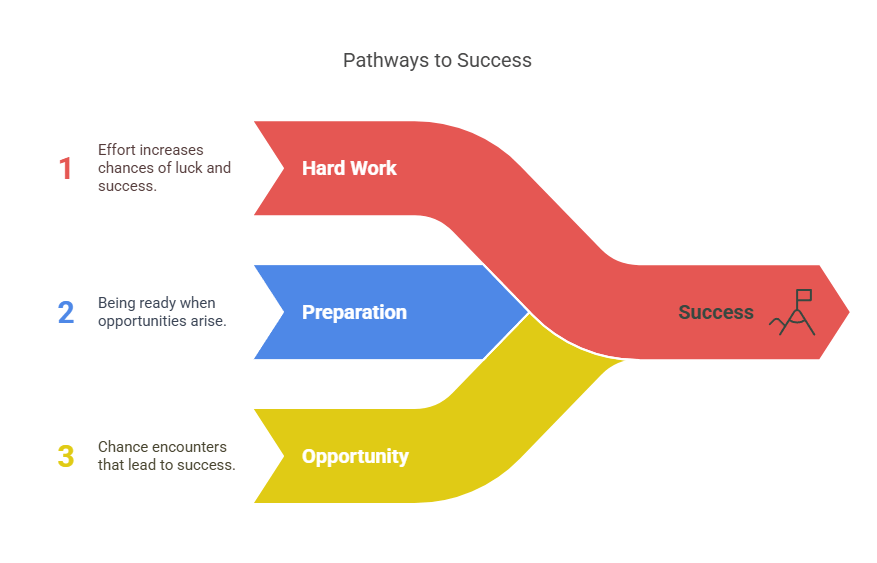
A visual representation of the pathways to success, highlighting the roles of hard work, preparation, and opportunity in achieving success.
Summary Takeaway: Let these quotes sink in—not just as inspiration but as a guide. Read them when you feel stuck, and they’ll serve as a compass back to your purpose.
Step-by-Step Action Plan to Increase Your Luck Through Hard Work
Step 1: Know What You Want – Setting the Right Goal
Before you grind, you must know why you’re grinding. Hard work without a target is just noise. Define your destination clearly.
Use SMART goals—Specific, Measurable, Achievable, Relevant, Time-bound.
Engagement Prompt: What’s your goal? Is it crystal clear? If not, spend 15 minutes today defining it.
Step 2: Break It Down – Creating a Clear Plan
Big dreams can feel overwhelming. The trick? Break them into mini-goals.
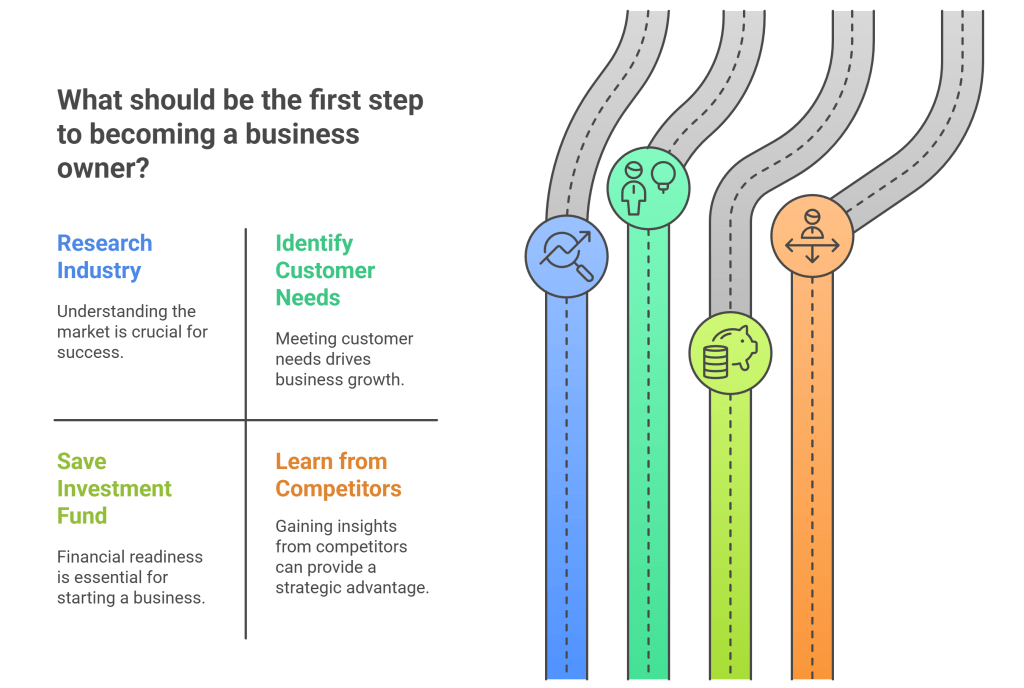
If you want to be a business owner, don’t start with “open a company.” Start with:
Researching the industry
Identifying customer needs
Saving a basic investment fund
Learning from competitors
A visual guide outlining essential initial steps to becoming a successful business owner.
Summary Tip: A small step daily is better than a giant leap once a year. Action creates momentum, which attracts lucky breaks.
Step 3: Show Up Daily – Building Discipline
Talent is wonderful. But showing up every single day beats raw talent 9 out of 10 times.
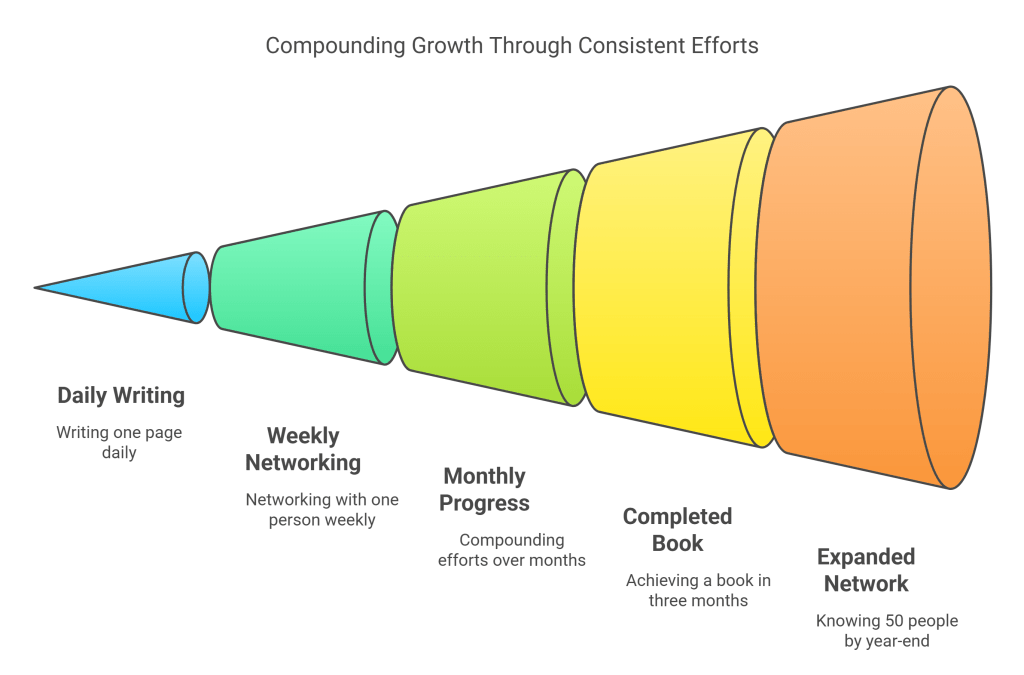
Even 1% progress compounds into massive growth over time (look up the “1% better every day” rule). If you write one page daily, you’ll have a book in three months. If you network with one person weekly, you’ll know 50 by year-end.
Visual representation of compounding growth through consistent efforts, highlighting daily writing, weekly networking, and monthly progress.
Reflection Prompt: What’s one thing you can do today that aligns with your goal?
Quote to Remember:“You don’t have to be extreme, just consistent.”
Step 4: Learn Constantly – Upgrade Skills
The market evolves. So should you. The best hard work is smart work, and smart work comes from knowledge.
Take courses. Read books. Follow experts. Reflect on failures.
Pro Tip: Spend 30–60 minutes daily learning something new about your field. This habit alone will outpace 80% of your peers.
Summary Takeaway: Skills invite opportunities. When your skills improve, luck shows up wearing a business suit.
Step 5: Take Calculated Risks – Open Doors to Luck
Risks are not reckless. They’re bold, educated guesses. And often, they’re the bridge between average and extraordinary.
Think about every major business move in history—most involved stepping into the unknown.
Start that blog. Pitch that client. Apply for that job even if you don’t meet 100% of the qualifications. Say “yes” before you’re fully ready.
Quote to Guide You:“Fortune favors the bold.” – Latin Proverb
Summary Takeaway: Staying safe keep you comfortable—but it won’t grow your luck.
I hope you found this read enjoyable and insightful. Your feedback means a lot, so please share it in the Comments section below. If you resonated with the content, I would appreciate it if you share it within your community. Knowing that even one person is positively impacted by this work would fulfill my efforts. If you haven’t subscribed yet, please subscribe through the email section. You can find it at the bottom of the page. Thank you for being a part of this journey!
Blissipline, a philosophy merging inner joy with disciplined action, emphasizes that success stems not only from achievements but also from the journey toward them. Rooted in Sufi wisdom, it promotes enjoying the process, better decision-making, and sustainable fulfillment across various life roles. Research supports that meaningful engagement elevates well-being and performance.
Silent Transformation refers to the gradual, unnoticed process of personal and professional improvement achieved through consistent, small actions over time. Unlike flashy successes, true growth derives from discipline and quiet decision-making. Emphasizing long-term habits leads to significant life changes and sustainable business success, highlighting that lasting achievements aren’t always visible immediately.
Have you ever looked back at a decision and wondered, “What would have happened if I had simply believed I could do it?” Most people assume success is primarily driven by intelligence, education, experience, or resources. While those factors matter, there is something even more fundamental operating beneath them all: beliefs. The beliefs you hold…
The content emphasizes that beliefs are tools for interpreting reality, not the truth itself. It encourages individuals to question and test their beliefs, as unexamined assumptions can limit personal and professional growth. By challenging these beliefs, one can uncover opportunities and enhance decision-making, ultimately leading to significant transformations in life and career.
The content discusses the pervasive issue of imposter syndrome, where individuals doubt their accomplishments despite evidence of their competence. It contrasts this with intellectual humility, the recognition of one’s knowledge limits and the willingness to learn. Embracing intellectual humility fosters personal growth, trust, and effective leadership, promoting continuous learning and adaptation.










Leave a Reply