

One evening, while helping my child with homework, I noticed something interesting. Every time I encouraged them with patience and guided them through their mistakes, they grew more confident. But when I became frustrated, they shut down. That’s when it hit me—this is exactly how leadership works in business.
Successful leaders and great parents share the same mission: to guide, inspire, and nurture growth. They both create environments where people feel supported yet challenged, where discipline meets empathy, and where failures become lessons.
Throughout history, many successful leaders have embraced this philosophy. They treat their teams like families. They foster cultures of trust and lead with care. In this article, we’ll explore how parenting and leadership are alike. We will offer real-world examples of leaders who applied this approach. A step-by-step action plan will be included. We will discuss challenges you face and how to overcome them.
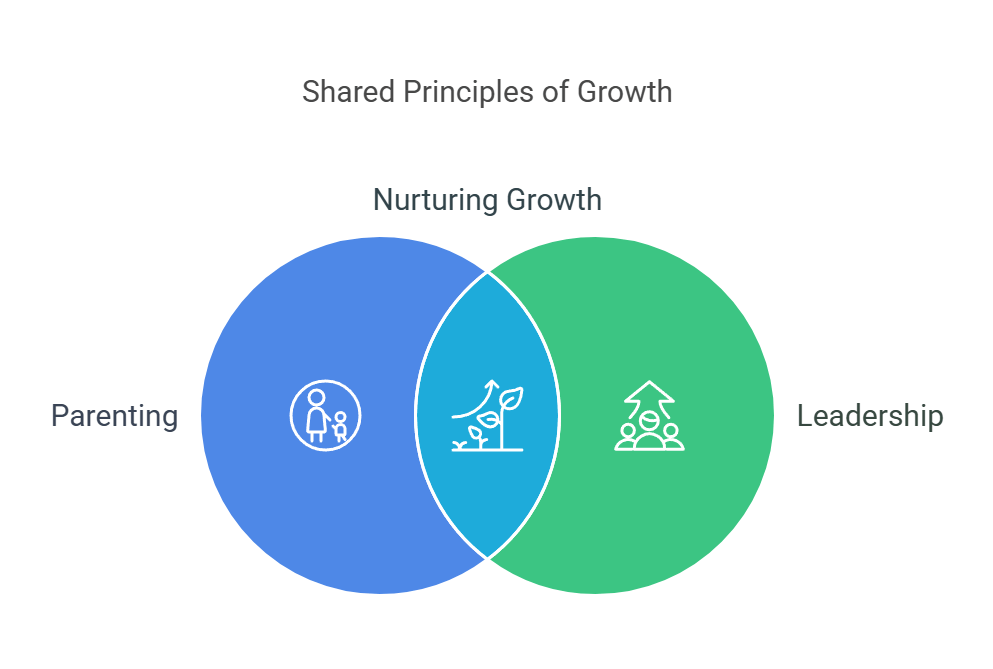
How Parenting and Leadership Are Alike
1. Providing Guidance and Setting Clear Expectations
Parents teach their children about rules, responsibilities, and values. Similarly, leaders define expectations, set company values, and guide their teams toward success.
Example: Imagine a parent setting a bedtime routine to make sure their child is well-rested. In the same way, a leader sets project deadlines to keep the team focused and productive.
Famous Leadership Quote:
“The very essence of leadership is that you have to have a vision. It’s got to be a vision you articulate clearly and forcefully on every occasion.” — Theodore Hesburgh
2. Encouraging Growth and Development
A good parent fosters their child’s education and skill-building. Similarly, a great leader invests in the professional growth of their employees.
Example: A parent enrolls their child in extracurricular activities to develop their talents. Similarly, a leader offers training programs to enhance employees’ skills.
Famous Leadership Quote:
“Before you are a leader, success is all about growing yourself. When you become a leader, success is all about growing others.” — Jack Welch
3. Leading by Example
Children mirror their parents’ behavior. Employees do the same with their leaders. The best leaders show the values and work ethic they expect from their team.
Example: A parent who values honesty teaches their child to be truthful. A leader who values integrity ensures their team follows ethical practices.
Famous Leadership Quote:
“People buy into the leader before they buy into the vision.” — John C. Maxwell
4. Providing Support in Tough Times
Children need comfort and reassurance during failures, just as employees need support when projects don’t go as planned.
Example: A parent who encourages their child after a failed test helps them try harder next time. A leader who reassures an employee after a mistake fosters a culture of resilience.
Famous Leadership Quote:
“Success is not final, failure is not fatal: it is the courage to continue that counts.” — Winston Churchill
5. Practicing Patience and Adaptability
No child learns everything overnight, and neither does a business team. Parenting and leadership both need patience and flexibility.
Example: A parent adjusts their parenting style as their child grows. A leader adapts their management style to fit changing business landscapes.
Famous Leadership Quote:
“Do not follow where the path may lead. Go instead where there is no path and leave a trail.” — Ralph Waldo Emerson
How Successful Leaders Apply Parenting Principles in Business
1. Richard Branson – Leading with Love and Encouragement
Richard Branson, founder of Virgin Group, believes employees should be treated like family. He prioritizes happiness and well-being, ensuring his team feels valued and motivated.
“Take care of your employees, and they will take care of your business.” — Richard Branson
2. Indra Nooyi – Balancing Toughness with Compassion
Indra Nooyi, as the former CEO of PepsiCo, treated her employees with the same care. She displayed the discipline she used in raising her children. She wrote letters to employees’ parents, thanking them for raising great professionals—just like a parent showing appreciation.
“The highest calling of leadership is to unlock the potential of others.” — Carly Fiorina
3. Elon Musk – Encouraging Curiosity and Learning
Elon Musk encourages employees to question, innovate, and never stop learning. Just as good parents encourage their children to be curious, Musk challenges his teams to think differently.
“It is possible for ordinary people to choose to be extraordinary.” — Elon Musk
Step-by-Step Action Plan to Apply This Philosophy
Step 1: Set Clear Expectations
- Define a vision for your team or family.
- Communicate responsibilities and goals clearly.
- Create rules and guidelines, but remain flexible.
Step 2: Foster Growth and Learning
- Encourage continuous learning through training or self-improvement.
- Provide constructive feedback instead of harsh criticism.
- Celebrate progress, not just results.
Step 3: Lead by Example
- Show dedication, honesty, and resilience in your work.
- Treat people with respect and fairness.
- Demonstrate the behavior you want to see in others.
Step 4: Support and Motivate
- Offer encouragement during tough times.
- Create a safe space for communication.
- Show appreciation for effort and improvement.
Step 5: Be Patient and Adapt
- Accept that growth takes time.
- Stay flexible with changing circumstances.
- Encourage innovation and adaptability.
Challenges in Applying This Approach and How to Overcome Them
Challenge 1: Employees May Resist Change
Solution: Lead with empathy. Explain why changes are happening and how they benefit everyone.
Challenge 2: Balancing Authority and Friendship
Solution: Be approachable but maintain boundaries. Like a parent, you can be kind without losing authority.
Challenge 3: Dealing with Setbacks
Solution: Treat failures as learning opportunities. Encourage problem-solving instead of blame.
Conclusion
Parenting and leadership are deeply intertwined. Both involve nurturing growth, providing support, setting expectations, and leading by example. Whether you’re guiding a child or managing a team, the same principles apply—care, patience, adaptability, and encouragement.
By embracing these lessons, you can become a better leader. You can also improve as a mentor, parent, and role model in every aspect of life.
FAQs
1. Can parenting skills really make me a better business leader?
Yes! Parenting teaches patience, adaptability, and emotional intelligence—key traits of great leaders.
2. How can I encourage growth in my team like a parent does with a child?
Provide mentorship, training opportunities, and constructive feedback. Celebrate progress and foster a culture of learning.
3. What if my employees resist this leadership approach?
Change can be difficult, but leading by example and clearly communicating the benefits will help build trust.
4. How do I balance discipline and compassion in leadership?
Set firm but fair boundaries. Be empathetic but maintain expectations. Support without enabling poor performance.
5. Can leadership lessons also help me become a better parent?
Absolutely! Leadership teaches patience, problem-solving, and the power of encouragement—all valuable parenting skills.
I truly hope you have found this article enjoyable and insightful. Your feedback and thoughts are incredibly important to me, so please feel free to share them. It would mean so much if you also spread the word within your community. If you haven’t subscribed yet, please do so. You can use the subscription box at the bottom of the page. Thank you for your support!
Stay Connected!





 Wining Life & Business
Leave a comment