
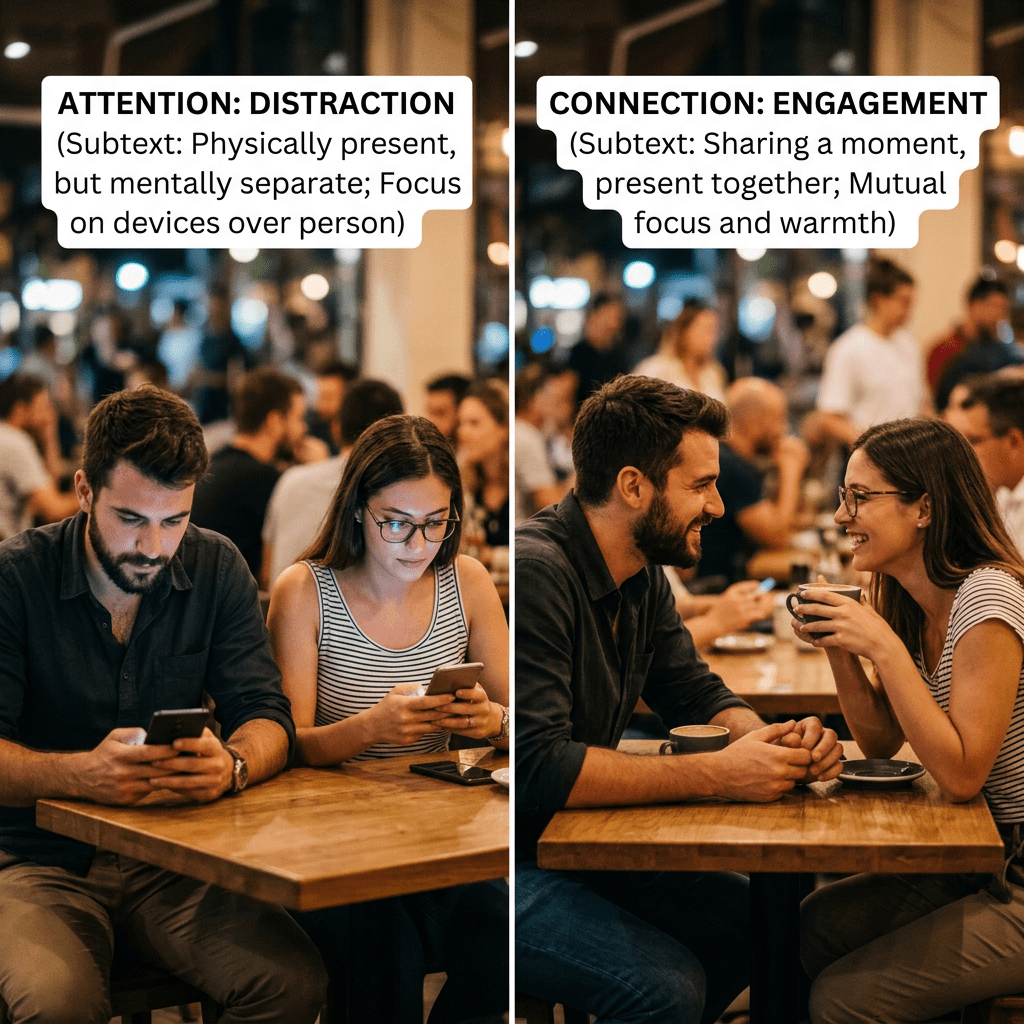
Shifting from Seeking Validation to Building Meaningful Connection
The Hidden Cost of Chasing Attention
A few years ago, I remember posting something online that got a lot of attention—likes, comments, shares. For a moment, it felt great. But what followed was unexpected: pressure. Pressure to repeat it, to stay relevant, to not “fall off.” That’s when it hit me—attention can feel rewarding, but it can also quietly become exhausting.
We often assume that more attention equals more success. But in reality, too much focus on gaining attention can dilute your purpose. In life, it shows up as comparison and self-doubt. In business, it shows up as chasing trends instead of solving real problems.
Here’s the shift that matters:
👉 Attention feels good in the moment. Value builds something that lasts.
When your decisions are driven by “Will this get noticed?” instead of “Will this help someone?”, you slowly lose clarity. And without clarity, both life and business start to feel scattered.
What Does “Too Much Attention on Attention” Really Mean?
Let’s simplify it. It means prioritizing visibility over value.
It’s not always obvious. It can look like:
- Posting content just to stay visible, even when you have nothing meaningful to say
- Agreeing with popular opinions instead of expressing honest thoughts
- Measuring your worth through external validation
I’ve seen this happen often in business too. Brands start strong, focused on solving real problems. But once attention comes in, the focus shifts to maintaining that spotlight.
Here’s the irony:
👉 The more you chase attention, the less meaningful it becomes.
It’s like running on a treadmill—you’re putting in effort, but not really moving forward.
From Attention to Connection: The Real Game-Changer
This is where everything changes.
Attention attracts people. Connection makes them stay.
Think about your own life. Who do you trust more? Someone who constantly seeks attention, or someone who genuinely listens and understands?
In business, it’s no different. Customers don’t just want to be sold to—they want to feel seen.
A simple shift in thinking:
- Instead of “How can I reach more people?” → ask “How can I help one person better?”
- Instead of “How do I go viral?” → ask “How do I stay valuable?”
I once worked with a small business owner who stopped focusing on social media trends and instead started personally responding to every customer message. Growth slowed initially—but within months, customer loyalty skyrocketed.
👉 Connection compounds. Attention fades.
Why Learning This Early Changes Everything (Life + Business Impact)
Understanding this early is like getting a shortcut most people miss.
In Life
When you stop chasing attention, you stop comparing constantly. You start doing things because they matter to you—not because they’ll impress others.
For example, choosing a career path based on genuine interest instead of social validation leads to long-term satisfaction. It may not look impressive immediately, but over time, it builds confidence and clarity.
👉 Clarity early in life saves years of confusion later.
In Business (From a Customer Perspective)
Let’s look at this from the customer’s point of view.
Customers today are highly aware. They can tell when a business is:
- Just trying to grab attention
- Or actually trying to solve a problem
A customer once told me, “I don’t mind ads. I mind irrelevant ads.” That says everything.
A business focused on attention:
- Pushes constant promotions
- Talks more than it listens
- Focuses on short-term wins
A business focused on connection:
- Understands customer pain points
- Communicates clearly and honestly
- Builds trust over time
👉 Customers don’t stay where they feel targeted. They stay where they feel understood.
This understanding, when applied early, compounds into stronger relationships, better decisions, and sustainable growth.
Lessons from Successful Indian Leaders (Real, Practical Insights)
Ratan Tata – Quiet Impact Over Loud Presence
Ratan Tata never relied on noise to stay relevant. His decisions consistently reflected long-term thinking and empathy. Whether it was the Nano project or employee-first policies, the focus was always on value.
👉 Lesson: Respect is earned through consistency, not visibility.
N.R. Narayana Murthy – Trust as a Strategy
Infosys didn’t grow through hype. It grew through transparency and discipline. Murthy focused on building systems people could भरोसा (trust), not just admire.
👉 Lesson: Credibility outlasts popularity.
Falguni Nayar – Deep Customer Understanding
Nykaa succeeded because it understood Indian consumers deeply. Instead of chasing global trends blindly, it built a personalized experience.
👉 Lesson: When you understand your audience, attention follows naturally.
A Step-by-Step Action Plan (With Real-Life Examples)
1. Redefine Your Metrics
Instead of tracking likes, track impact.
Example:
If you run a business, measure repeat customers instead of just new followers.
👉 Focus on depth, not just reach.
2. Ask Better Questions Before Every Action
Pause and ask:
- “Is this useful?”
- “Or am I just trying to be seen?”
Example:
Before posting content, ask: “Will this help someone solve a problem today?”
3. Build One Genuine Connection Daily
You don’t need thousands of interactions—just one meaningful one.
Example:
Reply thoughtfully to one message instead of sending 50 generic responses.
4. Create With Intent, Not Pressure
Not everything needs to be shared instantly.
Example:
Instead of posting daily for visibility, post when you have something meaningful to say.
5. Embrace Slow, Sustainable Growth
Fast growth often leads to shallow foundations.
Example:
A business that grows through referrals builds stronger trust than one that relies only on ads.
6. Reflect Weekly
Take 10 minutes every week to ask:
- Where did I chase attention unnecessarily?
- Where did I create real value?
👉 Awareness leads to better decisions.
Conclusion: Choose Meaning Over Noise
It’s easy to get caught in the race for attention. The world rewards visibility—but real success comes from being valuable, not just visible.
When you shift your focus from attention to connection:
- Your life feels more grounded
- Your work becomes more meaningful
- Your business becomes more trusted
And interestingly, attention still comes—but now, it comes naturally.
Let’s Continue the Conversation
What’s one area in your life where you feel you might be chasing attention instead of creating value?
Share your thoughts in the comments section below—your insight might help someone else reflect.
If this resonated with you:
- Send this article to one person who needs this perspective
- Or share it on your social platform with your key takeaway
And if you haven’t subscribed yet, don’t miss out—join through the email subscription box at the bottom of the page for more thoughtful insights like this.
Stay tuned!!






 Wining Life & Business
Leave a comment