Design your inner-self, build your dream business!!
Dopamine Is Not the Pursuit of Happiness—Happiness Is the Pursuit: A Neuroscience-Based Guide for Life and Business
Dopamine Is Not the Pursuit of Happiness—Happiness Is the Pursuit
Let me ask you something before we go any further: Have you noticed how excitement fades faster than effort, yet effort—when meaningful—leaves you calmer and more satisfied?
That insight sits at the heart of modern neuroscience—and Andrew Huberman explains it beautifully.
Andrew Huberman’s Perspective: Dopamine Sets the Baseline of Your Life
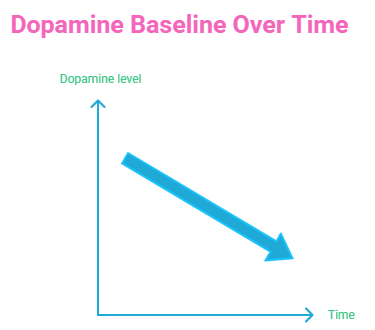
According to Dr. Andrew Huberman, neuroscientist and professor at Stanford School of Medicine, dopamine is not just about momentary motivation—it sets your baseline level of drive and satisfaction.
“High peaks of dopamine lead to lower baselines of dopamine afterward.” — Andrew Huberman
In simple terms:
The higher the dopamine spike, the harder the crash
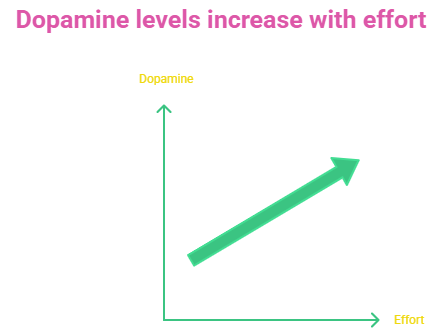
Huberman emphasizes that dopamine is best released gradually, through effort, not instantly through pleasure.
He explains that:
Instant gratification floods dopamine
Effort-based rewards release dopamine steadily
Steady dopamine builds long-term motivation and resilience
That’s why habits like:
Consistent exercise
Deep work
Learning difficult skills
feel hard at first—but deeply satisfying over time.
📌 Pull Quote :
“The pursuit itself can be the reward—if dopamine is tied to effort, not outcome.”
Section Summary
Instant pleasure weakens motivation
Effort strengthens dopamine circuits
Fulfillment grows through consistency
Huberman, David Goggins, and the Same Core Principle
Interestingly, Andrew Huberman often references David Goggins’ mindset—not for motivation, but for neuroscience.
Goggins unknowingly applied what Huberman explains scientifically:
He reduced reliance on external rewards
He conditioned dopamine to effort and discomfort
He stabilized his dopamine baseline
Huberman explains this as “rewarding effort, not just wins.”
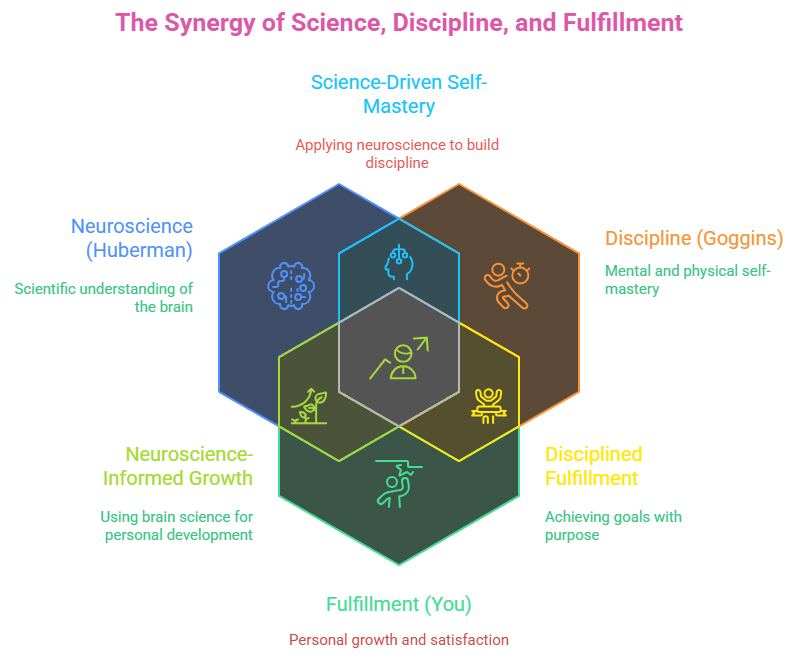
This alignment between science and lived experience is powerful:
Goggins lived it
Huberman explains it
You can apply it
Section Summary
Discipline rewires dopamine pathways
Effort becomes intrinsically rewarding
Motivation becomes more reliable
Practical Huberman-Inspired Dopamine Practices
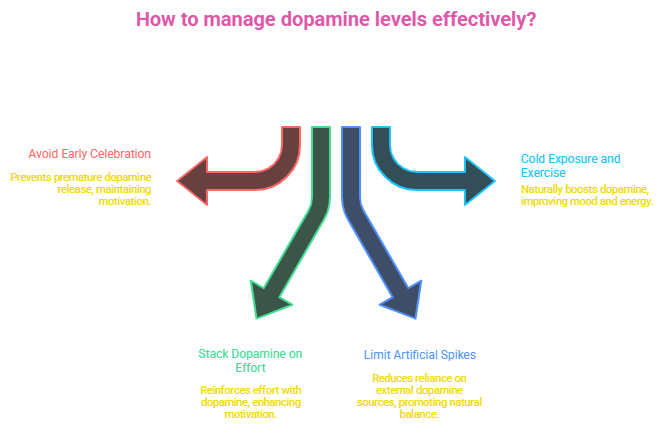
Here are Huberman-backed practices you can use immediately:
1. Avoid Celebrating Too Early
Huberman advises delaying reward until effort is complete—this keeps dopamine linked to action.
2. Stack Dopamine on Effort
Mentally acknowledge effort during hard work, not just after success.
3. Limit Artificial Dopamine Spikes
Reduce excessive sugar, social media, and binge entertainment.
4. Cold Exposure and Exercise
Huberman highlights cold exposure and physical effort as healthy ways to elevate dopamine without crashes.
📌 Checklist graphic:
“Huberman-Approved Dopamine Habits”
Section Summary
Train dopamine to value effort
Reduce artificial stimulation
Build sustainable motivation
Reframing Happiness Through Huberman’s Lens
Andrew Huberman’s work makes one thing clear: Happiness is not about chasing higher dopamine peaks—it’s about protecting your baseline.
When dopamine is stable:
You feel motivated without anxiety
You pursue goals without desperation
You experience satisfaction without constant excitement
Happiness becomes a state, not a chase.
Final Reflection and Call to Action
Understanding dopamine doesn’t remove ambition—it refines it.
When you stop asking, “How do I feel good right now?” and start asking, “What effort builds me long-term?” you step into a more grounded, powerful way of living and leading.
Now, Let’s Hear From You
💬 What part of Andrew Huberman’s perspective resonated most with you? Share your thoughts in the comment section below—your reflection may help others reframe their own habits.
📤 If this article added clarity, please share it with at least one person who might be unknowingly chasing dopamine instead of meaning.
📩 And if you haven’t subscribed yet, subscribe through the email subscription box at the bottom of the page to receive neuroscience-backed insights on life, leadership, and sustainable success.
Sometimes, the most powerful upgrade isn’t doing more—it’s understanding your brain better.
The M-type mindset encourages the development of multiple complementary skills, fostering a unique advantage in today’s interconnected world. Rather than being a jack of all trades, individuals with this mindset integrate their expertise to adapt, solve complex problems, and enhance their careers, ultimately creating significant value and opportunities.
The content discusses the delicate balance between confidence and arrogance in professional settings. It emphasizes how confidence fosters connections and trust, while arrogance alienates others. Through examples of successful leaders, it illustrates that genuine confidence, combined with humility, leads to better relationships and positive outcomes in business and personal interactions.
The content discusses the importance of distinguishing effort from outcomes, emphasizing that while hard work is within personal control, results often are not. It highlights the detrimental effects of expectation and advocates for detachment as a means to maintain emotional stability and clarity in decision-making. Real growth stems from consistency, patience, and a focus on…
The content emphasizes that while financial currency is essential for stability, network currency is crucial for growth. Building relationships can open doors to opportunities that money alone cannot. Successful individuals like Ratan Tata and Dr. APJ Abdul Kalam illustrate how strong networks, built on trust and integrity, lead to significant achievements. Networking early yields long-term…
Conflicting desires occur when strong motivations compete, creating internal tension between safety and growth. Understanding this psychological phenomenon can improve decision-making and leadership. By recognizing and analyzing these conflicts, individuals can make strategic choices aligned with their values, ultimately enhancing personal and professional satisfaction while minimizing stress and missed opportunities.







 Wining Life & Business
Leave a comment