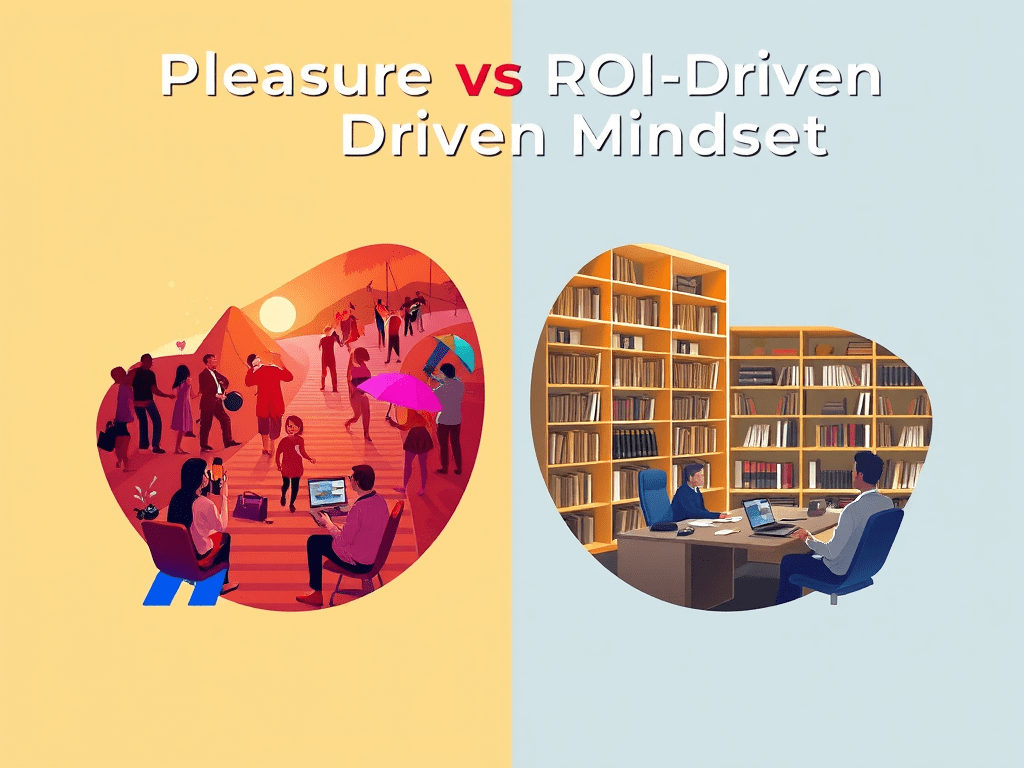
We often hear people say, “Do what makes you happy.” But happiness without direction can easily turn into distraction. On the other hand, those who align joy with purpose—who understand Return on Investment (ROI) not just in money but in life—tend to go further, faster, and stronger.
This article explores how recognizing the difference between pleasure-driven and ROI-driven mentalities can change the way you approach both life and business—and how Indian leaders have quietly mastered this art.
The Pleasure-Driven Mentality: Living for the Now
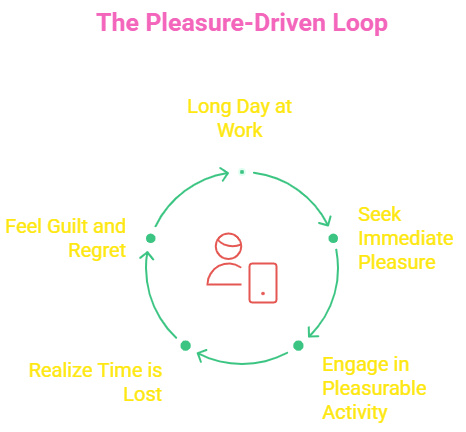
A pleasure-driven mindset is fueled by immediate satisfaction. It’s about choosing what feels good now rather than what builds value later.
Common Signs of a Pleasure-Driven Mindset
- Constantly seeking comfort or entertainment
- Avoiding discomfort or delay
- Making emotionally-driven decisions
- Prioritizing short-term rewards over long-term gains
This mindset isn’t “bad”—it’s human. The problem is when it becomes the default mode of decision-making. Pleasure-driven choices often leave us busy but not productive, excited but not fulfilled.
“Don’t let the excitement of the moment steal the success of your future.”
Reflective Prompt:
Ask yourself — What decisions am I making today that only serve my comfort, not my growth?
The ROI-Driven Mentality: Playing the Long Game
Being ROI-driven doesn’t just mean thinking about profit; it means thinking about purpose. It’s asking, “What will this give back to me, my goals, and my community over time?”
An ROI-driven person doesn’t chase every opportunity—they evaluate it. They understand that not every “yes” brings a return, and not every “no” is a loss.
Key Traits of an ROI-Driven Mindset
- Delayed Gratification – Choosing effort today for rewards tomorrow.
- Intentional Decision-Making – Every action has a clear why.
- Growth Orientation – Failure isn’t the end; it’s a return in learning.
- Energy Investment Awareness – Knowing that time and focus are assets.
When you think in terms of ROI, you stop being reactive and start being strategic. You don’t spend time—you invest it.
“Discipline is just delayed gratification with a purpose.”
Self-Check Question:
What are the top three activities in your week that give you the highest return on your time and effort?
Why Understanding This Early Changes Everything
Imagine two 25-year-olds—one driven by pleasure, another by ROI.
- The first spends on experiences that feel good.
- The second spends on learning, investing, and creating assets.
Fast forward ten years: one wonders where the time went, and the other enjoys both financial freedom and peace of mind.
Understanding this difference early helps you build compound benefits—just like compound interest. The earlier you plant the right mindset, the bigger your future returns.
Top 3 Life Areas to Apply the ROI Approach
- Relationships: Invest in people who bring genuine growth.
- Health: Exercise and eat well—not for today, but for decades ahead.
- Finance: Prioritize saving and investing over impulse spending.
“Small consistent efforts compound into massive outcomes.”
Reflective Prompt:
Which area of your life right now needs a stronger ROI-driven focus?
Lessons from Successful Indian Leaders
Let’s explore how Indian visionaries embody this principle in both life and business:
Ratan Tata – Purpose Before Profit
Ratan Tata once said, “I don’t believe in taking the right decisions. I take decisions and then make them right.” His focus was never on immediate gain but on long-term societal impact. From affordable cars to global acquisitions, Tata’s legacy is built on patient, ethical ROI.
Narayan Murthy – Building Infosys with Integrity
When Narayan Murthy founded Infosys, he wasn’t chasing quick fame. He built an organization rooted in ethics, transparency, and education. The ROI wasn’t just monetary—it was the trust of an entire nation.
Dr. A.P.J. Abdul Kalam – Investing in the Future
Kalam’s life was the perfect example of long-term investment. He poured his energy into innovation, youth empowerment, and national growth. His real “return” wasn’t fame—it was the generation he inspired.
Indra Nooyi – Balancing Purpose and Profit
As PepsiCo’s CEO, Indra Nooyi constantly pushed for “Performance with Purpose.” She redefined leadership by proving that long-term ROI can come from socially responsible choices.
“Leadership is not about power; it’s about purpose.” – Indra Nooyi
Takeaway:
Every one of these leaders made intentional trade-offs. They chose meaning over momentary pleasure—and their legacies reflect the power of ROI-driven thinking.
Practical Steps to Cultivate an ROI Mindset
Want to shift from pleasure-driven to ROI-driven? Start small.
1. Audit Your Time
Track where your time goes for one week. You’ll quickly see where your “returns” are low.
2. Set Long-Term Goals
Ask, “What will matter to me five years from now?” Then, align today’s actions with that answer.
3. Reframe ‘Boring’ Tasks
View them as investments, not chores. Reading, exercising, or budgeting aren’t thrilling—but they’re powerful ROI builders.
4. Celebrate Compound Progress
Measure growth monthly, not daily. ROI-driven growth compounds slowly but surely.
“What you do daily defines your ROI tomorrow.”
Reflective Prompt:
What small action today could give you the biggest return a year from now?
Conclusion: Choose Purpose Over Pleasure
At the heart of it, life and business are investments. Every decision is either building your future or consuming it. Pleasure-driven people live for today. ROI-driven people build for tomorrow—and eventually get to enjoy both.
The real power lies in balance: find joy in the journey but make sure every step has direction.
So, here’s your challenge—
Identify one pleasure-driven habit to replace with an ROI-driven one this week. Watch how that single shift changes your energy, confidence, and results.
If this article resonated with you, drop your thoughts in the comments below.
Share it with at least one person who needs this mindset shift.
And if you haven’t already—subscribe through the email Subscription Box at the bottom to receive future insights directly in your inbox. Let’s grow together, with intention.
Stay tuned!





 Wining Life & Business
Leave a comment